


Political movements that are successful over the long-term are those which have clear principles, an understandable and increasingly popular program, a strategy appropriate to time and place, and tactics which embody and advance that strategy and program. Although these four things are interrelated, they are not the same.
Take principles. Without strong principles an organizing effort for social change will not accomplish much. Yet, if it becomes a political force that those in power need to take into account, if not fear, they will try to use the carrot and the stick to weaken the movement by undercutting or coopting leadership. Leaders will say that in order to be effective the movement needs to settle for much less than it is demanding. Over time, or maybe quickly, this will demoralize grassroots members and weaken the movement.
But there’s also the problem of principles being substituted for strategy and tactics. When this happens, the organizing effort becomes so concerned about making compromises, about working with people not so principled, that it becomes a purist organization increasingly isolated from the broad mass movement which history shows is always necessary for major political, social, cultural or economic change.
If our objective is a fundamentally different kind of society, one that is truly democratic and just, which preserves the environment and provides the basic necessities of life to all, which dramatically reverses destructive militarism and obscene disparities in wealth and power, then our strategy must, above all else, flow from the understanding that, in the final analysis, history is made by many millions of people acting in different ways but for the same general purposes, and our tactics must move us toward that objective.
This doesn’t mean that every tactic, every action, must involve hundreds or thousands of people. Sometimes relatively small groups taking dramatic action, taking risks, or being creative and smart about the nature of the action, can have impacts far beyond their numbers. This will happen if they’ve organized and undertaken the action in a way which masses of people can relate to, are interested in, or can understand.
Movements that are going to succeed need tactics that “push the envelope.” They go beyond petitioning, letters to the editor, letters to elected officials, public speaking, conferences, legal demonstrations, support for mainstream/corporate Democrats, etc. Hunger strikes and nonviolent direct action, in particular, both communicate urgency, the need for action to be taken and taken soon by those being targeted or appealed to. Electoral campaigns by strong progressives independent of the two dominant parties, mainly these days using the tactic of running in Democratic primaries, send a message that the time is now to break with the usual political orthodoxy and create something new.
Right now, principles and strategy come into play when considering whether, in good faith, one can use the tactic of supporting opportunistic Congressional Democrats who have achieved political office and some power in part because of their too-often willingness to compromise. The need to defeat the Trumpist Republican alternative because of the danger of so many bad things coming about if there is a Republican takeover of the House and/or Senate on November 8 calls for all of us on the progressive Left to take this question seriously.
There continue to be polls and other indications that, despite Biden’s real political weakness and unpopularity, growing numbers of progressives, liberals and decent people see the importance of a massive turnout to the polls on November 8 as an essential, absolutely necessary, tactic for us over the next 100-plus days.

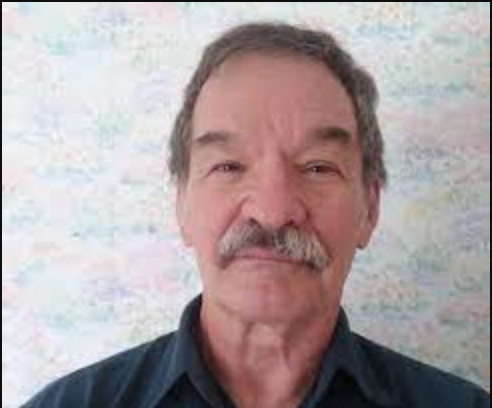
Ted Glick has devoted his life to the progressive social change movement. After a year of student activism as a sophomore at Grinnell College in Iowa, he left college in 1969 to work full time against the Vietnam War. As a Selective Service draft resister, he spent 11 months in prison. In 1973, he co-founded the National Committee to Impeach Nixon and worked as a national coordinator on grassroots street actions around the country, keeping the heat on Nixon until his August 1974 resignation. Since late 2003, Ted has played a national leadership role in the effort to stabilize our climate and for a renewable energy revolution. He was a co-founder in 2004 of the Climate Crisis Coalition and in 2005 coordinated the USA Join the World effort leading up to December actions during the United Nations Climate Change conference in Montreal. In May 2006, he began working with the Chesapeake Climate Action Network and was CCAN National Campaign Coordinator until his retirement in October 2015. He is a co-founder (2014) and one of the leaders of the group Beyond Extreme Energy. He is President of the group 350NJ/Rockland, on the steering committee of the DivestNJ Coalition and on the leadership group of the Climate Reality Check network.
ZNetwork is funded solely through the generosity of its readers.
Donate




