


A recent article by Bill McKibben in which I am quoted has motivated me to write a Future Hope column focused on the issue: what should independent progressives be doing about the Presidential election?
One thing we should be doing is already being done: being visible, demonstrative and in the streets taking action on the major issues. Two weeks ago this is what the broadly-based climate justice movement did for a number of days in New York City, with the big day being the 75,000 person March to End Fossil Fuels on September 17.
Who was the main target of this action? It was Joe Biden, since, as the President, he is the one person who has the power through Executive Orders to escalate the government’s actions to shift rapidly from fossil fuels to clean renewables like wind and solar. With the House of Representatives controlled by the MAGA Republicans, there is zero hope for any significant action from Congress until a new one is seated in January of 2025.
I’m sure some people who get it on the seriousness of the climate crisis and the need for action now didn’t come to the 9/17 action because of concern that the focus on calling out Biden might hurt his reelection chances. That’s an understandable concern. But there is a very strong argument to be made that the chances of Biden defeating Trump, or any Democrat defeating any Republican in the Presidential race, are very tied to how much independent grassroots activism there continues to be over the coming months. The overall progressive movement needs to continue the current upswing of activism both to win victories on issues and to maximize the progressive voter turnout before and on November 5, 2024.
Who can defeat Trump or any other Republican? Only Biden or the Democrat. No one else. So if you believe that 21st century fascism needs to be electorally defeated if we are to have any hope of avoiding full-on climate and societal unraveling in the years ahead, our tactics have to reflect that.
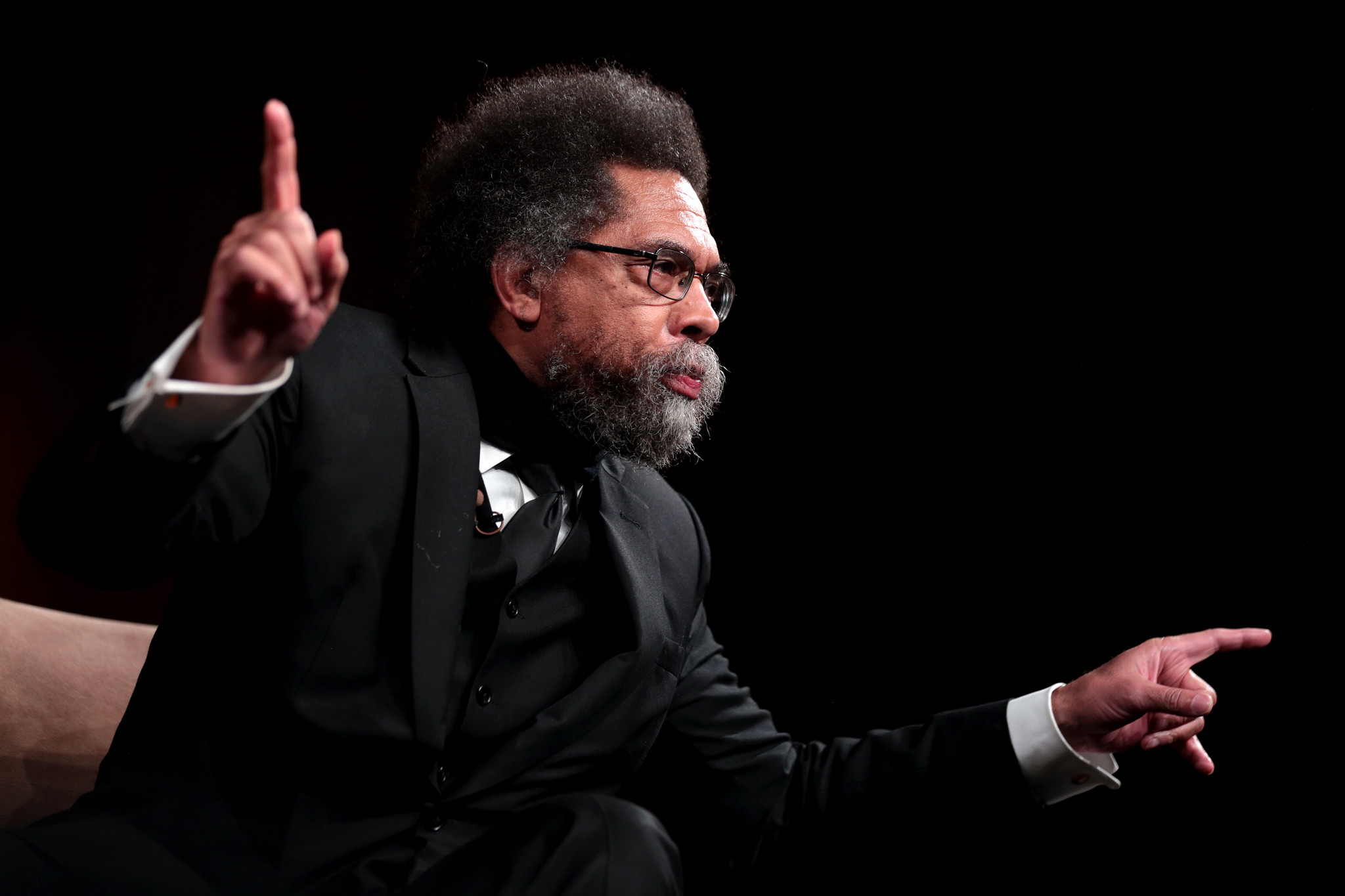
Does this mean that Cornell West shouldn’t be running for President as a Green Party candidate? Not necessarily. The continued existence of the Green Party and West’s campaign are a reflection of a political current that is much stronger than the electoral showing of that party over the last 25 years, which has been a decidedly weak showing. The average national popular vote of GP Presidential candidates between 2000 (Nader) and 2020 (Hawkins) is below 1%; Hawkins got about 1/3 of 1%.
The latest I’ve seen as far as West and the polls is that he’s at 4-5%. The likelihood of those numbers going up is not very high given the MAGA threat that most progressives appreciate. And I remember when Nader ran in 2000, he was at 5% in the polls going into the last weekend before the election, and he ended up with about half that, 2.7%, on election day.
At the same time that there’s been such a poor vote showing for GP Presidential candidates, the number of GP members on local levels who have won local office has also gone down over the last 20 years. In the early 2000s there were about 220 such local officeholders; in 2020 Hawkins said there were 135, and my guess is that if it’s any higher now it’s not by much.
A Cornell West candidacy could help keep the pressure on Biden/whomever and other Democrats running for office to be stronger on the issues, which will help to generate the massive turnout of progressives, especially young people, that is the key to not just a defeat of the Trumpists but a decisive defeat. But, and this is a HUGE “but,” is the GP going to go all out to get on the ballet in states like Pennsylvania, Georgia, Arizona, Michigan, Wisconsin, Nevada, the battleground states where Presidential elections are won or lost because of the anachronistic but still-very-real Electoral College? And if they are on the ballot in any of those states, what will West and the GP say about what voters should do?
All the past GP Presidential candidates have made very few distinctions. They’ve not said with any consistency, if at all, that the Republicans, especially in these Trump years, are worse than the Dems on most issues. They’ve not said that in the battleground states where the GP is on the ballot they are OK with progressives voting for the Democrat, much less encourage that. Because they haven’t done so, large numbers of progressives have not voted for them even though, like myself, they’re more in agreement with the GP on most issues than the Democrats.
It is very difficult to believe that Cornell West doesn’t care whether or not his candidacy leads to the election of Trump or some other Republican. I hope that he is thinking about how to run a campaign that doesn’t do that, particularly what he says about trying to get on the ballot in the battleground states. And I hope that if he agrees that the GP needs to do and say things differently this time around he will have the courage to say that and stand by it as he gets pushback from longtime GP leaders.
Ted Glick has been a progressive activist, organizer and writer since 1968. He is the author of the recently published books, Burglar for Peace and 21st Century Revolution. More info can be found at https://tedglick.com.

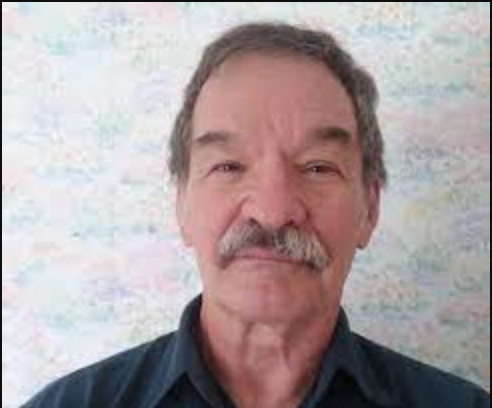
Ted Glick has devoted his life to the progressive social change movement. After a year of student activism as a sophomore at Grinnell College in Iowa, he left college in 1969 to work full time against the Vietnam War. As a Selective Service draft resister, he spent 11 months in prison. In 1973, he co-founded the National Committee to Impeach Nixon and worked as a national coordinator on grassroots street actions around the country, keeping the heat on Nixon until his August 1974 resignation. Since late 2003, Ted has played a national leadership role in the effort to stabilize our climate and for a renewable energy revolution. He was a co-founder in 2004 of the Climate Crisis Coalition and in 2005 coordinated the USA Join the World effort leading up to December actions during the United Nations Climate Change conference in Montreal. In May 2006, he began working with the Chesapeake Climate Action Network and was CCAN National Campaign Coordinator until his retirement in October 2015. He is a co-founder (2014) and one of the leaders of the group Beyond Extreme Energy. He is President of the group 350NJ/Rockland, on the steering committee of the DivestNJ Coalition and on the leadership group of the Climate Reality Check network.
ZNetwork is funded solely through the generosity of its readers.
Donate




