


Source: Meta
Michael Albert and Yanis Varoufakis, members of mέta’s Advisory Board, take part on an ongoing debate on how a postcapitalism worth striving for could look like. Here is the fourth contribution the whole discussion, to be constantly updated and enriched, can be found here.
4. Flat management, democratic planning and a basic income
Yanis Varoufakis, 23rd December 2021
Michael: Glad that we are proceeding slowly, refusing to take for granted vague terms like ‘equitable’ and ‘just’ – terms within which all manners of oppressions and irrationalities can take refuge. Before proceeding, and in the interests of full disclosure, let me state it for the record that, from a young age and to this day, I have signed up to Karl Marx’s dismissal of equity (as a bourgeois notion) as well as to his antipathy to defining freedom as the right to make free choices as long as they do not impinge on others.
So, when you ask me whether we agree “…that we should all decide our lives up to where our choices impinge on others, but from there on, others should have their self managing say, as well”, my response is: No, we certainly don’t. Interdependence is a given in any social network. Thus, according to your definition of freedom, every Tom and Dick has the right to scream that Harriet’s choices somehow impinge on theirs. Who will adjudicate then? Tom and Dick, merely because they are in the majority (or any majority for that matter)? That is unacceptable.
You ask me why I am alarmed by your definition of equitable: “…Equitable means we receive income for how long, how hard, and the onerousness of the conditions under which we do socially useful work.” The answer is because I shudder to imagine who will decide what constitutes ‘socially useful work’. What happens if Harriet wants desperately to work on some new project that Tom and Dick consider ‘socially useless’? Or who gets to quantify how hard or onerous a particular job is? The majority again? Just writing these words makes my throat choke with angst.
You ask: “Do we agree that to end coordinator class rule we need to replace the corporate division of labor with jobs balanced for empowerment?” Sure, we agree. But, who gets to decide the job balance necessary for Harriet’s empowerment? My answer is: Harriet. No one else. Not Tom and Dick. No worker council should tell Harriet what is good for her to do, let alone decide on her behalf. Sure, they can chat about it in the assembly, on the company’s intranet, via all sorts of teleconferences etc. But, unless Harriet gets to decide what Harriet does, it ain’t self-management.
>Naturally, the question then becomes: How do things that need to get done get done? I have concrete ideas on how to answer this all-important question. But, in the spirit of taking this conversation slowly, I shall begin by setting down five basic principles that enterprises should adhere to:
Authentic self-management: Participants (i.e., worker-co-owners) must be free to join at will, or to quit, work teams within the enterprise – and to pursue projects without anyone’s permission
Democratic hiring & firing: A democratic process must determine who is brought into the enterprise, but also who is fired (Nb. The right of the collective to dismiss a participant as a necessary counter-balance of authentic self-determination)
A basic income for all: Without an adequate basic income, to fire a participant is to jeopardise her capacity to live. This would vest too much power in the hands of the majority (within the enterprise) while, at once, making it harder to fire someone that deserves to be fired.
Democratic resource allocation: The collective decides how much the basic salary is, how much to spend on infrastructure (including R&D), the enterprise’s multi-year plan and, lastly, how much to set aside for annual bonuses (to be distributed according to a democratically agreed process)
Your thoughts?

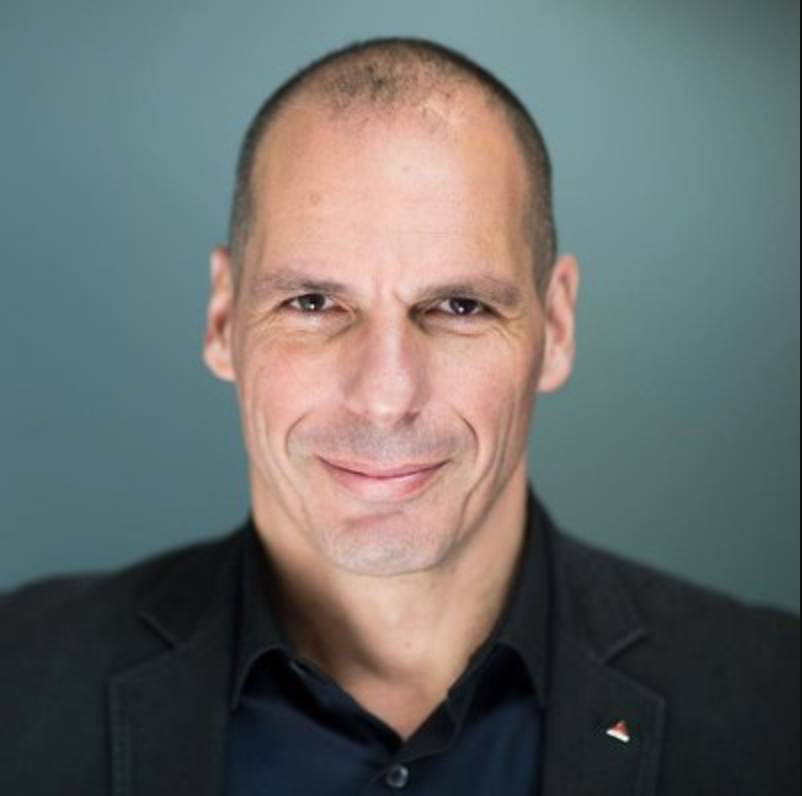
Yanis Varoufakis born 24 March 1961 is a Greek economist, politician, and co-founder of DiEM25. A former academic, he served as the Greek Minister of Finance from January to July 2015. Since 2019, he is again a Member of Greek Parliament and MeRA25 leader. He is the author of several books including, Another Now (2020). Varoufakis is also a professor of Economics – University of Athens, Honorary Professor of Political Economy – University of Sydney, Honoris Causa Professor of Law, Economics and Finance – University of Torino, and Distinguished Visiting Professor of Political Economy, Kings College, University of London.

Michael Albert`s radicalization occurred during the 1960s. His political involvements, starting then and continuing to the present, have ranged from local, regional, and national organizing projects and campaigns to co-founding South End Press, Z Magazine, the Z Media Institute, and ZNet, and to working on all these projects, writing for various publications and publishers, giving public talks, etc. His personal interests, outside the political realm, focus on general science reading (with an emphasis on physics, math, and matters of evolution and cognitive science), computers, mystery and thriller/adventure novels, sea kayaking, and the more sedentary but no less challenging game of GO. Albert is the author of 21 books which include: No Bosses: A New Economy for a Better World; Fanfare for the Future; Remembering Tomorrow; Realizing Hope; and Parecon: Life After Capitalism. Michael is currently host of the podcast Revolution Z and is a Friend of ZNetwork.
ZNetwork is funded solely through the generosity of its readers.
Donate





2 Comments
“I have signed up to Karl Marx’s dismissal of equity (as a bourgeois notion) as well as to his antipathy to defining freedom as the right to make free choices as long as they do not impinge on others”
I’d be curious to learn these arguments. I hope Yannis would also be open with ideas that contradict his dogmas.
“Thus, according to your definition of freedom, every Tom and Dick has the right to scream that Harriet’s choices somehow impinge on theirs”
That’s absurd maybe because it is so abstract. Could you make a more realistic case?
“But, who gets to decide the job balance necessary for Harriet’s empowerment? … No worker council should tell Harriet what is good for her to do, let alone decide on her behalf.”
The point is not what is good for her alone but what is socially good according to a reasonable and commonly agreed standard (namely, roughly equal mix of empowering and disempowering tasks). Harriet can decide that she wants to do only work which we would call empowering, but that would not be good for the self-government (democracy).
“Harriet wants desperately to work on some new project that Tom and Dick consider ‘socially useless”
Who decides? Harriet’s co-workers and consumers (much as today). Any economy determines what is socially useful. Markets do it irrationally and after the fact. Any planning requires determining it before hand. It need not be exact, and there can be plenty of experimental research work categories.
“Participants (i.e., worker-co-owners) must be free to join at will, or to quit, work teams within the enterprise – and to pursue projects without anyone’s permission” contradicts “A democratic process must determine who is brought into the enterprise, but also who is fired”. If I am free to join Google at my own will alone, clearly current Googlers have no say. Democratic hiring and firing is exactly what is proposed in parecon.
“Democratic resource allocation: The collective decides how much the basic salary is…”
What is the collective? Will salaries across enterprises be coordinated? How will it be decided how much of what needs to be produced?
“…to be distributed according to a democratically agreed process”
Let’s agree to base those processes on the principle of rewarding effort and sacrifice.
“ Glad that we are proceeding slowly, refusing to take for granted vague terms like ‘equitable’ and ‘just’ – terms within which all manners of oppressions and irrationalities can take refuge.”
So annoyingly frustrating: the philosophical and overbearing intellectual musings lurking behind such a comment. Hidden within is stuff Yanis knows and will unleash if necessary to clear up the ignorance of all us normals who use such words everyday. But what would I know. Hey, it’s a debate and I must wait. Be patient and openminded and not be lead by my throat choking with angst when Yanis comes down hard on aspects of participatory economics. After all, he’s read Marx and holds to the great dead old man’s words like a true believer.
Oh well, another debate and a decision I must make. Yanis or Parecon? Markets or not? See, no balance here at all. Just well mannered discussion between learned souls from and after which, I, an unlearned soul, must “collapse the wave function” and make a decision.
Maybe it comes down to who’s more hip?