

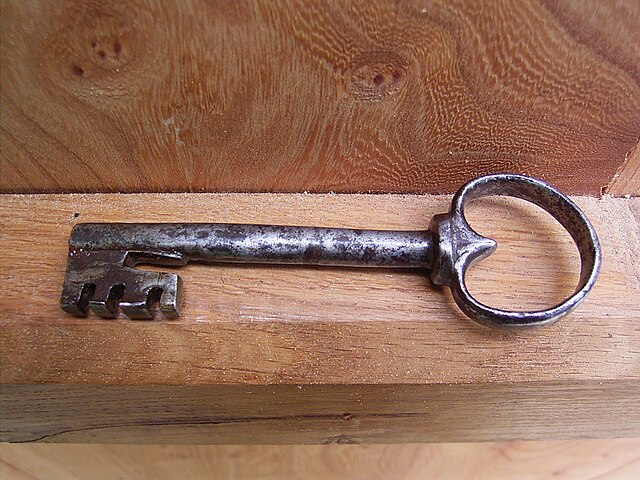
My grandmother left Jerusalem in 1948 with a key that never found its lock again. She believed she would return before the tea cooled in its cup. The years hardened around that belief until it became a kind of shrine inside the family. My grandmother, Rabiha Dajani, lived a century of uprooting and renewal, a woman who lost her home at gunpoint yet went on to make the world her home. Indomitable, she refused to be defined by loss and taught us that life, like a piano, is about how one plays it. I imagine that key when I watch the latest images from Gaza. It is a small object that keeps opening a large sorrow. Distance can feel like helplessness, yet it can also be a kind of lens, a way to see clearly enough to be of use. That is how I have tried to live my vocation, by learning to look and to keep looking when it would be easier to turn away.
When I wrote Palestine Wail, poems arrived like aftershocks. News moved too quickly for the heart, and so the heart found its own slower instrument. The book begins with an intuition I came to trust, which is that spiritual wounds may serve as peepholes if we remain honest about them. Rumi has a line that helped me think this through, that the wound is where the light enters a person, a reminder that our common pain can become a passage rather than a prison if we keep it clean and do not let it fester into hatred or exceptionalism. In that spirit the introduction to my Wail asks us to recognize that we are all wounded and wounding and to forgive damaged people, including ourselves, since many can scarcely imagine the pain they inflict on others.
From the same opening meditation comes another insight that steadies me in days of smoke and sirens. The poems trace a movement from anger toward a more resilient hope, from noisy entanglement toward a quieter surrender rooted in the knowledge that we are one. There I confessed that in the midst of darkness and ugliness I hungered for light and beauty and that I found it in reading and writing, in poetry and mysticism, and then in silence. This is not an escape. It is a way of breathing that keeps the inner life from collapsing. Beauty in this sense is not luxury. It is discipline. It keeps us sensitive when the age grows brutal.
There is a line often attributed to Darwish that I use as an epigraph in Palestine Wail: every beautiful poem is an act of resistance. I placed it beside Blake and Alice Walker, two companions in the long apprenticeship to conscience, and a tender fragment from Rita Dove about feeding on beauty in the midst of horror. The point is simple. Poetry cannot stop a bomb, yet it can keep a soul from consenting to murder. Poetry can train attention and protect tenderness. In a time of mass numbness, attention and tenderness are forms of courage.
In the afterword of my love letter to Gaza I called the true artist an unbribable witness. Such an artist stands as a voice for the voiceless and a reporter on the state of our soul. That artist knows that narratives shape realities and that power fears those who keep the moral record faithfully. I wrote that poetry is an act of resistance and that our understanding of the human condition is diminished without the witness of storytellers and artists. I also noted, with grief, how many Palestinian journalists and artists have been killed since October 2023, and I named the murder of the poet and teacher Refaat Alareer as a case in point because his words had become a lamp for many in the darkness.
Exile teaches a person to make a homeland of their art. In my Palestine book I wrote that refugees often feel posthumous, outliving themselves and wandering the world like strangers, which is why artists must dip their pens and brushes into the ink of their aching heart for remembrance and for inspiration. When your home is burning you feel the heat even from across an ocean. That is the temperature at which these sentences are being written.
I do not believe poetry is above politics. I believe it looks through politics toward the human. Years ago, during Egypt’s uprising, I tried to describe the distinction between journalism and poetry. Journalism rushes to the scene so the record will not be lost. Poetry sits with the record until it becomes meaning. I called that work a kind of journalism of the spirit, the seismograph of the heart, since the heart often feels the tremor before the building falls. That description remains true for me now. Poetry is not an alibi for inaction. It is a practice that keeps the moral nerve alive while we act.
Here another thread enters the weave. In On the Contrary, my study of Wilde and Nietzsche, I tried to understand the artist as a moral instrument. Both men believed that to think freely is an ethical act. Both understood suffering as a teacher, although they learned in different classrooms. Wilde wrote, in prison, that he had to make everything that happened to him good for him, to transform it into a spiritual exercise. Nietzsche named a similar discipline, the love of one’s fate, and asked that a person not merely bear what is necessary but love it. I set these two passages beside one another in the book to consider what courage can do with pain and how pain, rightly carried, can become knowledge rather than poison.
I will not pretend that such disciplines are easy or always possible. There are days when the vision blurs and the heart staggers. The point is to refuse the deadening that follows shock. Wilde and Nietzsche, each in his way, fought conformity of spirit. They argued that the free mind serves the common good because it restores the capacity to judge without fear. In that sense art is civic. It teaches a person to recognize a lie, especially the lie that says some lives are less worthy of grieving. Malcolm X described that lie with frightening clarity when he warned that careless newspapers can make a population hate the oppressed and love the oppressors. I regret to say this warning continues to explain too much of our public life.
The practical question for readers of an activist journal is what all this means for us now. I would answer with three simple commitments. First, we keep a faithful record. We name what is happening and we refuse euphemism. Second, we protect tenderness. If our hearts should harden and turn to ice we must try, at least, not to blame the weather. Third, we cultivate the forms of attention that sustain action over time, the inner disciplines that prevent despair from becoming doctrine. For some this will be prayer. For others it will be art or political and social action. For many it will be a combination, since writing that is true is a kind of activism and prayer in public.
Our shared goal is far larger than the cessation of violence, though that is the urgent first step. The hope is to become those who, in the midst of darkness and ugliness, hunger for light and beauty, and then feed one another with what we find. That is how a person remains human when the masses loses its way. That is how a community remembers that every child belongs to all of us, and that to harm them is to murder a piece of God in whom we say we believe.
There is another image I imagine. It is an artist at a desk in a small room far from home, writing lines that do not know where they will land. The lines travel anyway. They cross borders that concrete cannot stop. They arrive as breath in a room where someone has been holding their breath too long. When I falter, I think of my grandmother’s armor against despair: her bright red flower she wore in her hair, the perpetual twinkle in her eye, her conviction that will finds a way. Her example steadies my faith that art, too, can be a form of steadfastness, an inheritance of dignity carried forward in words. That is enough for me. To be useful in this way is to take part in the slow work of repair.
I want to close with these parting images. When the darkness grew too near and words failed to console, I turned to the visual arts for strength, to the elegy of Sliman Mansour and the sight of a mother and her children in a village held together by care. I kept that image close as I wrote because it reminded me that what we fight for is not only freedom from harm. We fight for the texture of ordinary days. We fight for a world where children can learn again to make a wish, and where they can trust the adults to keep that wish within reach.
The key still waits. So do we. Until the lock yields, we lend our vision to one another. We speak faithfully. We tend our wounds so that light may enter. We keep a place at the table for the living and for the dead. And we practice a courage that begins with seeing.
ZNetwork is funded solely through the generosity of its readers.
Donate




