


Reading documents from the United Nations Environment Programme (UNEP) makes me morose. Everything looks terrible. This is largely due to the social processes set in motion by capitalism, including the harsh use of nature and the reliance on carbon-based fuels. For example:
- One million of the estimated eight million species of plants and animals on the planet are threatened with extinction.
- The main threat to a majority of species at risk of extinction is biodiversity loss caused bythe capitalist agribusiness system of food production.
- Agricultural production – currently accounting for more than 30% of the world’s habitable land surface – is responsible for 86% of projected losses in terrestrial biodiversity because of land conversion, pollution, and soil degradation.
These are three out of hundreds of points that could be made from as many scientific documents. It is important to emphasise the fact that environmental degradation has not been caused by humans in general, but by a certain system of organising society which we call capitalism.
The problem with the term Anthropocene (which began to be used first by scientists, then by social scientists) is that it implies that humans – as an undifferentiated whole – have created the ecological crisis we are facing. This subtly downplays the role of the capitalist system and its accompanying class and national divides. However, data shows that humanity is using the equivalent of about 1.7 Earths to sustain our current consumption levels. In other words, we are consuming natural resources 75% times faster than nature can regenerate them each year. Unless we find another habitable planet, there is no arithmetic way to solve the problem. This is not a matter of the climate alone, but also of the environmental stress we have placed on the Earth (such as through deforestation, overfishing, overuse of fresh water, and soil degradation).
If we break this undifferentiated concept of humanity down by country, clear divisions emerge. If everyone lived like an average person in the United States, then we would need five Earths. If everyone lived like an average person in the European Union, we would need three Earths. If everyone lived like an Indian, we would need 0.8 Earths. If everyone lived like a person from Yemen, we would need 0.3 Earths. An undifferentiated concept of humanity disguises the great differences across the world and suppresses the need of some peoples – such as in Yemen – to increase their consumption in order to have a dignified life.
The concept of the Anthropocene masks more than it reveals.
In a few months, private jets will land in Belém, Brazil, for COP30. Situated at the estuary of the Amazon River, Belém is an ideal location for the thirtieth year of the Conference of Parties to the United Nations Framework Convention on Climate Change (UNFCCC). Over the past quarter century, the Amazon region has suffered from terrible deforestation, with the Brazilian Amazon alone experiencing total forest loss of 264,000 square kilometres from 2000 to 2023 – equivalent to the combined area of New Zealand and the United Kingdom. Brazilian President Lula da Silva’s intensive programme of conservation has made considerable advances in reversing this trend, but it needs to go further. Holding COP30 in Belém will be a strong message not only to save the Amazon but to highlight the future of the planet and of humanity.
Our team in Brazil is currently working on a series of publications on the capitalist crisis of climate and the environment to be distributed at COP30. It is already clear from our analysis that there is no solution to be found in ‘green capitalism’; as Jason Hickel wrote in one of our Pan African newsletters, it is capitalism itself that is the problem we face. Below, please find some preliminary demands that go beyond the façade of green capitalism.
1. Climate and environmental discussions must be democratised. There is no room for closed-door meetings financed by corporations that have a vested interest in environmental and climate destruction. For instance, COP29 in Baku, Azerbaijan, was partly funded by oil companies such as ExxonMobil, Chevron, Octopus Energy, the State Oil Company of the Republic of Azerbaijan, and TotalEnergies as well as the US Chamber of Commerce and the World Economic Forum (itself partly funded by the US government). He who pays the piper calls the tune, an adage that is not meaningless when it comes to money and power. Such a UN conference must be funded by governments and transparent about the conversations taking place in all meetings.
2. The world’s governments must strengthen their own agreements and treaty obligations. It is important to note that due to the pressure from the US and EU, none of the major climate agreements adopted strong language for compensation, or what is known as ‘loss and damage’ (i.e., climate reparations). Contributions to the loss and damage fund are voluntary, as reflected by a number of processes and treaties from the 1992 UNFCCC to the 2013 Warsaw International Mechanism, 2015 Paris Agreement, 2021 Glasgow Climate Pact, and the 2022 Loss and Damage Fund agreement.
3. There must be a fair energy transition plan that is democratically shaped. Such a plan must include ending governments subsidies for private carbon-based fuel companies. Instead those funds must be used to promote a new energy matrix and protect communities from the adverse impact of the climate and environmental catastrophe.
4. The global economy must be reshaped through agrarian reform. Such a reform must emphasise a science-based and democratic form of agriculture that protects the soil, water, and air. Governments must carry out studies to assess what it means to restructure agriculture in order to address the climate and environmental catastrophe. We need new forms of agroclimatic mapping and data to help us understand how to harness local communities’ knowledge to protect the natural ecosystem while finding ways to sustainably use natural resources for the benefit of all. Such a mapping exercise will help us better understand how to combat deforestation and promote reforestation, how to properly harness water resources for our own consumption and energy, and how to regulate mining activities to draw resources from the earth without causing catastrophic social and environmental destruction. Can we, for instance, pledge to reach net-zero deforestation by 2027?


The photograph above is by our friend Sebastião Salgado (1944–2025), who died on 23 May. Salgado portrayed the working class and peasantry with dignity and without romanticising their exploitation. He was always in solidarity with their struggles and organisations. After the 1996 Eldorado do Carajás Massacre, which killed nineteen activists connected to the Landless Workers’ Movement (Movimento dos Trabalhadores Rurais Sem Terra, or MST) in South Pará, Salgado, alongside the singer Chico Buarque and the writer José Saramago, created a book called Terra (Land), the proceeds of which went to the MST. This, alongside Salgado’s donation of some of his photographs, helped the MST build its Florestan Fernandes National School.
Salgado greatly enjoyed the work of Tricontinental and would occasionally send a note of appreciation for the materials we produce. We bow our heads in respect for his great contributions to humanity.
In 1843, a man named Julio Cezar Ribeiro de Souza was born in Belém, on the other side of the Amazon from the Vale do Javari that Salgado photographed. Souza loved to watch birds fly, and it was this close observation of nature that provided him with the inspiration to invent the steerable hot air balloon, mimicking birds’ aeronautics. Perhaps we need to cultivate this ethos: nature does not need to be conquered; it must be learned from and lived through.

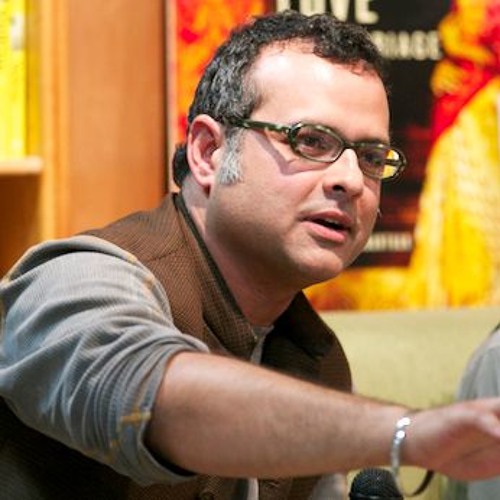
Vijay Prashad is an Indian historian, editor, and journalist. He is a writing fellow and chief correspondent at Globetrotter. He is an editor of LeftWord Books and the director of Tricontinental: Institute for Social Research. He is a senior non-resident fellow at Chongyang Institute for Financial Studies, Renmin University of China. He has written more than 20 books, including The Darker Nations and The Poorer Nations. His latest books are Struggle Makes Us Human: Learning from Movements for Socialism and (with Noam Chomsky) The Withdrawal: Iraq, Libya, Afghanistan, and the Fragility of U.S. Power. Tings Chak is the art director and a researcher at Tricontinental: Institute for Social Research and lead author of the study “Serve the People: The Eradication of Extreme Poverty in China.” She is also a member of Dongsheng, an international collective of researchers interested in Chinese politics and society.
ZNetwork is funded solely through the generosity of its readers.
Donate




