


Source: Democracy Now!

In a historic victory for unhoused people, Philadelphia city officials agreed to hand over 50 vacant homes to a community land trust, following months of organizing and protest encampments. We hear from one of the organizers and speak to Philadelphia-based Keeanga-Yamahtta Taylor, who has written extensively about housing insecurity and says the direct actions there are applicable across the U.S. “This dynamic exists all over the country where you have both empty housing and houseless people, a completely irrational expression of what American capitalism means,” Taylor says. The sustained movement in Philadelphia established “a model for what all tenant organizing and activist groups should be taking up, which is occupy the space, occupy the properties and put political pressure on public housing authorities to do their job and house people that are unhoused.”
AMY GOODMAN: Keeanga, you’re in Philadelphia. Your book Race for Profit: How Banks and the Real Estate Industry Undermined Black Homeownership was a 2020 finalist for the Pulitzer Prize for History. Congratulations.
KEEANGA–YAMAHTTA TAYLOR: Thank you.
AMY GOODMAN: But I want to ask about the historic victory in Philadelphia among housing activists after city officials agreed Friday to hand over 50 vacant homes to a community land trust, following months of organizing by unhoused people, including protest encampments and taking over vacant homes. Fifty mothers and children who have been occupying 15 vacant city-owned houses will also be permitted to stay as part of the deal. Philadelphia Housing Action, the group behind the direct action campaign, will set up the community land trust.
On Monday, we reached community organizer Jenn Bennetch at the Camp Teddy encampment and asked her to describe the significance of the victory.
JENN BENNETCH: Not just is it like a win for us, and not just is it a win even for the people in the encampments who will be able to move into homes, but this is also like 50 units that would have been sold to developers and used to speed up the process of gentrification in our neighborhoods. …
We’re going to be able to, like, house people from the encampment, if everything goes through right, and also we’ll be stopping these units from being sold off to the private market and potentially becoming like luxury condos or student housing in our neighborhoods. …
If this works out, then it could be a good push to go and say, like, instead of allowing housing authorities to, like, sell units and make money off of them, after they intentionally neglected them until they were too much for them to deal with, then allow community groups to take on those units and rehab them and use them for what their original use was, which is to house people in need.
AMY GOODMAN: So, that’s housing organizer Jenn Bennetch. If you can talk about the significance of this victory? And just in the bigger picture, we’re talking about tens of millions of Americans face eviction. This is a key area that you focus on, Keeanga-Yamahtta Taylor.
KEEANGA–YAMAHTTA TAYLOR: Sure. I think this is tremendously significant. Not only is this a vindication of a strategy that was focused on direct action. People occupied, you know, tony sections of downtown Philadelphia. They refused to move. They acted in solidarity with each other. There are so many times over the last two months when the city threatened to shut down the camps, when the city threatened legal action against the organizers. And throughout that, people stood tall. They did not cave in to the pressure. And they essentially called the city’s bluff. And the city was reluctant to actually move in on the camp, because Philadelphia has been a site of very large, demonstrative protests around police brutality. There’s a well-organized legal protection, as well as activist networks in the city, that I think created some pause and reluctance on the part of city officials.
But I think, even beyond its impact in Philadelphia, which I think is tremendous, there’s a bigger lesson to be drawn here, because this dynamic exists all over the country, where you have both empty housing and houseless people — a completely irrational expression of what American capitalism means. But, even more perniciously, you have public housing authorities — every city has one — which is either sitting on properties, that they should be distributing to people in need of housing, but they are sitting on properties, waiting for the right price point to flip those properties for profit. And that is unconscionable for public housing authorities to be engaged in that kind of predatory, gentrifying behavior.
And so, what has happened here in Philadelphia is creating a model for what all tenant organizing and activist groups should be taking up, which is occupy the space, occupy the properties, and put pressure, political pressure, on public housing authorities to do their job and house people who are unhoused. It is not that complicated. We shouldn’t be having empty housing and people without homes in the midst of a pandemic. At no time should we be having it, but we certainly should not be experiencing this in the midst of a pandemic. And I think that this is a model, a strategic model, and a tactic that should be generalized by housing groups across the country.
Now is the time, I think, to move on this, because the emergency of housing insecurity is at its most acute point, but also there’s a greater connection being made between housing as healthcare, housing as a right, that has been demonstrated by the CDC’s own moratorium against evictions, which really demonstrate that housing is an issue of healthcare as well as an issue of shelter.
AMY GOODMAN: Keeanga-Yamahtta Taylor, we want to thank you so much for being with us, New Yorker writer, author of Race for Profit: How Banks and the Real Estate Industry Undermined Black Homeownership, 2020 finalist for the Pulitzer Prize, and author of From #BlackLivesMatter to Black Liberation, assistant professor of African American studies at Princeton University.

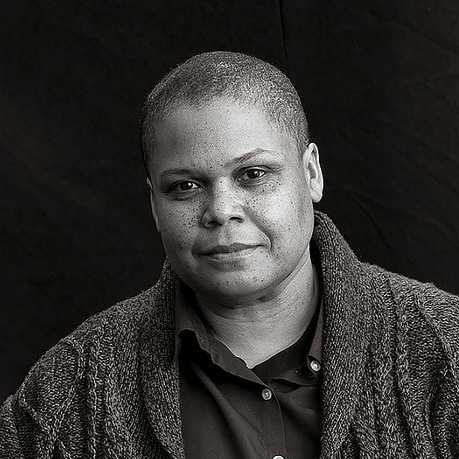
Keeanga-Yamahtta Taylor is a co-founder of Hammer & Hope and the Hughes-Rogers Professor of African American Studies at Princeton University. She is a recipient of a MacArthur Foundation “Genius Grant” and a Guggenheim fellowship. She is the author of Race for Profit: How Banks and the Real Estate Industry Undermined Black Homeownership and From #BlackLivesMatter to Black Liberation and the editor of How We Get Free: Black Feminism and the Combahee River Collective. Race for Profit was a semi-finalist for the 2019 National Book Award and a finalist for the Pulitzer Prize in History in 2020.
ZNetwork is funded solely through the generosity of its readers.
Donate




