

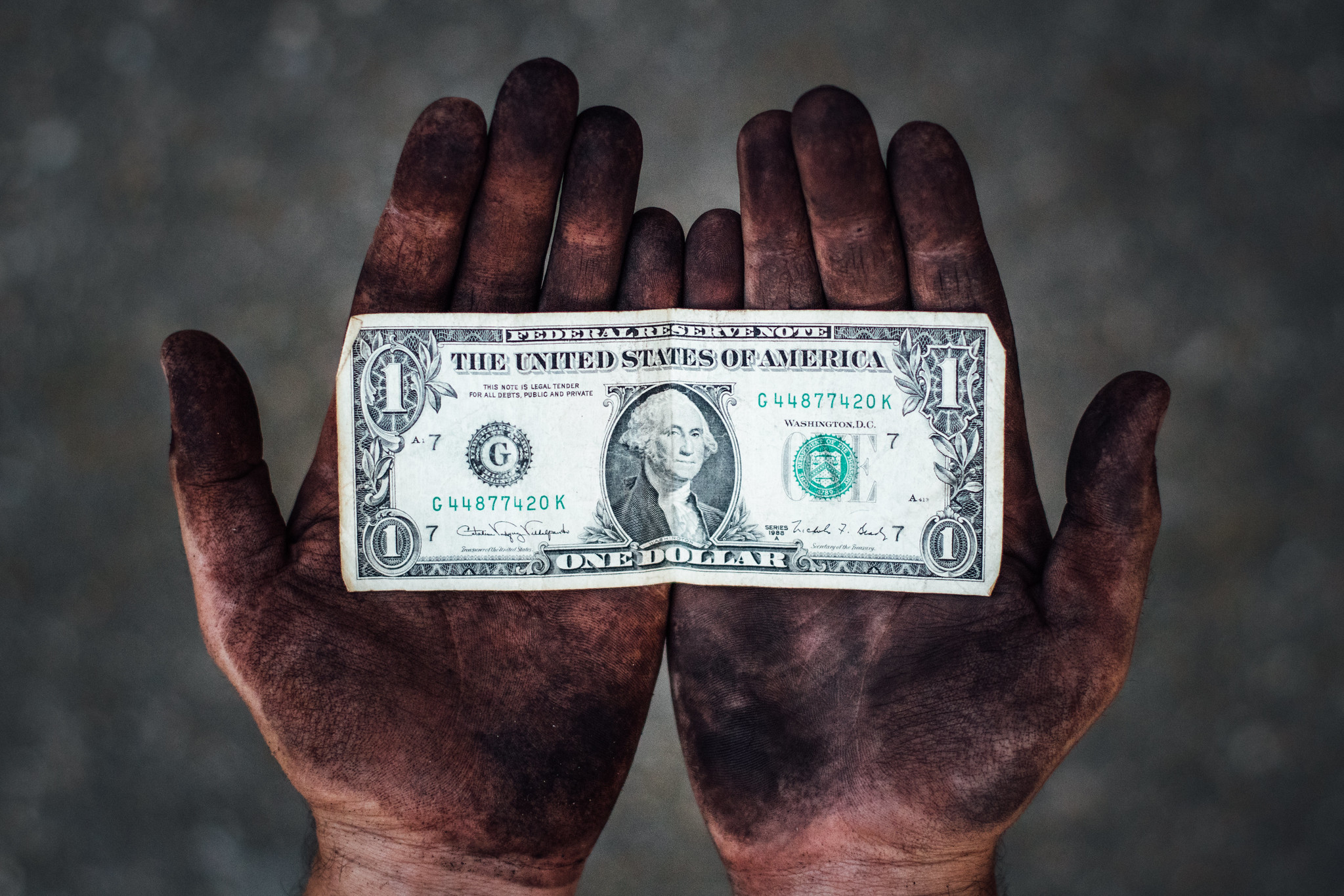
It has long been a particular irony of imperialist aggression in the Middle East that, thanks to decades-old geopolitical arrangements known as ‘petrodollar recycling,’ the Middle East finances its own invasions. In the ongoing genocide of Palestinians, every day reaching new depths of waking nightmarishness, this notable quirk of world politics tends to fly under the radar. If, however, the complicity of Middle Eastern oil sheiks in U.S. empire-building raises questions about the role of petrodollar recycling in enabling western fossil imperialism for control of oil, then this surely also raises questions about the role of oil dependency in the perpetration of crimes against humanity in Gaza and the West Bank.
The Nixon administration established the petrodollar recycling system in 1973 as a political response to two events: the oil shock that took place when OPEC (Organisation of Petroleum-Exporting States) limited oil exports to the West in retaliation for Zionist aggression via the Yom Kippur War of that year, and economic turmoil within the U.S., as the consequences of what Eichengreen has called its postwar ‘exorbitant privilege’ began to hit home. The yanking of the dependency chain by Arab oil states was particularly unwelcome by the western hegemon, for whom oil dependency is a deep taboo that cannot be spoken of but under pain of excommunication from respectable political discourse.
In the wake of WWII, the allied victors had learned from their grievous errors in the previous war, and had gone to considerable lengths to win the peace—the Marshall Plan for economic reconstruction in Germany being not the least of which; this also had political purposes in discouraging the shattered nations of Europe from looking to the Soviet Union for support. The victorious Allies also looked to develop a liberal ‘free trade’ world order, backed by the dollar, that would resist the development of economic autarky, that those excluded would then seek to break down through military aggression and imperialist warfare, as Hitler had done.
‘Exorbitant privilege’ arose as a result of the dollar being nominated the default world currency at Bretton Woods in 1946, and tied to the gold standard. While the U.S. was supposed to use this power responsibly, it instead initiated a series of imperialist wars in Southeast Asia and the Americas against its erstwhile ally against fascism, the Soviet Union, under cover of a deeply disingenuous campaign to contain expansionist global communism. Paradoxically, the conspiracism and conformist paranoia that characterized these lies had more in common with the fascist enemy lately defeated than the democratic values allegedly being defended—a fact reflected in the conformist and sterile social climate of the 1950s, the earliest and rudest stages of anticommunist conspiracism.
U.S. empire-building, perpetrated in the name of containing it, undermined the stability of the international system through inflationary pressures begotten through massive military spending. As an increasing number of Allied countries began to withdraw from the system, and the inflationary consequences of wanton militarism began to hit home, Nixon and his secretary of state Henry Kissinger adopted a multi-pronged approach; in the first place, they abolished the gold standard established at Bretton Woods in 1946, and floated the U.S. dollar on international exchanges. In the second, Kissinger came to an agreement with Saudi Arabia and other OPEC nations to sell oil only in U.S. dollars, thereby creating instant, permanent international demand for them, and to use some of its oil profits (‘petrodollars’) to buy U.S. bonds—the same kind of debt the United States had been racking up over the last quarter-century or so through its imperialist adventurism, in other words.
This latter arrangement, the ‘recycling’ part of petrodollar recycling, was critical insofar as it also dealt with what would otherwise become a terminal balance of payments problem; purchasing U.S. war debt ‘recycled’ dollars back to the U.S., thus ensuring a roughly equal level of outflows and inflows. In light of the level of fanaticism and zealotry that prevails in the U.S. in rooting out any manifestation of perceived socialist tendencies in providing for the needs of the population through government or ‘public’ measures, it merits being cognizant of how critical to U.S. capitalism this deeply interventionist and statist fix for the problems it created through its own recklessness, irresponsibility and sheer international aggression actually is. It is likewise notable for maintaining the value of the U.S. dollar artificially, regardless of the performance of the real economy; bull markets based on financialized instruments create stupendous profits, while infrastructure crumbles and capital flight guts manufacturing industries that create real value.
The crucial dependence of U.S. imperialism on massive state intervention on an international level also helps to account for its support for Zionist imperialism and aggression, as well as for the silence of Arab elites—compromised for their own part through their own commitments to petrodollar recycling, and for the vast power and privileges this affords them within their own domains domestically. Given the previous recalcitrance of countries like Egypt and Syria, manifest not least in the aforementioned 1973 war, the fossil imperialist hegemon needs a bully on the block with Eurocentric sympathies, loyalties and origins, and a deep, abiding hatred of those who occupy the land atop the lifeblood of its machinery of war. The counterterrorist conspiracism of the bully on the block serves to shift blame to the victims, naming the inadmissible features of the self and projecting them onto the dehumanized other—this state of ‘Otherness’ serving as the foundation for double standards in which anything goes as long as the right interests are served.
Thus while terrorism is reflexively associated with the violence of the weak, as it was 20 years ago after 9/11 while the fossil hegemon perpetrated international aggression in Iraq and Afghanistan, the terrorism of the bully on the block likewise flies under the radar. The historical record, however, notes the second Prime Minister of Israel, Moshe Sharett, arguing that:
This State has no international obligations, no economic problems, the question of peace is non-existent…. It must calculate its steps narrow-mindedly and live on its sword. It must see the sword as the main, if not the only, instrument with which to keep its morale high and to retain its moral tension. Toward this end it may, no-it must-invent dangers, and to do this it must adopt the method of provocation-and-revenge.. . . And above all, let us hope for a new war with the Arab countries, so that we may finally get rid of our troubles and acquire our space. (Such a slip of the tongue: Ben Gurion himself said that it would be worthwhile to pay an Arab a million pounds to start a war.) (26 May 1955, 1021)
Similarly, as current Prime Minister and perpetrator of crimes against humanity Benjamin Netanyahu faces concerted internal opposition at home, his crimes reflect the long-standing tendency of elites since Roman times to, as Jefferson noted, ‘excite a foreign war whenever a revolt was apprehended.’ Per Voltaire, the atrocities currently being perpetrated in occupied Palestine are thus born of the absurdities of counterterrorist conspiracism, as noted, which in turn are invoked on the basis of binaries between the Civilised Self and the Barbarian Other, typically associated with the European Civilising Mission and the centuries of European Colonialism—apparently now playing out its latest chapter through the imperialism of the Zionist project, invoking Civilising Mission discourse to demonstrate its indigeneity to Mesopotamia.
Amidst the absurdities of Civilising Mission Zionist counterterrorism and its consequent atrocities, the oil dependency at the heart of the petrodollar recycling system lurks in the background—and with it, the Wahabism of Saudi Arabian elites. The severe irony and double standards of counterterrorist discourse on this count in particular was well understood two decades ago; the fact that counterterrorist discourse reappears in new bottles directed against Hamas, while the complicity of Saudi oil sheiks in sponsorship of the kind of Islamic fundamentalism so decried by the moralizing civilizer of the west, reveals once again the dire double standards at play. Hamas does not serve the project of imperial power, therefore they are the bad Muslims, while Wahabist elites in Saudi Arabia do, so therefore their Islam is good—even if their sponsorship of fundamentalist Islam is well known by now to be associated with the atrocities perpetrated on 9/11 in New York City. The deeper the absurdity, the deeper the atrocity.
If, thanks to the petrodollar recycling system, the Middle East finances its own invasions, then it also follows now that it finances its own genocides. The oil elites of countries like Saudi Arabia in particular now are tied into the international grift that artificially maintains the value of the U.S. dollar while also permitting them to collect stupendous profits—as long as the oil flows. Whatever the cost in human life, whatever the cost to the humanity of the perpetrators of crimes against humanity the oil must flow; this fact helps to account for the willingness of the United States, as fossil imperialist hegemon, to provide the Zionist perpetrators of Palestinian genocide with both military aid and political cover. Just as crucially, it helps to account for the complicity of Arab elites, whose role as passive bystanders is just as crucial in allowing this waking nightmare to continue.
Ben Debney is a writer, researcher, and author of The Oldest Trick in the Book: Panic-Driven Scapegoating in History and Patterns of Persecution (Palgrave
ZNetwork is funded solely through the generosity of its readers.
Donate




