


Seventy-six years ago, to many ears on the left, Franklin D. Roosevelt sounded way too much like a centrist. True, he was eloquent, and he’d generated enthusiasm in a Democratic base eager to evict Republicans from the White House. But his campaign was moderate — with policy proposals that didn’t indicate he would try to take the country in bold new directions if he won the presidency.
Yet FDR’s triumph in 1932 opened the door for progressives. After several years of hitting the Hoover administration’s immovable walls, the organizing capacities of labor and other downtrodden constituencies could have major impacts on policy decisions in Washington.
Today, segments of the corporate media have teamed up with the Clinton campaign to attack Barack Obama. Many of the rhetorical weapons used against him in recent weeks — from invocations of religious faith and guns to flag-pin lapels — may as well have been ripped from a Karl Rove playbook. The key subtexts have included racial stereotyping and hostility to a populist upsurge.
Do we have a major stake in this fight? Does it really matter whether Hillary Clinton or Obama wins the Democratic nomination? Is it very important to prevent John McCain from moving into the White House?
The answers that make sense to me are yes, yes and yes.
* * * * * * * * * * * * * * *
In 1932, there were scant signs that Franklin Delano Roosevelt might become a progressive president. By the summer of that election year, when he accepted the Democratic Party’s nomination for president, his "only left-wing statements had been exceedingly vague," according to FDR biographer Frank Freidel.
Just weeks before the 1932 general election, Roosevelt laid out a plan for mandated state unemployment insurance nationwide along with social welfare. Even then, he insisted on remaining what we now call a fiscal conservative. "Obviously he had not faced up to the magnitude of expenditure that his program would involve," Freidel recounts. "Obviously too, he had not in the slightest accepted the views of those who felt that the way out of the Depression was large-scale public spending and deficit financing."
Six days later, on October 19, FDR delivered a speech in Pittsburgh that blasted the federal budget for its "reckless and extravagant" spending. He pledged "to reduce the cost of current federal government operations by 25 percent." And he proclaimed: "I regard reduction in federal spending as one of the most important issues of this campaign." If he’d stuck to such positions, the New Deal would never have happened.
As the fall campaign came to a close, the Nation magazine lamented that "neither of the two great parties, in the midst of the worst depression in our history, has had the intelligence or courage to propose a single fundamental measure that might conceivably put us on the road to recovery." Looking back on the 1932 campaign, Freidel was to comment: "Indeed, in many respects, for all the clash and clamor, Roosevelt and President Hoover had not differed greatly from each other."
The Socialist Party’s Norman Thomas, running for president again that year, had a strong basis for his critique of both major-party candidates in 1932. But in later elections, when Thomas ran yet again, many former supporters found enough to admire in FDR’s presidency to switch over and support the incumbent for re-election.
"The Roosevelt reforms went far beyond previous legislation," historian Howard Zinn has written. Those reforms were not only a response to a crisis in the system. They also met a need "to head off the alarming growth of spontaneous rebellion in the early years of the Roosevelt administration — organization of tenants and the unemployed, movements of self-help, general strikes in several cities."
Major progressive successes under the New Deal happened in sync with stellar achievements in grassroots organizing. So, in Zinn’s words, "Where organized labor was strong, Roosevelt moved to make some concessions to working people." The New Deal was not all it could have been, no doubt, but to a large extent it was a stupendous result of historic synergies — made possible by massive pressure from the grassroots and a president often willing to respond in the affirmative.
* * * * * * * * * * * * * * *
Support of a candidate does not — or at least should not — mean silence about disagreement. There shouldn’t be any abatement of advocacy for progressive positions, whether opposition to nuclear power plants, insistence on complete withdrawal of the U.S. military and mercenaries from Iraq, or activism for a universal single-payer healthcare system.
For good reasons, Obama doesn’t say "I am the one we’ve been waiting for." He says in speech after speech: "We are the ones we’ve been waiting for." Whether that ends up being largely rhetoric or profoundly real depends not on him nearly so much as on us.
A crucial task between now and November is to get Obama elected as president while shifting the congressional mix toward a progressive majority. Next year will bring the imperative of organizing to exert powerful pressure from the base for progressive change.
At a recent caucus in California‘s 6th congressional district, I was elected as an Obama delegate to the Democratic National Convention. It’s clear to me that Obama is now the best choice among those with a chance to become the next president.
Barack Obama has the potential to become as great a president as Franklin Roosevelt — while social and political movements in the United States have the potential to become as great as those that made the New Deal possible. I seriously doubt that Hillary Clinton has such potential. And John McCain offers only more of the kind of horrific presidency that the world has endured for the last 87 months.
_________________________________
"War Made Easy: How Presidents and Pundits Keep Spinning Us to Death," the documentary film based on Norman Solomon’s book of the same name, has been released on home video. For information, go to: www.WarMadeEasyTheMovie.org

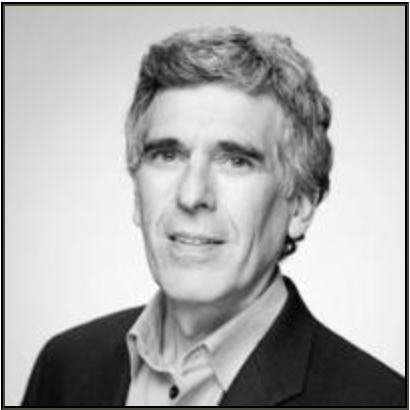
Norman Solomon is the national director of RootsAction.org and executive director of the Institute for Public Accuracy. The paperback edition of his latest book, War Made Invisible: How America Hides the Human Toll of Its Military Machine, includes an afterword about the Gaza war.
ZNetwork is funded solely through the generosity of its readers.
Donate




