


The Pentagon seems to have understood the risks posed to the continuity of United States dominance by social movements in Latin America. The option of militarizing societies serves two aims : it guarantees control of natural resources and protects governments so as to block social movements’ progress. In some countries like Colombia and Paraguay, both processes merge into a strategy using them as solid platforms from which to expand imperial control.
A visit in mid-July by the International Observer Mission of the Campaign for the De-militarization of the Americas (CADA) composed of 15 people from 8 countries was able to confirm both aspects in the field. The presence of troops from the US Southern Command carrying out 13 designated missions since July 1st 2005 thanks to immunity conceded to them by the Paraguayan parliament, has been widely reported by numerous media throughout the continent. Although the permanent, direct military presence hovers around 50 or so military personnel, the influence the Southern Command is gaining in Paraguay is much more important than the figures suggest.
In effect, US-Paraguay relations go much further and run from the possibility that the South American country might withdraw from Mercosur to sign a bilateral free trade treaty with Washington to the installation of a military base near the Triple Frontier, following the training of thousands of Paraguayan military personnel in anti-terrorist, anti-drugs operations.
However, the militarization of Paraguayan society is a much less visible process but with long term repercussions. 2004 was the tipping point. President Nicanor Duarte Frutos decreed the use of the armed forces in the streets to carry out internal security tasks in rural areas and at the same time promoted the creation of Citizen Security Councils, paramilitary organizations armed by the Ministry of the Interior. If the use of the military for police tasks is a grave development, the creation of the Security Councils marks an unprecedented move in the continent. It is true that the Colombian paramilitaries, formed forty years ago at the behest of US advisers, control a large part of the country and State apparatus; and that in Guatemala the paramilitaries played a significant role in the fight against the guerrillas and that in Peru the “rondas” civilian patrols armed by the army played a similar role. But in those three countries one might argue – from a “scorched earth” logic – that their wars led to the arming of genocidal paramilitary groups.
Paraguay’s case is different. Here, the paramilitaries have grown out of social conflict, from the struggle of the campesino movements for land and agrarian reform. And it has been the Paraguyan State that has created them. The big landowners took the first step ten years ago by creating the Committee for the Defence of Private Property. Now it is the very government, via the Interior Ministry, that has created the Citizen Security Councils, a parallel structure, armed by the State and protected by soya planters and big landowners. In the last decade, the area sown with genetically manipulated soya went from 800,000 hectares to 2 million hectares, taking up 64% of the country’s agricultural area. The soya frontier advances over communal lands and those of small farmers and has led to a dramatic clearance of rural working families from the land. When Alfredo Stroessner’s dictatorship fell in 1989, 67% of Paraguayans lived in rural areas , now barely 47% remain on the land. Around a million and a half Paraguayans live in Argentina, 50,000 in Spain. (1)
Soya’s advance was accompanied by the rise of the rural workers movement, gathered in two large organizations : the national Coordinating Table of Campesino Organizations (MCNOC), linked to Via Campesina and the National Rural workers Federation (FNC). Marches, roadblocks, land occupations and sit-ins in public buildings turned the rural workers movement into the most important in the country. The movements’ power was such that they managed, in 2002, to hold up neoliberal privatization policies and were able to settle thousands of families. But the Duarte Frutos government that took office in 2003 took a severe anti-popular and above all anti-rural workers line. With the police and the governing Colorado Party’s client networks of control overrun, hardline policies were imposed. One eloquent statistic :
the Citizen Security Councils today have 22,000 members, many of them recruited from the Colorado Party or from criminals, compared to just 9,000 police.
The rural worker’s movements have not given way despite the harrassment, persecution and abuses. Around 100 rural workers have been murdered by the paramilitary groups and the state security services, more than 2000 are on trial and have to present themselves weekly to the authorities, nor can they take part in public demonstrations. Meanwhile, the soya business continues to strangle the subsistence economy of rural working families, killing children with pesticide induced poisoning. The plans of the elites mean to continue clearing people from the land until the rural population drops to little more than 10%.
A hard battle for continental dominance is taking place in Paraguay. Stopping the installation of US military bases and reversing the presence of foreign military in that country will be an important step. But it will not happen without the effective demilitarization of a society that refuses to be turned into a platform for the US Southern Command and for agricultural big business.
Trnaslator’s note
1. Paraguay’s population in 2005 was estimated at just under 6.5 million people
Translated from Spanish into English by toni solo, a member of Tlaxcala (www.tlaxcala.es), the network of translators for linguistic diversity. This translation is Copyleft.

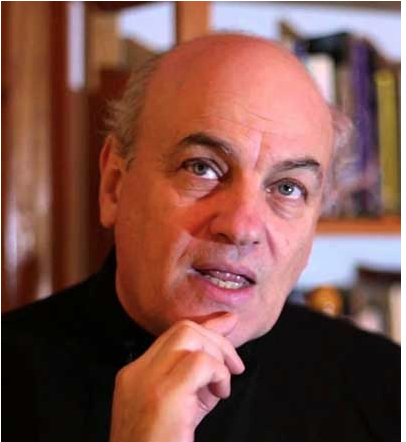
Raúl Zibechi (born January 25, 1952, in Montevideo, Uruguay) is a radio and print journalist, writer, researcher, militant, and political theorist. Between 1969-1973, as a student, he was a militant of the Frente Estudiantil Revolucionario (FER). In the '80s he began to publish in left newspapers and magazines. He focuses on social movements in Latin America and their relationships. As a popular educator he conducts workshops with social groups, particularly in urban peripheries and with peasants. He has published 18 books, almost all about concrete experiences of social movements. Three of his books have been translated into English: Dispersing power, Territories in resistance and The New Brazil (AK Press). He publishes regularly in La Jornada (Mexico), Gara (Spain) and other alternative media.
ZNetwork is funded solely through the generosity of its readers.
Donate




