


Visiting Russia, which I recently did, is a strange experience for someone coming from the Global North. As we know, most Russians have an entirely different reading of recent world history from most persons in the Global North. In addition, however, they are concerned about things other than what visitors expect them to be concerned about.
The one common assumption that transcends these differences is the fact that the occurrence of a sharp drop in world oil and gas prices combined with the embargo imposed by some countries on Russia has created an economic squeeze on Russian state expenditures and individual consumption.
In Russia today almost everyone across the political spectrum believes that the West, and the United States in particular, has conspired with some others – principally Saudi Arabia and Israel – to “punish” Russia for its actions and alleged misdeeds in pursuing what Russians regard as the legitimate defense of their national interests. The debate centers primarily on Ukraine, but includes as well to a lesser degree Syria and Iran. The conspiracy theory is probably a bit exaggerated, since the United States started developing its shale oil (a major factor in today’s world oversupply) already in 1973 as a response to the OPEC price rise.
Yet, one doesn’t hear much discussion of these foreign policy issues in Russia. This is probably because there is not too much dissent inside Russia concerning Russia’s official foreign policy positions, not even from persons or groups very critical of President Putin on other matters. What one hears discussed instead is how best to handle the acute budgetary shortfall that the Russian state is facing.
There are three basic positions. One is to reduce significantly state expenditures. We might call this the neoliberal option. It is espoused by the Minister of Finance. The second is to use the reserves still available to the Russian state, thus minimizing the need to reduce expenditures immediately. We might call this the social-democratic option. It is espoused by the Minister of Economic Development. The third is to use up one of the two sets of reserves but not the other. We might call this the midway option. This would ensure stability for probably eighteen months and is based on the hope that somehow the world price of oil and gas will begin to rise again by then and/or that the sanctions will be annulled or largely circumvented.
The remarkable thing is that all three positions are espoused within the relatively small group of decision-makers surrounding President Putin. So far, it seems that Putin himself is in the camp favoring the midway option. What is also remarkable is that this debate is quasi-public. At least, it is no secret to any Russian who follows the public statements of the protagonists as well as the leaks to a press that is more diverse than commentators in the West normally suggest.
There is however a lurking danger caused by this quasi-public debate. It is that Russian entrepreneurs, banks, and the general public (particularly the wealthier persons) panic, believing that an option they fear will prevail and that in consequence extensive withdrawals of resources would lead to a rush to the banks and major inflation. If there is a panic of this kind, then none of the options can succeed in enabling the state to survive the financial squeeze.
Hence there was great notice of a speech made by Prime Minister Dmitri Medvedev at the Gaidar Forum on January 14. Medvedev announced that the state was going to pursue the midway option. He asked everyone to rally around this option, precisely in order to squelch panic. Indeed he ended his speech by citing the famous saying of President Franklin Roosevelt in 1933: “The only thing we have to fear is fear itself.” Medvedev said that the Russian government is not afraid.
But will such a statement suffice to ensure that there is no panic? Medvedev’s speech however did not totally contain the panic. The debate about Medvedev’s pronouncement revealed that many persons and groups are not persuaded that there will not be a panic. There is what I would call a panic about panic.
Putin’s mode of containing the panic about panic is to pursue what he thinks is a carefully-measured strong and clear foreign policy. The decision to replace the so-called South Stream (a gas and oil Black Sea pipeline from Russia to Bulgaria that Bulgaria no longer will permit because of the sanctions) with a Turkish Stream (a different Black Sea pipeline going from Russia to Turkey) is a first such step. Both streams would hurt Ukraine by not sending Russia gas and oil via Ukraine and therefore eliminating Ukraine’s transit fees. However, the Turkish Stream is also intended to counteract the effect of sanctions (that led to Bulgaria’s change of position) and reward Turkey, now increasingly an ally of Russia.
A second step has been the decision to enter into accords with China and other countries to engage in currency transactions in their own currencies, thereby avoiding the fluctuations of the dollar. One of the resulting projects would be a pipeline across Siberia to Northeast Asia, financed heavily by China. This is a way of circumventing the sanctions.
A third step has been the just announced transmission of the S-300 air defense missile system to Iran. Long promised, Russia had cancelled the arrangement in 2010 as result of pressure from the West. Russia is now going to fulfil its initial promise. This serves to reinforce Russian support for Iran’s inclusion in the decision-making processes of West Asia. It both puts pressure on the United States and helps to check Saudi Arabia’s attempt to maintain itself as the key Sunni Arab state. Already, with the accession of King Salman, the press is full of discussion about the fragility of the Saudi position.
Finally, in Ukraine, the Russians pursue a careful policy. Not totally in control of the Donetsk-Luhansk autonomists, Russia is nonetheless making sure that the autonomists cannot be eliminated militarily. The Russian price for real peace is a commitment by NATO that Ukraine is not a potential member, about which there are different views within NATO. Everyone is playing a high risk game in Ukraine. My guess, and it is in large measure a guess, is that sanity will prevail and a political deal realized. I would say, watch Angela Merkel after the German elections. She (and Germany) want a deal but are not yet free to pursue it.

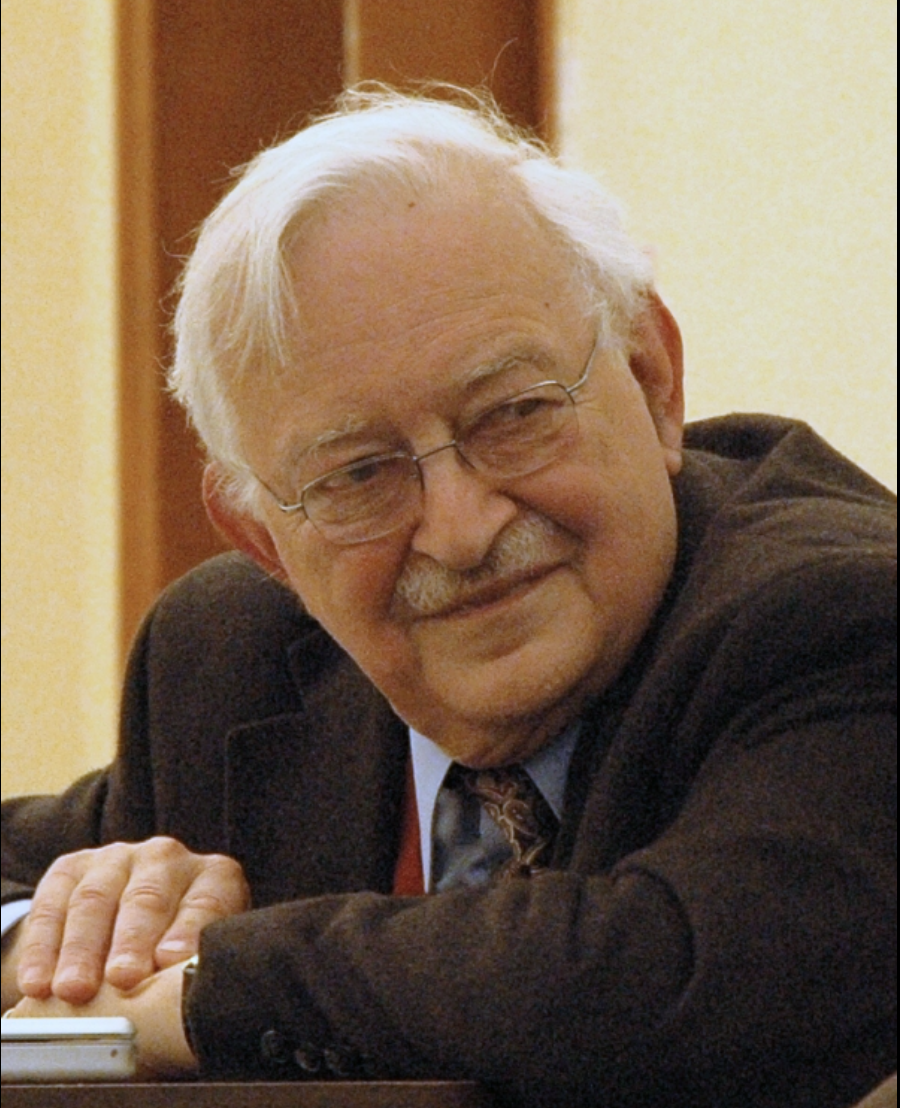
Immanuel Wallerstein (September 28, 1930 – August 31, 2019) was an American sociologist and economic historian. He is perhaps best known for his development of the general approach in sociology which led to the emergence of his world-systems approach. He was a Senior Research Scholar at Yale University from 2000 until his death in 2019, and published bimonthly syndicated commentaries through Agence Global on world affairs from October 1998 to July 2019. He was the 13th president of International Sociological Association (1994–1998). Politically, he considered himself on the "independent left" and was active in a variety of organizations. He argued that we are in the transition from our existing capitalist world-economy to some new system, and that the great political struggle of our time is about which new kind of systemic order will replace our existing one. A new systemic order could be better or worse, depending on our collective ability to push the worldwide decision in one direction or another. He believed that a crucial element in this is a vast debate about the kind of better system we wish to build, and saw the Reimagining Society Project as one of the ways to further this collective debate.
ZNetwork is funded solely through the generosity of its readers.
Donate




