

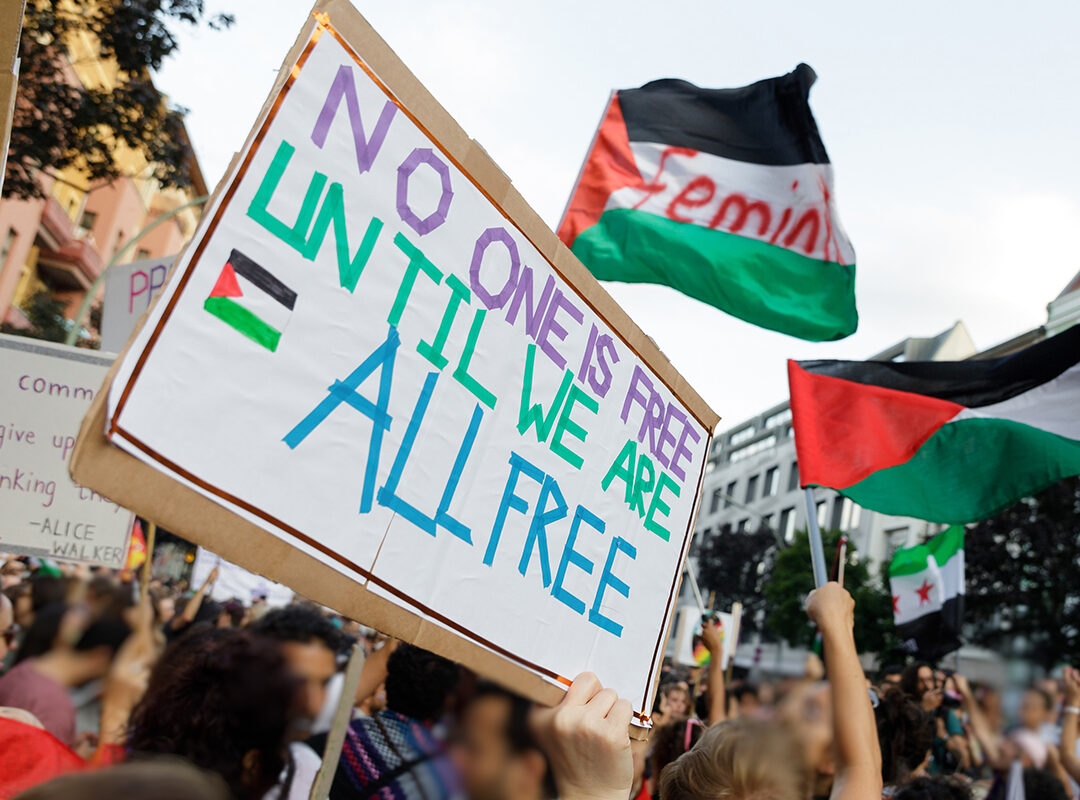
As workers around the world celebrate and recognize their efforts on May 1 — known globally as May Day or International Workers’ Day and celebrated in Palestine as Labor Day — this day passes in Palestine under a harsh economic reality that reflects a deepening crisis in the labor market and unprecedented levels of unemployment.
According to data from the Palestinian Central Bureau of Statistics, the unemployment rate in Palestine stands at around 27.5 percent, while it rises sharply among young people to nearly 40 percent, meaning that roughly one in every three young people is unable to find a job. In the Gaza Strip, estimates indicate that unemployment has reached alarming levels of around 78 percent, amid a widespread collapse in economic sectors and the halt of many productive activities.
In this context, Labor Day this year is not an occasion of celebration, but a moment that reflects the scale of the challenges facing Palestinian workers — the loss of job opportunities, declining incomes, and increasing living pressures that weigh heavily on families across different regions.
Behind these numbers, the crisis of the labor market in Palestine is reflected in daily lives of Palestinians — graduates searching for their first job opportunity, workers who have lost their sources of income, and employees facing the loss of the economic stability that once formed the foundation of their lives.
Unprecedented Challenges Facing the Palestinian Labor Market
A Ministry of Labor official explained that the Palestinian labor market faces unprecedented challenges due to severe economic deterioration and a declining ability to create new job opportunities amid the widespread closure of productive sectors and damage to many economic facilities. He noted that unemployment rates have risen significantly in recent periods, especially among young people and recent graduates, leading thousands of graduates to enter the labor market without sufficient available opportunities.
He added that the ministry is working within limited capacities to implement temporary employment programs and expand vocational training, along with efforts to support small- and medium-sized enterprises as one of the possible solutions to ease the crisis. However, these efforts remain insufficient in the face of the scale of the current crisis.
He further emphasized that the continuation of the current economic situation is increasing pressure on the labor market and pushing young people toward alternative or unstable forms of employment at a time when the Palestinian economy requires broader interventions and long-term measures to revive affected sectors.
Engineering Graduate in Gaza: Postponed Dreams Amid a Shrinking Labor Market
Ayman Abu Salama, a 28-year-old top engineering graduate from the Islamic University of Gaza, is one of many graduates who have been confronted with a reality very different from their post-graduation expectations. He said that one of his main goals since starting university was to secure a job in his field and build a stable professional future after years of study and effort, but the reality after graduation was far more difficult than expected. “I’ve applied to dozens of jobs, but I haven’t received any real response so far,” Abu Salama said. “I feel stuck in the same place, despite all the effort I put into my studies.”
He added that the recent war and the widespread destruction of infrastructure and facilities in the Gaza Strip have led to a significant decline in job opportunities, especially in engineering and construction-related fields, as many engineering institutions and offices were either destroyed or forced to shut down, sharply reducing employment prospects for new graduates.
Abu Salama said that he is still searching for a job without success, despite submitting numerous applications. He noted his frustration when he sees peers in other countries who graduated at the same time managing to enter the labor market and build their professional lives, while he remains stuck at the stage of searching for a first opportunity.
He said this reality affects him not only financially but also leaves a deep psychological impact on young people like him who have spent years in academic preparation, only to find themselves facing a closed labor market and extremely limited opportunities. “Sometimes I lose hope, but I keep trying because I have no other choice,” Abu Salama said.
A Goldsmith Who Lost His Home and Workshop After 25 Years of Work
Ghassan Abu Zayed, a goldsmith and workshop owner, lost his source of income and his home as a result of shelling. He is also my father. He began working in this field after returning from Iraq, where he learned the craft of goldsmithing, and later established his own workshop about 25 years ago.
Over the years, he equipped a fully functioning workshop with specialized machinery, some of which was imported from abroad, and produced various types of jewelry such as bracelets, necklaces, and rings. The workshop served as his primary source of income for many years.
His home and workshop were hit during recent Israeli bombings, turning the entire place into rubble along with all the equipment and tools used for his work.
“I worked in this profession for more than 20 years, and everything I built was gone in a moment,” he said. “It’s not just a financial loss — it’s the loss of a lifetime of hard work.”
My father said this destruction led to a complete halt of his profession of more than two decades, and he is no longer able to continue working in the same field due to the loss of equipment and the difficulty of rebuilding the workshop.
He pointed out that this is the reality for numerous professionals and small business owners in Palestine, many of whom have lost their workplaces and sources of income over the past years of war and genocide, directly affecting the labor market and living standards.
“Rebuilding is not easy, especially under the current conditions … starting from scratch feels impossible,” he said.
Labor Day in Palestine Is No Cause for Celebration This Year
Between official figures reflecting rising unemployment rates and individual stories documenting the loss of jobs and income sources, this year’s Labor Day comes in a very different context in Palestine. Rather than being a celebration of work and achievement, it reveals the difficult economic reality experienced by workers, graduates, and professionals alike.
The testimonies of those I spoke to highlight the scale of challenges facing the labor market — whether through limited opportunities, damaged projects, or the suspension of economic activities — making it harder than ever for Palestinians to find a job or stay employed.
While efforts to adapt to this reality continue, the future of work in Palestine and the ability of young people and workers to secure stable opportunities remains a question without an answer.
ZNetwork is funded solely through the generosity of its readers.
Donate




