

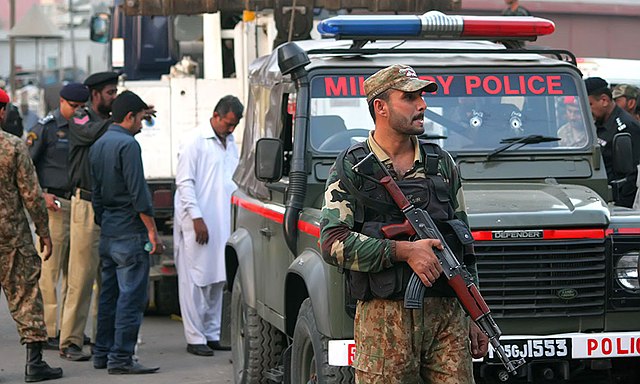
On Tuesday, as American aircraft struck Iran for a tenth consecutive night, Iran’s interior minister Eskandar Momeni flew to Islamabad. He was carrying a direct message from Iranian President Masoud Pezeshkian. When he arrived, he sat down with Pakistan’s army chief, Field Marshal Asim Munir.
Tehran is at war with the world’s most powerful military. Its list of trusted messengers is short. It chose Pakistan.
This is the part of the 2026 war that the daily coverage keeps walking past. The reigning story is a duel: American firepower against Iranian defiance, with the Gulf monarchies and Israel filling out the cast. The actor holding the quietest leverage, meanwhile, is a sanctioned, debt-heavy, non-Arab state that wants nothing the war can hand it, and both sides trust it for precisely that reason.
Pakistan is not a bystander to this war. It is the reason there was ever a pause in it. The memorandum of understanding that Prime Minister Shehbaz Sharif signed in June as mediator, the ceasefire that held through the spring, the shuttling between Washington and Tehran: all of it ran through a country neither combatant can afford to alienate.
Why Pakistan, and not one of the richer capitals lining up to host talks? Because Pakistan is the rare state both sides read as honest. It shares a 900-kilometre border with Iran and cannot wish the country away. It is Sunni-majority but never enlisted in the Saudi and Israeli project of isolating Tehran. It takes American money and American weapons, yet it declined to join anyone’s war. To Iran, that makes Islamabad a neighbor with no stake in its defeat. To Washington, it makes Islamabad a partner that can actually reach the other side. Very few governments on earth are trusted in both Tehran and the Oval Office on the same afternoon.
None of this is new. When Richard Nixon wanted to reach Mao in 1971 and had no way to speak to Beijing, he routed Henry Kissinger through Rawalpindi on a Pakistani flight. Pakistan was, in Kissinger’s own account, a friend to both sides. It has played switchboard ever since. It has been the channel to the Taliban in Doha, the back-line for messages nobody could send in daylight. Great powers keep a number for Islamabad because they keep needing it.
For 20 years, the Western commentariat filed Pakistan under one heading: problem. Then, last summer, Trump hosted Munir at the White House for lunch, the first serving Pakistani army chief received that way without ruling as a dictator, and told reporters that Pakistan knew Iran “better than most.” The label did not change because Pakistan changed. It changed because Washington finally needed what Pakistan could do.
The stakes are counted in barrels. Brent crude sits near $90, American pump prices have climbed to $4 a gallon with midterm elections months away, and the fighting keeps threatening the Strait of Hormuz, where roughly a fifth of the world’s oil moves. Iran struck a tanker there this week. The Houthis, Tehran’s allies in Yemen, have declared a maritime blockade of Saudi Arabia. Insurers are repricing every hull that transits the Gulf, and the cost lands in fuel bills and grocery prices from Karachi to Ohio. Every day the war runs, the world pays a toll. The only people working to shorten it are the mediators.
The map of the war is widening faster than the diplomacy can keep up. Iranian missiles have crossed into Jordanian airspace twice in two days, Kuwait says it intercepted drones aimed at its territory, and three more American service members are now dead. Each of those incidents is a door to a bigger war, and each one raises the price of the message only Pakistan seems able to deliver: stop before the war becomes uncontainable.
Here is what the vocabulary of great powers gets wrong. Mediation sounds like weakness, the consolation prize of a state too small to fight. It is the reverse. Real leverage is being the one actor both enemies need in the room. Riyadh and Abu Dhabi can write checks. Only Islamabad can carry a message that Tehran will accept and Washington will believe. That is a harder thing to buy, and Pakistan holds it without spending a dollar or firing a shot.
The work is also dangerous, which is the part that should earn Pakistan respect rather than suspicion. Qatari and Pakistani mediators floated a joint 10-day ceasefire package this week; if it collapses, Islamabad will own a share of the blame. Iran’s supreme leader Ali Khamenei was killed in February in the opening American and Israeli strike, leaving President Masoud Pezeshkian and the leadership in Tehran navigating an opaque decision-making environment. A middle power that wedges itself between a superpower and a wounded theocracy is one miscalculation from being blamed by both.
Pakistan keeps taking the call anyway, because indispensability is the only durable currency a state its size will ever hold, and it has learned to bank it. Standing in Washington, leverage over trade talks, a seat at a table it was long kept away from: this is what the diplomacy buys.
There is a lesson here that reaches past South Asia. The order that lectures the Global South about restraint and responsibility did not prevent this war and cannot end it. The institutions built to keep the peace have been reduced to issuing statements. The people actually trying to stop the bombing are a soldier from Rawalpindi and a foreign ministry in a small Gulf emirate. For a Western establishment used to owning the peace as well as the war, that is an uncomfortable truth.
So, watch the dateline on the next ceasefire, whenever it comes. It will not read Geneva or Vienna. It will read Islamabad. And the capitals that spent two decades trying to discipline Pakistan will have to make their peace with a harder truth: the road out of this war runs straight through Rawalpindi.
ZNetwork is funded solely through the generosity of its readers.
Donate




