


Pakistan’s February 8 general elections resulted in a split vote, with no party securing a clear national majority. Voting occurred for 366 national assembly seats and four provincial assemblies: Punjab, Sindh, Balochistan and Khyber Pakhtunkhwa. The vote was divided among various right-wing parties, indicating a significant shift in political dynamics. Initial results suggest Pakistan has voted against IMF policies and state repression.
Centrist right-wing party Pakistan Muslim League (Nawaz) (PML-N), backed by the military establishment, failed to resonate with voters. While PML-N retained its majority in the Punjab Assembly, Pakistan People’s Party (PPP) secured a sweeping victory in the Sindh Assembly. Meanwhile, the Balochistan assembly witnessed a split vote among several nationalist and federal parties and in Khyber Pakhtunkhwa, Pakistan Tehreek Insaaf (PTI) supported “independent” candidates dominated. Despite facing obstacles, such as the Election Commission of Pakistan’s refusal to allow the use of its election symbol due to alleged unfair internal elections, PTI-supported “independents” also emerged as the single largest political group at the national assembly.
The overall vote reflects a stance against IMF policies, which have led to unprecedented price hikes in Pakistan. These elections served as a clear repudiation of the implementers of IMF policies and those responsible for inflation and state coercion, particularly the Pakistan Democratic Movement (PDM) government, which had been in power for the past 16 months.
Furthermore, the vote signifies opposition to state repression, particularly against PTI, which is led by Imran Khan who faced several politically motivated convictions in the days leading up to the general election. Khan’s perceived victimisation mobilised voters against the military-backed PML-N. The return of three-time Prime Minister Mian Nawaz Sharif from self-imposed exile in Britain and the swift dismissal of all cases against him underscored this collusion.
Religious political parties experienced setbacks in these elections, with only Jamiat Ulema-e-Islam making notable gains. Tehreek Labeek secured 5-7% of the votes in each constituency, while Jamaat-e-Islami’s independent campaign failed to yield significant results.
The elections, delayed unconstitutionally for several months by the caretaker government that assumed power in August 2023, were evidently orchestrated to favour the PML-N.
The left-wing suffered due to the popularity of PTI, with most anti-military establishment and anti-IMF policy votes going to it. Left-wing candidates, including those from the Haqooq-e-Khalq Party, the Awami Workers Party and Barabri Party Pakistan failed to secure significant support or win seats. Notably, the national assembly seat won by Marxist Ali Wazir during the 2018 general elections was lost this time.
The elections were marred by widespread corruption, with all major political parties spending exorbitant sums to buy votes. The open sale of votes for up to 5000 Rupees ($18) further undermined the democratic process. Campaigns lacked substantive discussion on issues, with PTI focusing on condemning Khan’s sentencing, PML-N rallying around the slogan “Give Nawaz to Pakistan,” and PPP presenting Bilawal Bhutto as a national saviour.
The outcome underscores the dominance of right-wing ideologies, though the vote lacked fervour and was primarily a reaction to intra-right-wing conflicts rather than a clear division between left and right. This was not solely an anti-establishment vote, as PTI’s anti-establishment stance remains temporary and selective in its opposition to state oppression.
Unfortunately, the elections offer little hope for positive change, as the incoming government is poised to fast-track neoliberal policies, privatise state institutions and deepen class exploitation. The potential government under Nawaz Sharif’s leadership is expected to cosy up to the IMF and World Bank, prioritising corporate interests over public welfare. The rise of corporate farming, facilitated by PML-N and caretaker governments, is likely to exacerbate economic inequality while failing to address the needs of small farmers.
Although the left-wing participated to some extent, their influence was limited, with fewer than 40 candidates contesting. Despite this setback, parties such as Haqooq Khalq vow to continue strengthening their base among the working class through parliamentary intervention. The incoming government will undoubtedly be capitalist and right-wing, focused on counter-reforms rather than radical change. The left is committed to intensifying the movement of the working class, small farmers, and common people against this oppressive regime.
Farooq Tariq is General Secretary of Pakistan Kissan Rabita Committee and President of the Haqooq-e-Khalq Party.

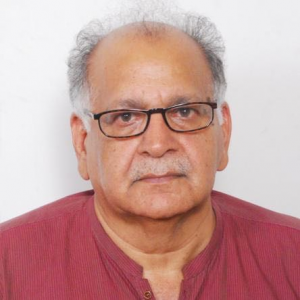
Farooq Tariq is the General Secretary of the Pakistan Kissan Rabita Committee, a network of 26 peasant organizations and a coalition member of the international platform La Via Campesina.
ZNetwork is funded solely through the generosity of its readers.
Donate




