


In recent days, the already tenuous political situation in Pakistan has made a turn toward the worse. Musharraf’s government clamped down first on the judiciary and other opponents in the government in the first days after his declaration of martial law. More recently, those same forces have prevented even the liberal bourgeois opposition represented by Benazir Bhutto from gathering and arrested several thousand members of the opposition. In addition, Musharraf has gone on record as stating that many of those arrested face capitol charges. One element of the secular opposition to Musharraf is the Labour Party of Pakistan, a democratic socialist organization launched in 1997 from various elements of the Pakistani Left. What follows is an exchange conducted over the past couple of days (November 9-10, 2007) between myself and Farooq Tariq, secretary general of the Party. (Thanks to Tariq Ali for putting me in contact with Mr. Tariq.-Ron)
Ron: Hello. To begin, can you please identify yourself and generally describe your politics and the politics of the Pakistan Labour Party? Also, how many members and supporters do you estimate the Labour Party has?
Farooq: I am Farooq Tariq, secretary general, Labour Party Pakistan (LPP). I am an activist since my student days at Punjab University back in mid 1970s. I became active as left activist and left used to be strong on campuses those days. Our main rivals were religious fundamentalists. When Zia military dictatorship was imposed, I went in exile. Spent some eight years in Holland and England. There we built Struggle Group that got active in Benazir Bhutto’s Pakistan Peoples Party. In 1986, I moved back to Pakistan as situation improved in Pakistan and Struggle Group had possibility to get active from Pakistani soil itself. After Benazir’s first stint in power, Struggle Group with a perspective that PPP would now on serve only ruling classes, left PPP and began campaigning for an independent workers party. After building a good trade union base, Labour Party Pakistan (LPP )was launched in 1997. LPP wants a democratic socialist Pakistan and is a Marxist organisation that draws inspiration from, among others, Russian revolutionary Leon Trotsky.
We have a membership of over 3,000. One of the eight big trade union federations (NTUF) in Pakistan is LPP’s sympathetic body. The NTUF (National Trade Union Federation) represents over hundred thousand industrial workers. We run a Urdu weekly (www.jeddojuhd.com), only left weekly published in Pakistan. Our woman members set up Women Working Help Line (WWHL) that has a membership of almost two thousands. Our youth front has some modest success in last two years while our student base remains almost non-existent.
Ron: What city are you writing from? Have there been protesters in the streets in that city?
Farooq: I am underground since the imposition of Emergency. Mostly, I have been in Lahore and certain towns in northern Punjab.
Ron: What is the make up of the protesters in Pakistan right now? The US newspapers describe the majority of the protesters as being lawyers and NGO activists. Is this so? What are the demands of the protests?
Farooq: Initially, it was advocates (lawyers), left and human rights activists. But the situation has changed in last three days as Benazir Bhutto has declared her opposition. Yesterday, PPP workers fought pitched battles with police in Rawalpindi. PPP claims that 5000 of its workers were arrested across Pakistan. Also, government has arrested members of Justice Party of former cricket-star Imran Khan and Muslim League of exiled prime minister Nawaz Sharif. However, Islamists parties are not either joining the movement nor being targeted by the regime. Their opposition of regime remains restricted to press statement.
Ron: Do you foresee the protests continuing and perhaps growing in size?
Farooq: There is the potential. Big possibility. This past summer, it took sometime before masses took to roads. Masses hesitate at first but when they see a leadership fighting, they most likely join it. One reason is also media black out. TV channels are off air while print media is censored. Many don’t know whats happening. Often, expat Pakistanis are more informed than us here.
Ron: What security forces are arresting the opposition? Is it the Army, the ISI, or other police?
Farooq: It is police. But there have been reports where known arrested activists have been handed over to ISI.
Ron: What role does Benazir Bhutto play in Pakistani politics? Does the Labour Party consider her role a positive one? Do they support her at all? What do you make of her arrest?
Farooq: The good news in last three days was the changing attitude of Benazir Bhutto towards present military regime. While in exile, she made a deal to share power with military regime. This deal was brokered by USA. Her return on October 18 was also a US-backed move. But while in Pakistan , there was suicidal attack on her rally leaving over 200 dead. There was a mass negative campaign by the chief minister of Punjab against Benazir Bhutto. Then Musharraf imposed the Emergency on 3rd November without her consent apparently. Most of the advocates arrested after Emergency were from her party. It was all too much. This built a pressure. In first three days, PPP activists were not arrested but it all changed with Benazir coming openly against the military regime on Emergency.
Her changing attitude was welcomed by LPP in press. I, on LPP’s behalf, announced in the media that LPP would join the Long March planned for 13th November by PPP from Lahore to Islamabad . Although we were very critical of polices she pursued in last few months that is to say her power sharing formula with Musharraf regime, her soft corner for the regime.
Her recent dealings have also given currency to conspiracy theories. Many say that her opposition is just fake and all is done in collaboration with the regime in order to restore Benazir’’ image as militant leader. LPP don’t agree with such so-called conspiracies theories about Benazir and Musharraf being friends. Benazir’s opposition of the regime has meant arrests of thousands of PPP activists and their houses raided all across Pakistan.
Ron: I understand the situation constantly changes, but do you believe the elections will be held in February 2008? If they are, do you think they will be free and fair? Why or why not?
Farooq: In view of the unfolding movement, and international pressure, yes we can hope for that. But fair and free elections are out of question. (Any) Democracy movement will have to fight a long war before we are able to have a democracy strong enough that ensures a free election.
Ron: What, in your opinion, is the cause of the unrest in Pakistan? How much of a role do religious extremists play? How much of a role does the Army play? How is this martial law similar to previous episodes of martial law in Pakistani history?
Farooq: In the first place, it is the mass impoverishment of masses under Musharraf regime. Struggle for bread and butter has become even hard. Utility bills, price hike and jobless are biggest issues. This is the root cause of unrest. Also, (the) military has become a military-industrial complex that is acting like a mafia. There is resentment against that. Then you have US presence in the region leading to instability in Pakistan. Musharraf’s pro-US policies are universally unpopular.
Musharraf’s military rule is unlike Zia dictatorship in its mask. Musharraf claims enlightenment and moderation. Zia Islamised Pakistan. But both these dictatorships, like earlier military regimesm have been pro-US.
On (the) internal front, all have been repressive when faced with opposition. Every time military takes over, the military increases its industrial base, thus leading to more corruption.
Ron: What do you think will be the result of the Emergency rule? How long do you think it will be in place?
Farooq: General Musharaff would not have thought of the political scenario that has emerged the imposition of Emergency on 3rd November. His hopes for normalcy have been dashed despite a vicious repression against the advocates and political activists. More unpleasant surprises will come in future for the military regime that was used to a rather stable political control until now.
After advocates, now students are emerging on the political opposition to the military regime. Demonstrations took place on 7th November 2007 in certain public and private universities in the main cities of Pakistan. “Student power rises from slumber” was the headline of daily The News International on 8th November.
The media organization of the bosses and employees are also joining the mass movement after unprecedented repression against the electronic and print media by the regime.
It was a black Monday on 5th November for the stock exchanges in Pakistan. The stock exchange crash resulted in a net loss of four billion dollars in one day, unprecedented in last 17 years.
His imperialist backers like US, UK and European Union have been forced to condemn Emergency at least in word for the first time since 9/11. Any gross violation of human rights in Pakistan since 9/11, was always an internal matter for the US imperialism. Even Australian imperialism is condemning the sorry state of affairs of Pakistan and terming Musharraf “a dictator” for the first time, a fact Pakistani people knew for eight years. LPP perspective is that such an isolated regime can not last long. The opposition movement is on and is growing.
Ron: Is there any other information or thoughts you wish to provide the readers?
Farooq: The opposition to military regime will be strengthened by the active solidarity of our friends and comrades outside Pakistan. The pickets of the Pakistan embassies all over the world will be one the most effective way of opposition. It is time to show international solidarity.
Ron: Thanks you for your time.

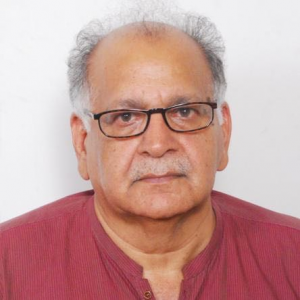
Farooq Tariq is the General Secretary of the Pakistan Kissan Rabita Committee, a network of 26 peasant organizations and a coalition member of the international platform La Via Campesina.
ZNetwork is funded solely through the generosity of its readers.
Donate




