


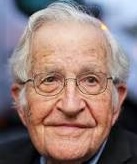
AMY GOODMAN: We turn to part two of our conversation with MIT professor, world-renowned political dissident, linguist, author, Noam Chomsky. I was joined in this interview by Democracy Now! producer Aaron Maté. We began by asking him about Libya.
NOAM CHOMSKY: Well, there are actually two major issues with regard to Libya. The first one was, was it appropriate to initiate and then to implement the U.N. resolution, U.N. 1973, which called for a no-fly zone and protection of civilians? That’s first question. Second question, was it appropriate for the—basically the imperial triumvirate, the traditional imperial states—U.S., Britain and France—was it appropriate for them instantly to reject the resolution that they had gotten through the Security Council and to simply become pretty much the air force for one of the sides in the civil war, the rebel side? Those are two quite separate issues.
My own feeling was that you could have made a case for a no-fly zone and protection of civilians, but I think it’s much harder to make a case for direct participation in a civil war and undercutting of possible options that were supported by almost the entire world. The African country—the African Union, the so-called BRICS countries—Brazil, Russia, India, China, South Africa—you know, the major developing countries, non-aligned countries, almost entirely were pressing for some kind of negotiated settlement, not just taking part—participating on the rebel side in the war. Well, was that the right thing to do or not? A lot of questions to ask. If, according to the Transitional National Council, the rebel quasi-government, about 30,000 people have been killed, that’s not slight.
Right now there’s a major attack going on on—against the bases of the largest tribe in Libya. NATO’s bombing—you know, the triumvirate is bombing, the rebels are attacking. Who knows what’s going to happen there? They’re already—it’s a very complex situation. Very few people understand it. It’s a tribal society. The western tribes, the ones that pretty much conquered Tripoli, although the people in Tripoli say they did it themselves, those tribes are one group. Cyrenaica, the eastern coastal regions, have been—that’s where the Transitional National Council is centered—have been pretty different from tribal Libya for a long time, way back to the colonial period. They were very anti-Gaddafi. There are other tribes. The loyalty and the commitments of the other tribal groups is pretty much unknown. It could turn into a—I mean, one hopes for the best, but the seeds are there for pretty ugly conflicts and confrontations.
I should say, I was kind of struck by the fact that the energy corporations didn’t skip a beat. I mean, the day that troops were—that rebel forces were—western tribes were beginning to approaching Tripoli, that day, the New York Times business section, the lead article had a headline like, you know, "Oil Companies Scramble for Contracts" or something like that. And it just hasn’t been hidden that they’re very eager to assure that they get their hands on the loot. What’s important in Libya is, first of all, it has a good deal of oil. A lot of the country is unexplored; there may be a lot more. And it’s very high-quality oil, so very valuable. There are some reasons to anticipate that it might turn out not too badly, but it’s—I think it would be a very rash person who would try to make a prediction now.
ZNetwork is funded solely through the generosity of its readers.
Donate

