


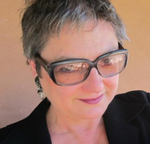
One Tuesday every other month Yvonne Newkirk rises at 3:30 A.M. to catch a 5 A.M. Philadelphia bus that takes her three-and-a-half hours northwest to a medium/maximum security prison in Muncy, Pennsylvania, where she visits her daughter, imprisoned for life without parole.
When Newkirk arrived for her mid-September visit, she discovered that the food vending machines, which she and other families rely on for sustenance during the 8:30 AM to 2:30 PM visiting hours, were empty. No other accommodations were made for food, and prison authorities told the families that may be the case for the next three months.
“They said it was a health issue, because of drugs entering the prisons statewide, something unsanitary in the machines,” Newkirk said. “But then a guard ate a Kit-Kat bar in front of us. It was a punishment.”
Newkirk was addressing a “Poor People’s Hearing in Harrisburg,” on November 1, part of the Pennsylvania’s ongoing efforts related to the Poor People’s Campaign: A National Call for a Moral Revival. The national grassroots campaign led by poor people in 40 states aims to change a distorted narrative that villainizes and criminalizes low-income people in the United States.
“The ‘No Food Policy’ is really hard on diabetics, the elderly, children, and those on medications,” said Newkirk. “Quite a few inmates are advising family members not to visit.”
The goal of the Poor People’s Hearings is to provide a platform for people afflicted with poverty to tell their own stories about the burdens that come with being poor.
In 2013 Jennina Gorman lost her five children after fleeing domestic violence. What was supposed to be a few weeks of foster care to allow her to deal with a roach infestation has turned into five years of spinning her wheels in an absurd bureaucratic rabbit hole. Adding insult to injury, her wages are garnished to pay for the foster care of her children, and though she says she has toed all their lines, she’s about to lose two of her children to adoption.
“The Court has refused to acknowledge my children’s Native heritage and the protections granted to us by The Indian Child Welfare Act,” said Gorman. “My children have a right to live with their family. I will never stop fighting for my children, I will never stop fighting for my family.”
Both Gorman, who is a member of Put People First! PA, and Newkirk, who is a member of Coalition Against Death by Incarceration, have found a political home in the growing alliance of organizations and individuals that comprise the Pennsylvania Poor People’s Campaign. Newkirk is working against policies that as she puts it, “test the very fiber of life, decrease human rights, and lower the dignity of some and the health of others.”
Also speaking at the hearing was Borja Gutiérrez, co-chair and political education coordinator for the Campaign. He summarized the gains of the group’s “Phase I,” which saw 1,500 people participate in six weeks of nonviolent civil disobedience actions at the Pennsylvania State Capitol. Seventy-six people were arrested.
Those actions gave people a “greater unity, shared experience and sense of purpose,” Gutiérrez said. “We gained knowledge of what is possible, and a new imagination of what could and should be.”
In the future, the campaign will build on these strengths, organizers, say by, engaging in deep dive organizing, mobilizing, base-building, and outreach.
“We’re establishing real bonds with the communities that we live in, leaving behind the shallow tactics of traditional, transactional politics,” Gutiérrez explained. “We are working to build a new America with the people, instead of without them.”
Key issues Gutiérrez lists are lack of living wages, healthcare, affordable housing, clean water and access to healthy food, voting rights, and gerrymandering, immigration, family unity and equitable justice. Political education grounds the contemporary moment in historic worker struggles.
Chapter co-chair Nijmie Zakkiyyah Dzurinko spoke of how people in the past have overcome “divide-and-conquer” strategies. “There’s a ton of history in Pennsylvania including the presence of the Underground Railroad, organizing in coal country and Mother Jones.”
The organizers say the 2018 midterms will be the last election cycle in which their issues are not meaningfully addressed.
Tammy Rojas is a full time worker, living paycheck to paycheck and receiving Medicaid.
“Between the hoops we have to jump through to get Medicaid and keep it along with the constant cuts to it, we, the poor and dispossessed, are suffering” she testified. She detailed the adverse health effects that she herself has experienced due to neglect, inconsistency of care, and added stress of being subject to a dehumanizing process in which accidental administrative mistakes result in lapses of coverage. Rojas told the hearing, which was streamed online, about her advanced periodontal disease, a painfully inflamed foot, and an untreated autoimmune disease.
“By introducing me to this campaign they have saved my life,” Rojas said of the campaign.” I truly believe with all my heart and soul that it will be the poor and dispossessed of this nation that will save us from self destruction.”
Dzurinko agrees. In her view, unless things change the poor of today preview the position of the middle class tomorrow.
“The poor and dispossessed have the least stake in the status quo and the most understanding of the depth of the issues we face,” Dzurinko said.
The chapter is planning an organizing tour for the coming year focused on Northern Pennsylvania.

ZNetwork is funded solely through the generosity of its readers.
Donate




