


Source: Informed Comment
The popular story about Thanksgiving is an environmental parable that we would do well to remember today. It was a harvest festival in 1621, participated in by the 50 (out of 100) survivors at Plymouth Plantation and 90 Native Americans. Some of these latter, such as Squanto, had shared with the undocumented aliens arriving in Wampanoag territory their local techniques of fishing and corn farming. In some subsequent years there were droughts that threatened the colony.
The pilgrims faced a harsher climate than had Leif Erikson when he came to North America during the European medieval warming period (900-1250). From 1550 to 1850, temperatures in the Northern Hemisphere fell by an average of about 1.3 degrees F (1 degree C.). This fall in temperature was exacerbated in the 1500s and 1600s by a slight decrease in atmospheric carbon of 6 to 10 parts per million. Stanford University geochemist Richard Nevle has argued that the great die-off of Native Americans, who were exposed to European diseases for which they had no antibodies, contributed to this decrease of carbon dioxide and fall in temperature. They ceased burning trees for fuel, and the forests recovered, with millions of new trees absorbing CO2.
Science News explains:
“By the end of the 15th century, between 40 million and 100 million people are thought to have been living in the Americas. Many of them burned trees to make room for crops, leaving behind charcoal deposits that have been found in the soils of Mexico, Nicaragua and other countries.
About 500 years ago, this charcoal accumulation plummeted as the people themselves disappeared. Smallpox, diphtheria and other diseases from Europe ultimately wiped out as much as 90 percent of the indigenous population.
Trees returned, reforesting an area at least the size of California, Nevle estimated. This new growth could have soaked up between 2 billion and 17 billion metric tons of carbon dioxide from the air.”
That is, the cold winters that challenged the English immigrants (and which they played down in their letters back home) had in part been caused by the very European influx of which they were a part!
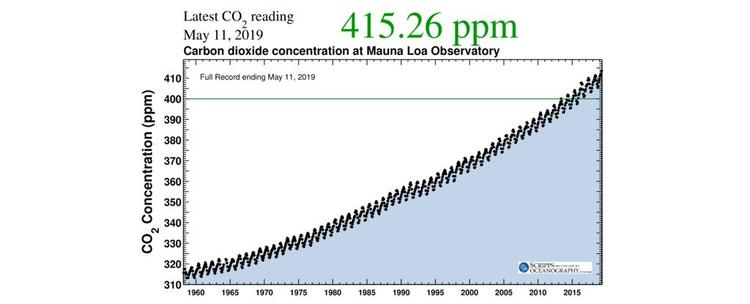
From about 1750, however, Europeans started substantially increasing their burning of wood and coal so as to drive steam engines and make the industrial revolution. In that year, there were roughly 278 parts per million of carbon dioxide in the atmosphere and it was relatively cold. This past spring, 2019, we hit 415 ppm of CO2 in the atmosphere for the first time in human history and actually for the first time in millions of years. It is on average over 2 degrees F. (1.5 degrees C.) warmer now than then.

If the Pilgrims faced Coldworld and its weather and agricultural challenges, today we face Hotworld. Just as they looked to the Native Americans for cues on how to survive in that cold environment, we should look at indigenous peoples’ current environmental initiatives to understand how to avoid heating the earth more than the further nearly 4 degrees F. that we already certainly will. (4 degrees F. is a global average, including the oceans–which are cold– and some places will experience a much greater increase in heat than that).
Native leaders from the Pine Ridge reservation are dedicated to decolonizing green energy and “greening the rez through solar panels,” ending a dependence on coal. Henry Red Cloud has formed a non-profit for the provision of panels to residents, 40% of whom still lack electricity.
The Oglala Sioux and other tribes are banding together around a 500 megawatt wind farm to provide green electricity. They also have launched a lawsuit to stop oil pipelines from North Dakota. Petroleum when burned produces carbon dioxide, a greenhouse gas that stops the sun’s heat from escaping back out to space and so heats up the earth.
The Navajo, partnering with the Salt River Project, are planning 500 megawatts of new solar power for the reservation, after a successful trial of the Kayenta 1 solar project. The Navajo have closed their coal plant, massively reducing their carbon footprint. But they need to train the former coal workers as solar panel installers to replace the jobs lost.
The Sioux and the Navajo are our modern-day Squantos, teaching us how to live sustainably in a North America they have inhabited for thousands of years longer than have post-Columbus arrivals. The Pilgrims, despite their conviction of European superiority, were humble enough to learn what they could from the natives, which was the only way they could survive. Can we be as humble, today?
We can make our Thanksgivings greener and greener in coming years.
We cannot address the climate emergency without large-scale, government-led changes in big infrastructure. The most important thing we can do is to vote in politicians who will in turn support investments in solar, wind, batteries, mass transit and electric vehicles. And, we need to get out there and demonstrate to keep the heat on elected officials.
But it is good for morale for us also to try to do what we can as individuals in the meantime.
We can make sure our homes are insulated, which will cut down on our fuel costs and carbon production, and will make them more cozy for guests.
We can put solar panels on our homes where we are homeowners, to generate electricity to run the television and other appliances for our family and guests.
Those who go to church, synagogue or mosque on Thanksgiving can make sure that their religious edifices are powered by solar panels. A temple that burns fossil fuels is paying dues to the devil, not glorifying the God of wisdom who commands good stewardship of earth.
We can drive to the homes of our family and friends for the dinner in electric cars or plug-in hybrids, fueled from the rooftop solar panels (which are falling steeply in price). If we fly, we can buy carbon offsets or eat vegetarian often enough to make up for it.
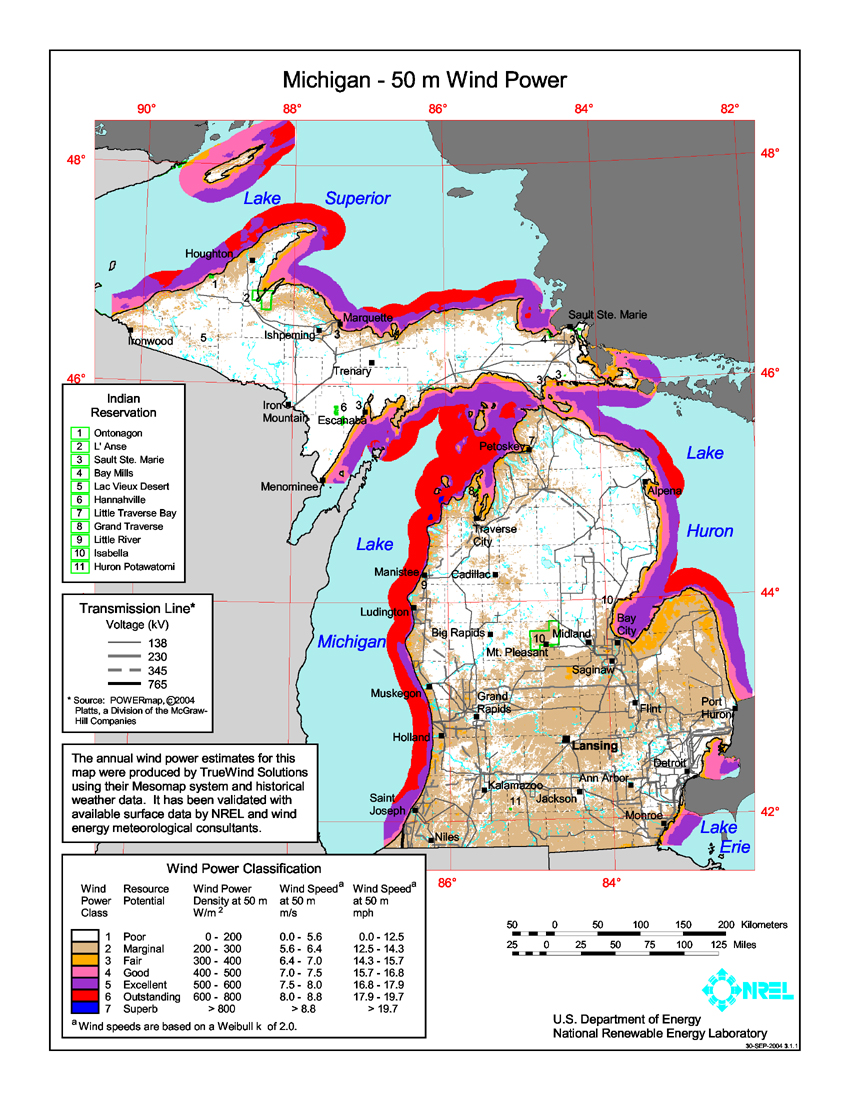
We can lobby our electric utility to turn to wind turbines, as Iowa and Texas increasingly have, which supplements the solar generation. Some 37% of Iowa’s electricity came from wind in 2018. Not all states are equally blessed with its wind resources. But Michigan, e.g., does have promising wind generation areas in the Thumb and on the Lake Michigan shore, which it has quite shamefully so far done almost nothing with.
We can avoid beef, the most carbon-intensive protein (not so hard, since who eats beef on Thanksgiving?) and can try to buy local produce to prepare the meal.
Some will say these steps are not enough; but they are more than most Americans have undertaken and would be a good start.
Thanksgiving in the American popular tradition hasn’t only been about being thankful for food abundance. It has been gratitude for survival and adaptation in an alien clime. We are all now entering an alien clime, of a warming globe– a world hotter than it has been since the mid-Pliocene some 3 million years ago, when the seas were 25 yards/ meters higher and the northern hemisphere 10-20 degrees hotter than now (it had 400 ppm of carbon dioxide in its atmosphere too). Survival and adaptation require us now to change a lot of habits and become sustainable, and ASAP. Like the Pilgrims, half of whom died in their first year, we face an emergency.
Juan Cole is the founder and chief editor of Informed Comment and Richard P. Mitchell Professor of History at the University of Michigan. He is author of, among many other books, Muhammad: Prophet of Peace amid the Clash of Empires. Follow him at @jricole.


Juan R. I. Cole is Richard P. Mitchell Collegiate Professor of History at the University of Michigan. For three and a half decades, he has sought to put the relationship of the West and the Muslim world in historical context, and he has written widely about Egypt, Iran, Iraq, and South Asia. His books include Muhammad: Prophet of Peace Amid the Clash of Empires; The New Arabs: How the Millennial Generation is Changing the Middle East; Engaging the Muslim World; and Napoleon’s Egypt: Invading the Middle East.
ZNetwork is funded solely through the generosity of its readers.
Donate




