


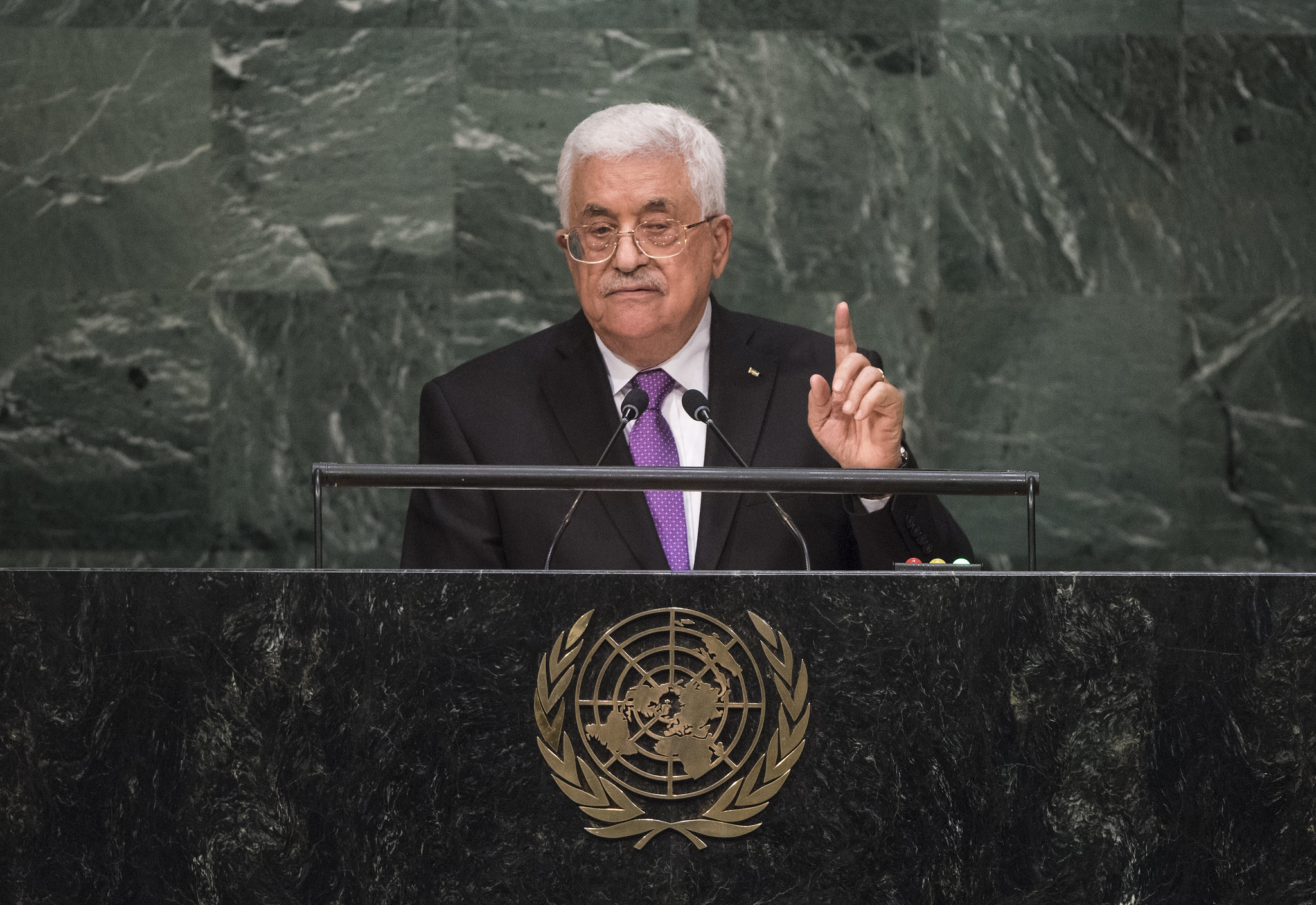
Rarely does the Palestinian ambassador to the United Nations make an official remark expressing happiness over any UN proceeding concerning the Israeli occupation of Palestine.
Indeed, the Palestinian Ambassador Riyad Mansour is “very happy that there was a very strong united message from the Security Council against the illegal, unilateral measure” undertaken by the Israeli government.
The ‘measure’ is a specific reference to a decision, on February 12, by the far-right government of Israeli Prime Minister Benjamin Netanyahu to construct 10,000 new housing units in nine illegal Jewish settlements in the Occupied Palestinian West Bank.
Expectedly, Netanyahu was angered by the supposedly ‘very strong united message’ emanating from an institution that is hardly known for its meaningful action regarding international conflicts, especially in the Palestinian-Israeli case.
Mansour’s happiness may be justified from some people’s perspective, especially as we seldom witness a strongly worded position by the UNSC that is both critical of Israel and wholly embraced by the United States. The latter has used the veto power 53 times since 1972 – per UN count – to block UNSC draft resolutions that are critical of Israel.
However, on examination of the context of the latest UN statement on Israel and Palestine, there is little reason for Mansour’s excitement. The UN statement in question is just that: a statement, with no tangible value and no legal repercussions.
This statement could have been meaningful if the language had remained unchanged from its original draft. Not a draft of the statement itself, but of a binding UN resolution that was introduced on February 15 by the UAE Ambassador.
Reuters revealed that the draft resolution would have demanded that Israel “immediately and completely cease all settlement activities in the Occupied Palestinian Territory.” That resolution – and its strong language – was scrapped under pressure from the US and was replaced by a mere statement that “reiterates” the Security Council’s position that “continuing Israeli settlement activities are dangerously imperiling the viability of the two-state solution based on the 1967 lines.”
The statement also expressed “deep concern”, actually, “dismay” with Israel’s February 12 announcement.
Netanyanu’s angry response was mostly intended for public consumption in Israel, and to keep his far-right government allies in check; after all, the conversion of the resolution into a statement, and the watering down of the language were all carried out following a prior agreement among the US, Israel and the PA. In fact, the Aqaba conference held on February 26 is a confirmation that that agreement has indeed taken place. Therefore, the statement should not have come as a surprise to the Israeli prime minister.
Moreover, US media spoke openly about a deal, which was mediated by US Secretary of State Antony Blinken. The reason behind the deal, initially, was to avert a “potential crisis”, which would have resulted from the US vetoing the resolution. According to the Associated Press, such a veto “would have angered Palestinian supporters at a time that the US and its western allies are trying to gain international support against Russia.”
But there is another reason behind the Washingtron’s sense of urgency. In December 2016, then US Ambassador to the UN, Susan Rice, refrained from vetoing a similar UNSC resolution that strongly condemned Israel’s illegal settlement activities. This occurred less than a month before the end of Barack Obama’s second term in the White House. For Palestinians, the resolution was too little, too late. For Israel, it was an unforgivable betrayal. To appease Tel Aviv, the Trump Administration gave the UN post to Nikki Haley, one of the most ardent supporters of Israel.
Though another US veto would have raised a few eyebrows, it would have presented a major opportunity for the strong pro-Palestine camp at the UN to challenge US hegemony over the matter of the Israeli occupation of Palestine; it would have also deferred the issue to the UN General Assembly and other UN-related organizations.
Even more interesting, according to the Blinken-mediated agreement – reported by AP, Reuters, Axios and others – Palestinians and Israelis would have to refrain from unilateral actions. Israel would freeze all settlement activities until August, and Palestinians would not “pursue action against Israel at the UN and other international bodies such as the World Court, the International Criminal Court and the UN Human Rights Council.” This was the gist of the agreement at the US-sponsored Aqaba meeting as well.
While Palestinians are likely to abide by this understanding – since they continue to seek US financial handouts and political validation – Israel will most likely refuse; in fact, practically, they already have.
Though the agreement had reportedly stipulated that Israel would not stage major attacks on Palestinian cities, only two days later, on February 22, Israel raided the West Bank city of Nablus. It killed 11 Palestinians and wounded 102 others, including two elderly men and a child.
A settlement freeze is almost impossible. Netanyahu’s extremist government is mostly unified by their common understanding that settlements must be kept in constant expansion. Any change to this understanding would certainly mean a collapse of one of Israel’s most stable governments in years.
Therefore, why, then, is Mansour “very happy”?
The answer stems from the fact that the PA’s credibility among Palestinians is at an all-time low. Mistrust, if not outright disdain, of Mahmoud Abbas and his Authority, is one of the main reasons behind the brewing armed rebellion against the Israeli occupation. Decades of promises that justice will eventually arrive through US-mediated talks have culminated in nothing, thus Palestinians are developing their own alternative resistance strategies.
The UN statement was marketed by PA-controlled media in Palestine as a victory for Palestinian diplomacy. Thus, Mansour’s happiness. But this euphoria was short-lived.
The Israeli massacre in Nablus left no doubt that Netanyahu will not even respect a promise he made to his own benefactors in Washington. This takes us back to square one: where Israel refuses to respect international law, the US refuses to allow the international community to hold Israel accountable, and where the PA claims another false victory in its supposed quest for the liberation of Palestine.
ZNetwork is funded solely through the generosity of its readers.
Donate

