


*NAJAF, Iraq, Jan 31 (IPS) – Iraqi government lies over the killing of hundreds of Shias in an attack on Sunday stand exposed by independent investigations carried out by IPS in Iraq.*
Conflicting reports had arisen earlier on how and why a huge battle broke out around the small village Zarqa, located just a few kilometres northeast of the Shia holy city Najaf, which is 90 km south of Baghdad.
One thing certain is that when the smoke cleared, more than 200 people lay dead after more than half a day of fighting Sunday Jan. 28. A U.S. helicopter was shot down, killing two soldiers. Twenty-five members of the Iraqi security force were also killed.
“We were going to conduct the usual ceremonies that we conduct every year when we were attacked by Iraqi soldiers,” Jabbar al-Hatami, a leader of the al-Hatami Shia Arab tribe told IPS.
“We thought it was one of the usual mistakes of the Iraqi army killing civilians, so we advanced to explain to the soldiers that they killed five of us for no reason. But we were surprised by more gunfire from the soldiers.”
The confrontation took place on the Shia holiday of Ashura which commemorates Imam Hussein, grandson of the prophet Muhammad and the most revered of Shia saints. Emotions run high at this time, and self-flagellation in public is the norm.
Many southern Shia Arabs do not follow Iranian-born cleric Ayatollah Ali al-Sistani. They believe the religious leadership should be kept in the hands of Arab clerics. Al-Hatami and al-Khazaali are two major tribes that do not follow Sistani.
Tribal members from both believe the attack was launched by the central government of Baghdad to stifle growing Shia-Sunni unity in the area.
“Our convoy was close to the al-Hatami convoy on the way to Najaf when we heard the massive shooting, and so we ran to help them because our tribe and theirs are bound with a strong alliance,” a 45-year-old man who asked to be referred to as Ahmed told IPS.
Ahmed, a member of the al-Khazali tribe said “our two tribes have a strong belief that Iranians are provoking sectarian war in Iraq which is against the belief of all Muslims, and so we announced an alliance with Sunni brothers against any sectarian violence in the country. That did not make our Iranian dominated government happy.”
The fighting took place on the Diwaniya-Najaf road and spread into nearby date-palm plantations after pilgrims sought refuge there.
“American helicopters participated in the slaughter,” Jassim Abbas, a farmer from the area told IPS. “They were soon there to kill those pilgrims without hesitation, but they were never there for helping Iraqis in anything they need. We just watched them getting killed group by group while trapped in those plantations.”
Much of the killing was done by U.S. and British warplanes, eyewitnesses said.
Local authorities including the office of Najaf Governor Asaad Abu Khalil who is a member of the pro-Iranian Supreme Council for Islamic Revolution in Iraq (SCIRI) had claimed before the killings that a group of primarily foreign Sunni fighters with links to al-Qaeda had planned to disrupt the Ashura festival by attacking Shia pilgrims and senior ayatollahs in Najaf. The city is the principal seat of religious learning for Shias in Iraq.
Officials claimed that Iraqi security forces had obtained intelligence information from two detained men that had led the Iraqi Scorpion commando squad to prepare for an attack. The intelligence claimed obviously had little impact on how events unfolded.
Minister of Interior Jawad al-Bolani announced to reporters at 9 am Sunday morning that Najaf was being attacked by al-Qaeda. Immediately following this announcement the Ministry of National Security (MNS) announced that the dead were members of the Shia splinter extremist group Jund al-Sama (Army of Heaven) who were out to kill senior ayatollahs in Najaf, including Grand Ayatollah Ali al-Sistani.
Iraq‘s national security advisor Muaffaq al-Rubaii said just 15 minutes after the MNS announcement that hundreds of Arab fighters had been killed, and that many had been arrested. Rubaii claimed there were Saudis, Yemenis, Egyptians and Afghans.
But Governor Khalil’s office backed away from its initial claims after the dead turned out to be local Shia Iraqis. Iraqi security officials continue to contradict their own statements. Most officials now say that the dead were Shia extremists supported by foreign powers.
The government of Prime Minister Nouri al-Maliki has a pattern of announcing it is fighting terrorists, like its backers in Washington.
Many Iraqis in the south now accuse Baghdad of calling them terrorists simply because they refuse to collaborate with the Iranian dominated government.
(Ali al-Fadhily is our Baghdad correspondent. Dahr Jamail is our specialist writer who has spent eight months reporting from inside Iraq and has been covering the Middle East for several years.)
_______________________________________________
*** Think Dahr’s work is vital? We need your help. It’s easy! http://dahrjamailiraq.com/donate/ ***
(c)2007 Dahr Jamail.
All images, photos, photography and text are protected by United States and international copyright law. If you would like to reprint Dahr’s Dispatches on the web, you need to include this copyright notice and a prominent link to the http://DahrJamailIraq.com website. Website by photographer Jeff Pflueger’s Photography Media http://jeffpflueger.com . Any other use of images, photography, photos and text including, but not limited to, reproduction, use on another website, copying and printing requires the permission of Dahr Jamail. Of course, feel free to forward Dahr’s dispatches via email.
More writing, commentary, photography, pictures and images at http://dahrjamailiraq.com

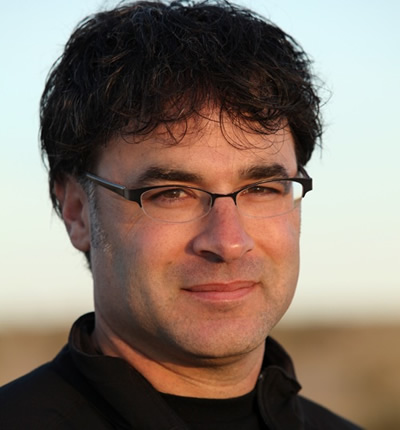
Dahr Jamail is the Baghdad correspondent for The NewStandard. Jamail, a political activist from Anchorage, Alaska, first traveled to Iraq in November 2003 to write about the effects of the US occupation on the Iraqi people. After nine weeks covering Iraq under occupation, he returned to the US and addressed audiences in Alaska and the Northeast about his experience. He has recently returned to Iraq in order to continue reporting on US occupation and privatization. You can view his dispatches and articles at http://newstandardnews.net/iraq.
ZNetwork is funded solely through the generosity of its readers.
Donate




