


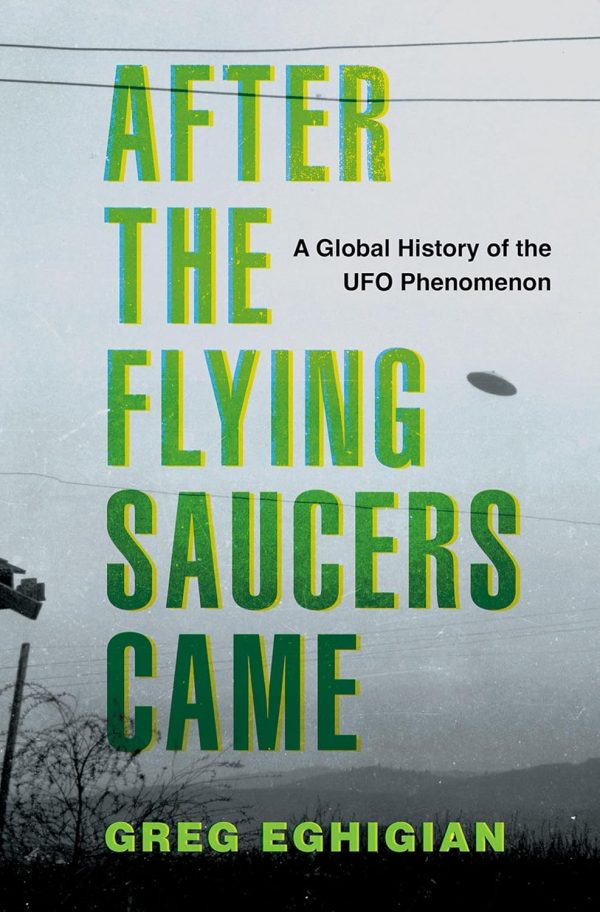
If Fox Mulder had tenure, he’d be Greg Eghigian. Not just because he also wants to believe, but because he wants citations with his sightings, footnotes with his flying saucers, and a properly peer-reviewed approach to the paranormal. For years, Greg has studied how societies respond to what they consider marginal, bizarre, or threatening—whether that means deviance, mental illness, or unexplained lights in the sky. A historian of science and medicine at Penn State, he’s delved into the history of criminality and psychiatry, and more recently, turned his attention to the UFO phenomenon not as a believer or a debunker, but as someone examining how institutions construct meaning around the strange.
In a world thick with grainy YouTube videos and Ancient Aliens reruns, Eghigian stands out. His new book doesn’t hunt for aliens in Area 51—it excavates the cultural scaffolding around why we care about them in the first place. The piece examines the political, cultural, and perceptual dimensions of the UFO phenomenon through contemporary discourse, skepticism, and state interest. It probes themes resonant with readers: power, belief, distraction, and disclosure—in a time where reality itself seems uncertain.
When I sat down to speak with Greg, it wasn’t under the shadow of a blinking saucer or a chalkboard of red-string conspiracy. It was with the recognition that the story of UFOs is also the story of us: our anxieties, our politics, our shifting trust in institutions, and our very human need to find meaning in what we don’t yet understand. From pandemic paranoia to TikTok-era sightings, what Greg brings is clarity—not about what’s “out there,” but about what all this fascination says about what’s ‘in here.’ We talked cover-ups, contactees, disclosure movements, and the rise of a possible new Cold War.

Historically, academia dismissed UFO studies. What’s driving the recent shift to take them more seriously? And what impact might this have, Greg?
It’s clear that a series of changes here in the United States have been really behind this shift that’s going on. It began in December of 2017, and then followed throughout 2018 with a series of articles that revealed that people within the US Department of Defense had been studying UFOs secretly, with some funding allocated for this purpose. Subsequently, military intelligence in 2019 and 2020 acknowledged that military personnel have encountered what were previously termed UFOs, now called Unidentified Anomalous Phenomenon (UAP). Many of these encounters defy explanation. What changed was the acknowledgment that these sightings are of real objects, not computer glitches or optical illusions. Moreover, it was revealed that military personnel were discouraged from reporting such sightings due to a culture of ridicule perpetuated within the military system.
This legitimization marked a significant turning point. Soon after, NASA formed a panel to explore whether these phenomena warrant further scientific investigation on the civilian side, affirming their importance. As a result, academics from diverse disciplines, not limited to history but spanning astronomy, chemistry, philosophy, religious studies, sociology, and others, have begun to engage in serious research on this subject. So the phenomenon now has entered into a kind of a new phase where it looks like that academia and people who before might have turned up their nose at the subject, now seem to be far more open, at the very least to opening up the door and saying, okay, let’s look at this a little more carefully and see if there’s anything to be learned from it. That’s a change that really has not… we’ve not seen things like that in quite some time.
What kind of role did the Cold War play in shaping both public and government attitudes towards UFOs?
Yeah, the Cold War plays a very big role. It plays a number of different kinds of roles. One of the roles is that when UFOs, or flying saucers as they were then called, really burst into the international scene in the summer of 1947, it’s happening right at the same time that the Cold War is really getting underway. You have this period in which the U.S. and the Soviet Union had been allies, of course, during the Second World War, but very quickly become bitter enemies, and by 1947 that’s fully taken hold.
So when flying saucers are seen across the United States in June and July of 1947, the first assumption on the part of the military is that this might be Soviet. So one of the things that the Cold War did is it helped frame the discussion of what these things might be, especially in the military context, as possibly being hostile or foreign technology—maybe something from Russia or China later on.
It also helped ramp up secrecy. Because these things were seen as possibly involving national security, what you get is a response by the U.S. government and military that was very secretive. A lot of files, a lot of investigation went on behind closed doors, and what that ended up doing was fostering a kind of distrust among the public.
People felt like, “Wait, why are you keeping this secret from us? What are you not telling us?” So even if what they were seeing wasn’t alien, the fact that the government was secretive made people believe that something big was being hidden from them.
Another thing the Cold War did was it helped create this psychological environment in which people were constantly watching the skies. I mean, we’re talking about an era of duck-and-cover drills, of nuclear fear, of the sense that destruction could come from above at any time. That kind of atmosphere makes it a lot easier to believe that something unknown or threatening might also be coming from the skies.
So yeah, the Cold War helped shape both how governments approached the UFO phenomenon—as something potentially hostile—and how ordinary people thought about it—as part of this larger, very anxious moment in history.

Do you believe, Greg, there are US documents awaiting declassification that could significantly reshape UFO research or public perception? How has intelligence involvement shaped the narrative historically?
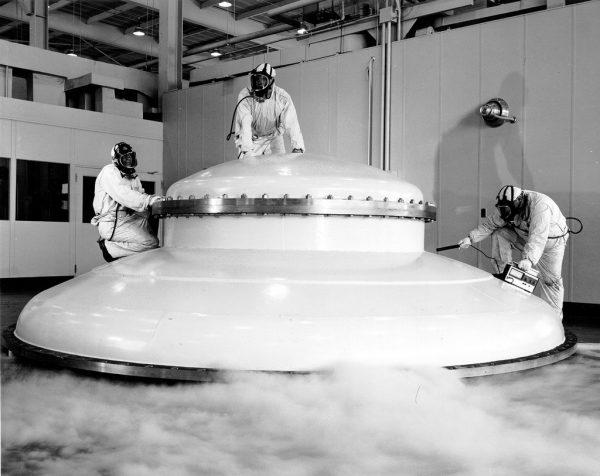
The security dimension and the government—particularly the U.S. government—in many ways may be even more complicated than the UFO phenomenon itself. I talk about this in the book: since about 1950, UFO research has revolved around two major questions. The first is the obvious one: What are the UFOs? What are they doing? The second emerged quickly afterward: What does the government know, and what aren’t they telling us?
Some groups became entirely focused on this second question—this is what we now call the Disclosure Movement. But others push back and say, “Didn’t we get into this to understand the phenomenon itself? Why are we obsessing over the government?”
The secrecy question, though, has deep roots. Secrecy around national security dates back to the emergence of the modern state, but it becomes especially significant in the 20th century. After WWII, the U.S. had to decide how to protect atomic bomb knowledge. Should they focus on safeguarding materials like plutonium or on protecting the knowledge itself? Ultimately, they chose the latter: control the knowledge. That decision embedded secrecy deeply into the state’s structure.
Once you say knowledge is dangerous, then everything follows—classification systems, gatekeeping, surveillance of people, controlling circulation of information. The UFO phenomenon, which arises right at that time, is caught in that web. Even if the objects aren’t extraordinary, the government may avoid acknowledging them, not because of the object itself, but because revealing how they identified it would compromise surveillance capabilities.
The CIA, for example, admitted in the 1990s that it had sometimes leaned into UFO stories to draw attention away from classified programs. In the 1950s and 60s, the FBI and likely other agencies surveilled UFO organizations, worried they could be exploited by Soviet agents.
The issue with the disclosure movement is this: a lot of documents have already been released. We have an enormous amount of material. Yet there’s a persistent dissatisfaction. The question becomes, What will satisfy the disclosure advocates? If only documents confirming alien craft will do, then anything short of that is insufficient. Are we asking for full transparency? Because no government can or should offer complete transparency—it would be irresponsible.
So I suspect we’ll continue doing what we’ve done for decades—spinning our wheels. Maybe we’ll get a surprise. But the idea that the U.S. government could hide something like crashed alien craft or bodies for decades seems implausible. And even if such material existed, it’s hard to believe they would ever willingly release it. That’s why I doubt we’ll see anything truly paradigm-shifting anytime soon.
There’s been what you might say, a global resurgence in interest around UFOs. Beyond government disclosures and media coverage, what cultural, technological or geopolitical factors might explain this renewed focus?
It seems to me that we’re genuinely seeing a resurgence—a return to heightened interest that had gone somewhat dormant. From around 2000 to 2015, the topic of UFOs seemed to largely recede from mainstream cultural conversation. But that’s changed recently.
There are several reasons for this. First, there’s the democratization of technology. Everyone has a smartphone now, and everyone can take videos. So we’re seeing a lot more visual material being shared. Some of it is ambiguous, and some is clearly not extraordinary, but the sheer volume of content has reignited public attention.
Second, geopolitical shifts have made people feel a renewed sense of global uncertainty. During periods of anxiety—be it the Cold War, 9/11, or the COVID pandemic—interest in phenomena like UFOs tends to spike. It’s a way for people to project fears, hopes, and anxieties onto something mysterious.
Third, there’s the shifting landscape of institutional trust. Many people today feel that governments, media, and even science have failed to answer big existential questions or have been caught withholding information. That breeds a climate where alternative explanations, including those involving UFOs, gain traction. In many ways, the UFO conversation becomes a vessel for broader questions about truth, transparency, and the nature of reality.
Finally, pop culture has played a role, but not always in the simplistic way people think. We’ve seen a lot of science fiction narratives exploring themes like first contact, post-human futures, and cosmic loneliness. That primes people to be more receptive to discussing these ideas—even if they don’t fully believe in literal alien visitors.
So yes, I think we’re in the midst of a genuine cultural moment. And as with all previous UFO “waves,” it tells us just as much—if not more—about ourselves as it does about anything in the sky.

What are some common misconceptions about UFO history that you wish more people understood from your research? Are there any surprising narratives people often overlook?
One of the ones that I most prevalent is this idea that UFOs sightings and reports of sightings are directly influenced by, let’s say, big pop culture events, typically movies, about UFOs. The UFO sightings and what people are reporting about UFO sightings has a direct relationship to, say, Hollywood versions of things. And that either movies trigger an elevated number of sightings after they come out, particularly big popular ones, or that people are just sort of stealing movie plots and movie ideas and figures to make sense of the things that they’re seeing.
It’s very clear to me, I think, that the evidence shows that that’s a very difficult case to make. It’s not to say that they’re irrelevant to one another. I’m a big believer that the media plays an enormous role. But it’s not as simple as I think people often see it a. And I discussed this in the book. I’ll give you two examples.
One is take a look at Hollywood movies in the 1950s about flying saucers and aliens. With the exception of the 1951 film, The Day the Earth Stood Still, where you have this kind of kindly, nice, and very nice looking alien who is here to sort of save planet Earth, right? Most all the movies coming out are about aliens visiting here to conquer us, to kill us all. It’s War of the Worlds, right? And they look horrible and they’re ugly looking and they’re scary.
What’s interesting is when you look at the people in the 1950s, a group called the Contactees, who said that they were meeting aliens. These are people in real life who said in real life, I’ve met the aliens. Their version of the aliens looks nothing like that or sounds nothing like it. They talk a lot about how the aliens are, in fact, very beautiful. They look like us. They talk our language. They’re kindly. They’re generous. They have messages of hope. They certainly don’t come here with weapons. They come here with their arms out to us to embrace us.
So what’s interesting, therefore, is the films are not influencing Contactee stories, but what’s also interesting, the Contactee stories aren’t influencing Hollywood. Hollywood’s getting influence clearly by earlier science fiction, right? So you don’t get that kind of thing.
And then if you fast forward to say a good example are the Steven Spielberg films of the 70s and 80s, like Close Encounters of the Third Kind and ET. You know, Close Encounters in, what is that, ’77 comes out and you hear this always, you know, oh my God, after that, all sorts of new sightings happen. And the evidence is not, isn’t very clear on that. It doesn’t seem like it triggered new sightings. What it seems to have done is it seemed to have inspired people to now report old sightings they once had. That’s sort of what it did – it opened up the possibility for people to talk, but it didn’t trigger people now seeing UFOs where they ordinarily hadn’t been before.
And we know, at least I talk about it in the book, there’s at least one report that says in the UK, for instance, after ET came out, actually sightings declined in the UK. So yeah, that relationship is far more complicated, I think, than we ordinarily think it is.
UFOs are often seen as an American obsession, but you explore cross-cultural perspectives in the book. How do beliefs and narratives about UFOs differ globally, and what unique stories have you found?
There’s no question that there are these kind of hubs that existed since the 1940s. And the United States is probably the primary hub. If we think of it, it sort of is like airports, right? It’s the primary hub, and whenever any major news item or development would come out of the United States, news would spread across the world pretty quickly, and people would cover it. And the keys to those were two things.
One was the news outlets, primarily print media for most decades. That was newspapers and magazines, but radio later on. You have to wait till really the 60s and 70s for television to sort of enter in there. But of course, movies and Hollywood played a role. After around 2000, social media and the internet plays that role. So news spreads, and it spreads extremely quickly, even well before the age of the internet. And news stories, particularly through these international news agencies like the Associated Press or UPI, they send out these stories, and they are reprinted, almost verbatim, across the world in languages of those particular countries.
So people share the same stories, even the same wording across cultures. So news spreads in that way. The other way it spreads is through UFO organizations that start developing in the early 1950s, who at first, of course, tend to be small. Some of them get large. They focus on researching cases, reading about cases. And one of the things these groups do is they start sharing information with other groups. And they do that internationally. They start saying, Hey, I’m going to send you our news bulletin here in Phoenix, Arizona. And you folks over there in Liverpool, send us your news bulletin. And then we can share this information with our readers.
And so people are doing that in the 1950s and 60s. And it becomes an international network of ufologists. But there are differences that take place. We know that, for instance, the aliens, when people start talking about making claims that they’ve actually seen the occupants of these flying saucers and UFOs, that these alien beings, these humanoids, oftentimes look different in different cultures, right?
In the United States, for instance, in the 50s and 60s, you often saw people saying they saw things that looked like robots. In South America, a very common sighting was of a kind of a hairy kind of creature. You go to a place like Malaysia, and the aliens are typically under a foot tall, sometimes as small as six inches large. In the Soviet Union, they were oftentimes described as kind of looking like bears or something like that. So the alien image is different.
The other thing, lastly, that you see that’s different is when, for instance, the whole alien abduction phenomenon started to become big, particularly in the 1980s. We see among the UFO researchers, the ufologists, a real difference in terms of how they dealt with that. It was a very big deal in the United States. It kind of takes over American ufology in the 1980s and 90s. But on the continent of Europe, for instance, it did not.
And there are actually instances where very famous ufologists are at a UFO convention in the mid-80s. And they’re saying quite loudly, what the heck is going on in America? Why are they so obsessed with these alien abduction stories? Can’t we get back to what we used to always do, right? Which is trying to figure out what these objects in the sky were. So there are definitely differences.


You argued that UFOs act as metaphors for social anxieties and aspirations. Can you share examples of how they’ve reflected specific historical moments like the Cold War or even the recent COVID pandemic, for example?
Yeah, that’s a great question. Well, I think that what we see at different times is that, and again, this is to me, it’s inevitable. I often say this to colleagues and to just folks who are interested in understanding how I think history plays a role in understanding the phenomenon,, is no one escapes the stream of history. We are all in it. So whether or not you think the phenomenon is real and is maybe of transcendent importance, or whether you’re a skeptic and you think all of this stuff is just easily explainable, no matter what, the thing is, is we all seemingly have to find a way to make sense of it using kind of the mental tools available to us at any given time. We are prisoners of the historical moments we exist in.
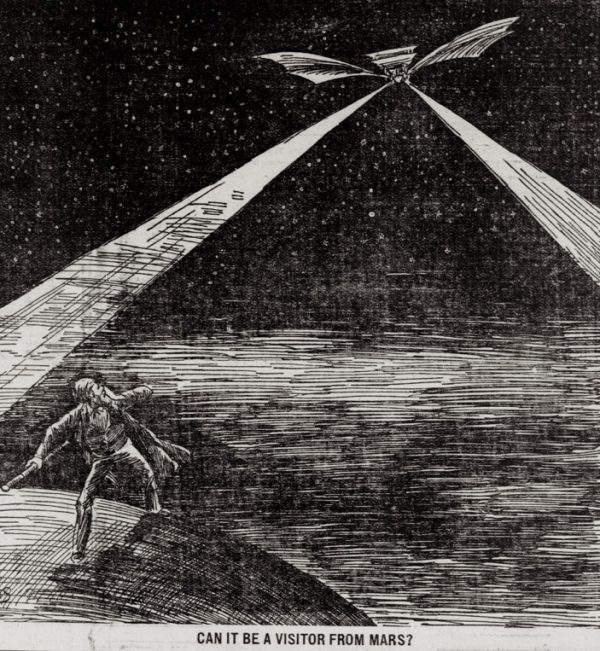
So it’s not at all surprising that when people have sort of talked about seeing things in the sky, they tend to associate them with particular things that are affecting them in their lives now. So for instance, I talk about in the book, these very famous set of what we call airship scares of the late 19th and early 20th century. And the UK had a number of them, particularly from around 1909 to about 1914, in the start of the Great War. And what you see there is a lot of people saying they’re seeing things that look like zeppelins, right? Right after Germany and Count Zeppelin in Germany had actually made these things. And you even have these conversations in parliament about how we’ve got to be concerned about the possibility that one day our airspace might be invaded by Germans flying these things.
So then it’s not necessarily a surprise when we see from around 1909 to 1912, and even at the start of World War I, these claims that people are seeing zeppelins flying overhead, or that there are these warehouses or containers out in the English countryside that have strange men looking at this thing that looks like a dirigible, and they’re speaking a foreign language, I think it was German. It’s not a surprise that those things start to sort of emerge. In the early 1950s, as the Cold War now is really set in motion, of course all these fears about secrecy and spies and counter espionage and stuff, that it’s in the 1950s you have the development of this idea of supposedly men in black, right?
This idea that if you report a UFO, what is very common is you’ll be visited by some very mysterious figures, all dressed in black, black suits, driving a black Cadillac, who will visit you and come in and tell you, listen, you didn’t see anything, you get it? And if you speak up about this, you’re going to regret it, this kind of thing. It fit a certain kind of right Cold War espionage, it’s sort of Jean Le Carré kind of version of James Bondish history that feeds well into the 1960s and 70s.
So time and again, we sort of see these ways in which cultural elements and things that we’re familiar with get folded into the stories that get told about UFOs. Because in many ways, really what the UFO phenomenon is all about the stories we tell about them.
ZNetwork is funded solely through the generosity of its readers.
Donate


1 Comment
Again another interesting interview about something I had thought very little about. Thank you Jack for the topics you cover, in such a thought provoking manner!