


ATHENS (IPS) – Support for an academic boycott of Israeli universities exposed Ilan Pappe to death threats last year, forced him to resign as senior lecturer of political science at the University of Haifa, and leave the country.
His argument that the creation of Israel in 1948 was followed by a policy of cleansing Israeli territory of Palestinians, his support to Hamas resistance despite rejecting its political ideology, and the denouncement of Israeli academia for justifying the occupation of Palestine have made him an unwanted person in Israel. But still he remains a firm believer that the only way to improve this reality is by exposing its worst aspects.
Pappe now teaches history at the University of Exeter in Britain.
In an interview with Inter Press Service correspondent Apostolis Fotiadis, Pappe discusses the situation in Palestine today, and the Arab-Israeli conflict 60 years after it began.
IPS: Can Barack Obama’s victory make a difference?
IP: I think people who strive to hold the post of the strongest person in the world are not interested in moral issues, or are really moved by suffering and oppression. Obama is no different, and the morality of the issue or the suffering of the Palestinians would not move him. He would move in a different direction if he and his advisors would feel that showing less support for Israel enhances their political power. So far this is not the case. It is better to be pro-Israeli to win American elections and be re-elected for the second term. If there is any hope, this is from a second term, when the powerful men are brought back to their normal human size again, and may begin to think like you and me about injustice, oppression and occupation.
IPS: Do we experience today the worst moment of the Arab-Israeli conflict since its beginning?
IP: I still think the worst moment was 1948 and the ethnic cleansing; but it is very bad indeed. It is the final stages of the Israeli unilateral attempt to divide the West Bank into two parts, one annexed to Israel and the other maintained as a big prison camp, or a Bantustan at best. The situation in the Gaza Strip is worse, there the "prison" is already in place, and because of the resistance by the Palestinians to the imprisonment, Israel launches an escalating policy of massive killings. The world seems indifferent, and the Arab world uninterested.
IPS: During his last visit to the region US President George W. Bush described Israel as an example of progress and democracy in the Middle East. How objective do you find his view?
IP: A society that endorses a 40-year occupation of another people cannot be a liberal one. A society that discriminates against 20 percent of its population because they are not Jews cannot be described as progressive. The problem in Israel is not the role of religion or tradition; it is the role of Zionism, a very clear ideology of exclusion, racism and expulsion. This ideology allows the army to play a significant role in most of the domestic and foreign policies, and it is probably right to say that Israel is not a state with an army, but an army with a state.
IPS: To what extent does the US follow a policy of aggravating conflicts in the region while simultaneously call for revival of the peace process? Does something similar happen with Palestinian militants who capitalize on people’s rage? Are we experiencing an organized hypocrisy in the Middle East?
IP: I am not sure everyone is hypocritical in the same way or degree. Political elites in general are manipulators of people’s tragedies and dreams, but they do differ. The worst is the American administration as in its case the gap between words and actions is the widest. Talk of peace accompanies acts of war, support for negotiations in Palestine are actually the endorsement of Israel‘s occupation etc.
Israeli politicians are more transparent, their racism and oppressive plans are quite clear, but nobody in the West, and in particular Europe, is willing to do anything. On the other hand the Palestinian Authority (PA) is not a paragon of honesty, and in fact this is why Hamas won the election, but Hamas are trapped in an abnormality that would disable any political group from behaving differently. This is why the PA has to be dismembered.
IPS: On the other hand do you agree with those who see an advance of radical Islam never seen before in Palestine?
IP: Religion will continue to play for a long time a role in the life of the Palestinians, politically and socially. Whether it would be an aggressive stance or a constructive one depends entirely on the occupation and its oppressive realities. Once they are gone there is a better chance for building a political set-up that includes, rather than excludes, various ideological movements.
The advance of Hamas has a regional and local dimension. In the regional dimension it is part of the overall disappointment with the political regimes and their Western supporters. Locally, it is more directly connected to the occupation and the failure to liberate Palestine by the more secular forces. Most of Hamas support comes from the political vacuum and people’s sense of defeat.
IPS: How has the abuse of history influenced the Arab-Israeli conflict up to today, and is there a way back to an objective understanding of what has happened.
IP: History was used especially in Israel to justify past criminal policies. This is the main abuse of history. It is also abused in the way that the historical narratives are employed to educate the next generations in one-dimensional, nationalist, one could say even, racist, mold. The most deplorable part of it is the abuse of the Holocaust memory which is used in Israel to Nazify the Arabs and the Palestinians, and justify criminal policies against them.
IPS: Where will this policy of suffocating Palestinians finally lead? Leaving aside the humanitarian aspect, can it become the reason for a new explosion of the Arab-Israeli conflict?
IP: It will not be a reason for another conflict, as the Arab regimes do not seem to care. But it can lead in the short term to the uprooting of Palestinians from the Strip, genocide and ethnic cleansing. In the long run, it will make more difficult for future Palestinian generations to forgive and reconcile, and this could endanger the survival of Israel and the Jews living in it, as the Arab world and the Muslim world one day can change and become more effective and united, and Israel may lose its protector: the United States.
IPS: Has peace any change left after 60 years of war, and if yes, what is the direction?
IP: There is no chance for peace in the near future because the conditions for it are very fundamental changes in the reality, which take time. Israel has to be de-Zionized before peace is possible, and peace has to include the return of the Palestinian refugees, otherwise it would be a futile exercise. However, one can still hope that first from the outside, through pressure, sanctions etc. and then from the inside, led by the growing number of young Israeli activists who are getting organized and effective, new energies would come to allow this transformation to take place. I think it will happen, it is hard to say when, but only working for it can bring it about.

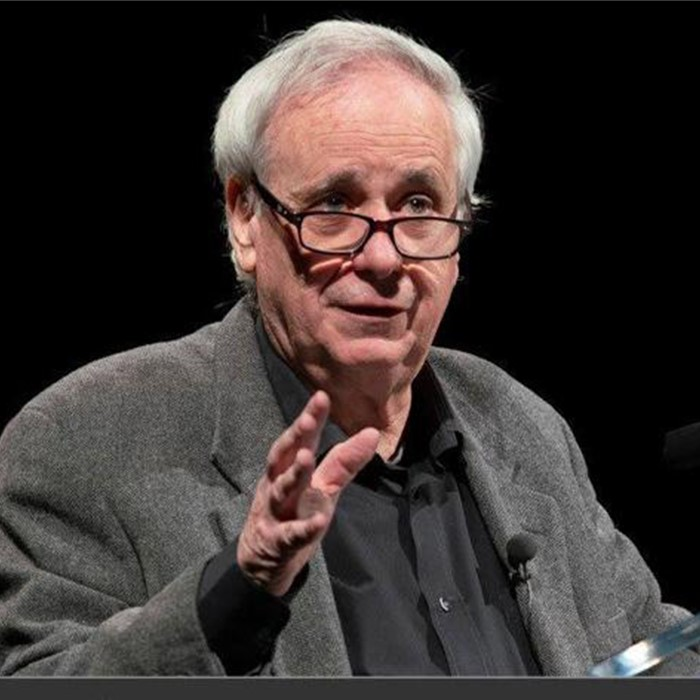
Ilan Pappé is an Israeli historian and socialist activist. He is a professor of history at the College of Social Sciences and International Studies at the University of Exeter in the United Kingdom, director of the university's European Centre for Palestine Studies, and co-director of the Exeter Centre for Ethno-Political Studies. He is also the author of the bestselling The Ethnic Cleansing of Palestine (Oneworld), A History of Modern Palestine (Cambridge), The Modern Middle East (Routledge), The Israel/Palestine Question (Routledge), The Forgotten Palestinians: A History of the Palestinians in Israel (Yale), The Idea of Israel: A History of Power and Knowledge (Verso) and with Noam Chomsky, Gaza in Crisis: Reflections on Israel's War Against the Palestinians (Penguin). He writes for, among others, the Guardian and the London Review of Books.
ZNetwork is funded solely through the generosity of its readers.
Donate




