


Something strange is happening in Latin America. The Latin American right forces are poised to do better during the U.S. presidency of Barack Obama than they did during the eight years of George W. Bush. Bush led a far right regime that was totally out of sympathy with popular forces in Latin America. Obama, on the other hand, is leading a centrist regime that is trying to replicate the "good neighbor policy" which Franklin Roosevelt proclaimed as a way of signaling the end of direct U.S. military intervention in Latin America.
During Bush’s presidency, the only serious coup attempt supported by the United States was that against Hugo Chavez in Venezuela in 2002, and that one failed. It was followed by a series of elections throughout Latin America and the Caribbean in which left-of-center candidates won in almost every instance. It culminated in a 2008 meeting in Brazil to which the United States was not invited and in which Cuba’s president, Raúl Castro, was treated as a virtual hero.
Since Obama became president, there has been one successful coup, in Honduras. Despite Obama’s condemnation of the coup, U.S. policy has been ambiguous, and the coup leaders are winning their bet of staying in power until the coming elections of a new president. In Paraguay, the left Catholic president, Fernando Lugo, has just averted a military coup. But his right-wing vice-president, Federico Franco, is maneuvering to obtain from a Lugo-hostile national parliament a coup in the form of an impeachment. And military teeth are sharpening in an array of other countries.
To understand this apparent anomaly, we must look at U.S. internal politics, and how it affects U.S. foreign policy. Once upon a time, and not so long ago, the two major parties represented overlapping coalitions of social forces, in which the internal balance of each was somewhat right of center for the Republican Party and somewhat left of center for the Democratic Party.
Since the two parties overlapped, elections tended to force presidential candidates of both parties more or less to the center, in order to win over the relatively small fraction of voters who were "independents" in the center.
This is no longer the case. The Democratic Party is the same wide coalition that it always has been, but the Republican Party has moved far to the right. This means that the Republicans have a smaller base. They should logically be in a lot of electoral trouble. But, as we are seeing, it doesn’t quite work that way.
The far right forces that dominate the Republican Party are highly motivated and quite aggressive. They seek to purge any and all Republican politicians whom they consider too "moderate" and they seek to enforce on Republicans in Congress a uniformly negative attitude to anything and everything that the Democratic Party, and in particular President Obama, may propose. Political compromises are no longer seen as politically desirable. Quite the contrary. Republicans are pressed to march to a single drummer.
Meanwhile, the Democratic Party is operating the way it always has. Its wide coalition runs from the left to somewhat right of center. Democrats in Congress spend most of their political energy negotiating with each other. This means that it is very hard to pass significant legislation, as we are currently seeing in the attempt to reform the health structures of the United States.
So, what does this mean for Latin America (and indeed for other parts of the world)? Bush could get almost anything he wanted from Republicans in Congress, in which he had a clear majority for the first six years of his regime. Real debates occurred in Bush’s inner executive circle, which was basically dominated by Vice-President Cheney for the first six years. When Bush lost the Congressional elections in 2006, Cheney’s influence declined and policy slightly changed.
The Bush era was marked by an obsession with Iraq and to a lesser extent with the rest of the Middle East. There was some energy left for dealing with China and western Europe. Latin America faded into the background from the perspective of the Bush regime. To their frustration, the Latin American right did not get the usual kind of engagement in their favor from the U.S. government that they expected and wanted.
Obama is faced with an entirely different situation. He has a disparate base and an ambitious agenda. His public stance wobbles between a firm centrist position and moderate left-of-center gestures. This makes his political position essentially weak. He is disillusioning the left voters he had aroused during the elections, who are in many cases retreating into political withdrawal. The reality of a world depression makes some of his centrist independent voters pull away from him out of fears of a growing national debt.
For Obama, as for Bush, Latin America is not at the top of his priorities. However, Obama (unlike Bush) is struggling hard to keep his head above political water. He is very worried about the 2010 and 2012 elections. And this is not unreasonable. His foreign policy is considerably influenced by its potential impact on these elections.
What the Latin American right is doing is taking advantage of Obama’s internal political difficulties to force his hand. They see that he doesn’t have the political energy available to thwart them. In addition, the world economic situation tends to redound against incumbent regimes. And in Latin America today, it is left-of-center parties that are the incumbents.
If Obama were to have some important political successes in the next two years (a decent health bill, a real withdrawal from Iraq, reduced unemployment), this would actually blunt the return of the Latin American right. But will he have such successes?

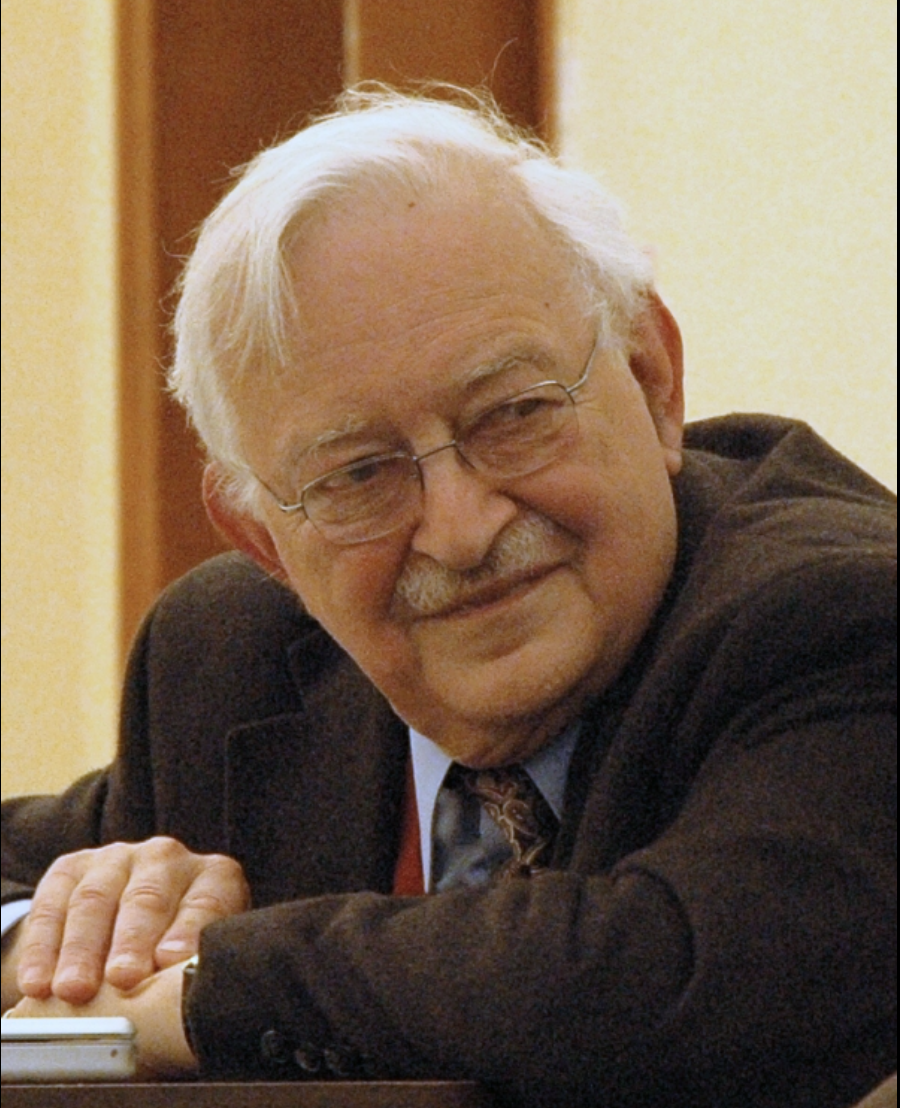
Immanuel Wallerstein (September 28, 1930 – August 31, 2019) was an American sociologist and economic historian. He is perhaps best known for his development of the general approach in sociology which led to the emergence of his world-systems approach. He was a Senior Research Scholar at Yale University from 2000 until his death in 2019, and published bimonthly syndicated commentaries through Agence Global on world affairs from October 1998 to July 2019. He was the 13th president of International Sociological Association (1994–1998). Politically, he considered himself on the "independent left" and was active in a variety of organizations. He argued that we are in the transition from our existing capitalist world-economy to some new system, and that the great political struggle of our time is about which new kind of systemic order will replace our existing one. A new systemic order could be better or worse, depending on our collective ability to push the worldwide decision in one direction or another. He believed that a crucial element in this is a vast debate about the kind of better system we wish to build, and saw the Reimagining Society Project as one of the ways to further this collective debate.
ZNetwork is funded solely through the generosity of its readers.
Donate




