


Not far from Rabat’s train station, a small group of protesters hold Moroccan flags and banners as they chant for their lives. They are a family of farmers who have lost their land. These are rebels in the name of the King, to whom they plead for redress. “If only the King knew our situation,” says one of the men. Passers-by skirt the protest. So do the security forces. They are embarrassed. After a few hours, the farmers gather their things. They walk towards the train station. It is over.
The palace of Mohammed VI, the King of Morocco since 1999, is a short walk from the train station. But the King is not home. Nor is he in one of his 12 large palaces in grand cities as Casablanca, Fez or Meknes (the daily upkeep for these palaces is over $1 million). News comes that Mohammed VI is where his passion lies — on a jet ski far from Morocco.
Tourists do not go often to the city of al-Hoceima, which sits between the Mediterranean Sea and the Rif Mountains. This is mainly a fishing town with flashes of old Spanish architecture hidden behind the urgency of modern construction. Last October, the police confiscated some fish from Mouchine Fikri, a 31-year-old fishmonger, and threw it into the garbage. Fikri jumped into the garbage compactor to retrieve his fish. He was killed by the machine. People saw this as another example of hogra — the everyday humiliation of people like themselves by the makhzen (the royal family and its military establishment as well as the landowners and the businessmen). Fiercely rebellious, the Rif exploded.
Heated protests
Regular protests moved from al-Hoceima to cities and towns across Morocco. These are not demonstrations that embarrass the government. They terrify the makhzen. The government oscillated between arrest of the protest leaders and conciliation of their demands. Arrests of the leaders of the al-Hirak al-Sha’abi (Popular Movement) — Nasser Zefzafi, Najib Ahamjik and Silya Ziani — angered, rather than intimidated, the public. Fifty thousand people took to the streets of Rabat on June 11. That was the biggest protest in the city since the February 20 Movement of 2011 (as part of the Arab Spring).
It is difficult not to be in awe of Morocco’s history. Inside the charming maze of the Medina of Fez sits the Al-Karouine University that was founded in 859 AD by Fatima al-Fihri. This daughter of a wealthy merchant put her money into a place of scholarship that taught such luminaries as Ibn Khaldun, Moses Maimonides and Leo Africanus. Ancient manuscripts reside inside the library.
There is solace that the destructive impulse that tore through Mosul, whose great library was ravaged by the IS, will not come to this jewel. Neglect is the criminal. Outside the university runs the Fez River, which has more effluent from the tanneries than fresh water. The architect of the restoration, Aziza Chaouni, calls her city a ‘living city’, not just a city for tourists but also for the million people who live inside it.
Chinese presence
Morocco’s authorities worry that the Hirak protests might dampen tourism — the main foreign exchange earner. The government would like to see 20 million tourists enter the country, double the current figure. Numbers from the West are flat. Chinese tourism has, on the other hand, increased. It is not hard to run into Chinese tourists in the medinas of the old cities and in the hashish region anchored by the blue city of Chefchaouen (70% of the world’s hash comes from Morocco).
Poverty and hogra, as well as state-supported radical clerics, had opened the door for anger to move away from mass protest towards terrorist action.
The IS bomb-maker Najim Laachraoui, who died in the suicide attack in Brussels Airport, is from Ajdir (Morocco), while Paris attackers Salah Abdeslam, Brahim Abdeslam and Abdelhamid Abaaoud were all Moroccan. In June, the Moroccan authorities dismantled an IS cell in the southern coastal town of Essaouira. About 1,500 people have joined groups like the IS.
Hirak put the basic needs of the Moroccans on the table: dignity, healthcare, education and access to water. It is also the antidote to the growth of the IS. Neglect of the people threatens to push them into the arms of toxic radicalism that is typically antithetical to Morocco.
One of Al-Karouine University’s most important graduates was Abd el-Krim, the founder of modern guerrilla warfare.
Krim’s rebellion in the Rif from 1921 to 1926 defeated the much stronger Spanish army. But he was eventually caught and exiled to Egypt. His demands were also elementary: for dignity and for livelihood. These are unredeemed. They are on the table once more.
The writer, who could easily settle down in Chefchaouen, is the author of The Death of the Nation and the Future of the Arab Revolution.

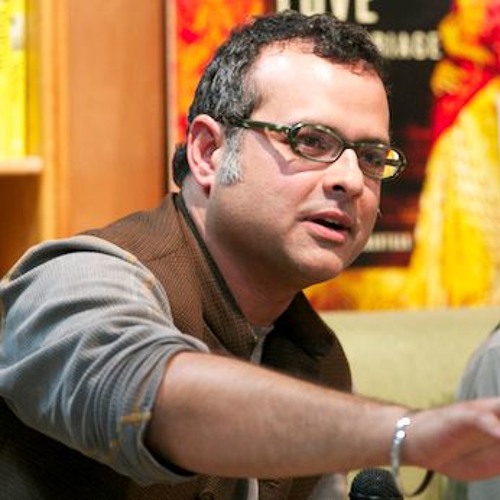
Vijay Prashad is an Indian historian, editor, and journalist. He is a writing fellow and chief correspondent at Globetrotter. He is an editor of LeftWord Books and the director of Tricontinental: Institute for Social Research. He is a senior non-resident fellow at Chongyang Institute for Financial Studies, Renmin University of China. He has written more than 20 books, including The Darker Nations and The Poorer Nations. His latest books are Struggle Makes Us Human: Learning from Movements for Socialism and (with Noam Chomsky) The Withdrawal: Iraq, Libya, Afghanistan, and the Fragility of U.S. Power. Tings Chak is the art director and a researcher at Tricontinental: Institute for Social Research and lead author of the study “Serve the People: The Eradication of Extreme Poverty in China.” She is also a member of Dongsheng, an international collective of researchers interested in Chinese politics and society.
ZNetwork is funded solely through the generosity of its readers.
Donate
