


Who would have thought it possible for the people of Korea to start genuine talks toward peace? Everything seemed to point toward certain war—belligerence from the Trump White House, acquiescence from South Korea’s Blue House and a missile test from the North last November that seemed to provide the pretext for a full-scale war. Matters were bleak. The Bulletin of Atomic Scientists’ doomsday clock was set at two and a half minutes to midnight. A catastrophe was inevitable.
Then came the Winter Olympics. It provided South Korea’s President Moon Jae-in and North Korea’s leader Kim Jong-un the opportunity that they seemed to want. North Korea sent a delegation—led by Kim Jong-un’s sister, Kim Yo-jong—to the games, the two Koreas marched into the stadium together and the women’s ice hockey teams joined to play under the standard of Korea: neither North nor South. At the stadium, Moon Jae-in shook the hand of Kim Yo-jong in the stands, a symbolic gesture that seemed to charm the people of the peninsula.
Unification
Then, within weeks, North Korea hosted a high-level delegation from the South led by Chung Eui-yong who heads South Korea’s National Security Office and is a close adviser to President Moon. On March 5, the delegation was personally met by Kim Jong-un, who shook the hands of each guest before they sat for their meeting and dinner that ran for four hours. The delegation returned to South Korea with good news: it seems like a path forward has been established.
Kim Jong-un invited President Moon to visit the North—the first such invitation in the history of these two countries. The visit of Chung Eui-yong is the first intra-Korean talks held in two years. The two sides have agreed to hold their first major summit in late April. This will be the first such summit in more than a decade. The two Korean leaders have opened a hotline for communication across the De-Militarized Zone. The temperature in the peninsula has gone down. Smiles replace frowns, possibilities replace destruction.
What is astonishing is that North Korea’s Kim Jong-un said openly that a path to unification of the peninsula must be built. This statement was widely circulated not only by Yonhap, South Korea’s news agency, but also by the Korean Central News Agency (KCNA) from the North. That means that there should be no misunderstanding this point: North Korea has offered talks whose eventual goal is not merely peace in the peninsula but its unification. This is the ripest olive branch that has been offered over the course of the past six decades.
Annihilation
Why would North Korea consider reunification? After all, for the past six decades it has tried to protect itself from what it sees as annihilation by its enemies (the United States, Japan and South Korea). It has built a nuclear weapons and a conventional weapons arsenal as a shield against any attempt to overthrow the government in the North. It has good reason to worry about regime change. This remains the stated policy of the United States government, even though US officials are often incoherent in their statements.
For example, last August, Trump’s Defense Secretary James Mattis and his Secretary of State Rex Tillerson wrote, ‘The US has no interest in regime change or accelerated reunification of Korea’. At the same time, Trump’s Vice President Mike Pence said of US policy towards the North, ‘all options are on the table’. Trump himself promised ‘fire and fury’ on the North, threatened war and said that an ‘armada’ was on its way to pummel North Korea. They follow the lead of George W. Bush, who placed North Korea in an ‘axis of evil’ with Iraq and Iran. The US then conducted an illegal regime change war against Iraq and continues to threaten such a war against Iran. No wonder that the North Koreans are suspicious of US motivations for the peninsula. (For more on this, see the Tricontinental dossier, Crisis in the Korea Peninsula.)
No wonder therefore that the North has put before the South Koreans a plea not to conduct its military drills with the United States in April. These drills, the North Koreans say, will merely inflame the political process that has begun to yield real dividends. The United States is not interested in this process.
Surrender
Trump’s response was tepid if not dismissive. The Trump administration follows the line developed by the Bush administration: ‘dismantle first, talk later’. In other words, the North Koreans must first give up their nuclear weapons program before the United States will open peace talks. Denuclearization is, for the Americans, a precondition to talks. The United States is essentially asking the North Koreans to surrender before they will entertain talks. This is an impossible standard. It is why the Six Party Talks ended in 2009. They will not begin unless the United States shifts its position.
Why does the North fear these military drills? The drill last December, Vigilant Ace, lasted for five days. The US Seventh Fleet put its major strategic assets into the drills, including stealth fighter jets (F-22 and F-35). These stealth fighters had been recently deployed to Japan and were in target range of North Korea. The US also exercised its B-1B Lancer bombers, a ferocious weapon that can drop a 2,000-pound bomb on a target. It is a veteran of the 2003 US war on Iraq. The US had 12,000 of its troops in the drill, with 230 aircraft flying around between eight US and South Koreans bases on the peninsula. There are currently 28,500 US troops based in South Korea. The North sees these drills and the permanent bases in South Korea, Japan and the Philippines as a provocation; as the infrastructure for an all-out assault on North Korea.
South Korea’s Chung is now to visit China, Japan, Russia and the United States: the other partners of the suspended Six-Party process (North and South Korea are the fifth and sixth parties to the dialogue). The Koreas hope to open up the Six Party Talks as a mechanism to take the discussion beyond the two governments. So far, China, Russia and even Japan have indicated that they would welcome such an opening. The only country that has indicated that it is not going to budge is the United States.
The US government has already put pressure on President Moon not to postpone the military drills. Moon has had to make a curious statement that ‘without a strong military and robust national defense, we can neither make nor maintain peace’. North Korea’s Kim, apparently, has sent a message to South Korea’s Moon that he understands the pressure put on the South by the United States. He hopes, however, that the South Koreans will refuse to be held hostage to US ambitions for East Asia.
Ban
North Korea is willing to speak directly to the United States. It has said it is willing to talk about a broad denuclearization of the Korean Peninsula and of the region in general. This would mean a withdrawal of US nuclear-armed military assets from the region. The United States finds this intolerable.
Last year, the United Nations General Assembly passed the Nuclear Ban Treaty. All nine nuclear weapons states ignored this resolution. But in 2016, when the First Committee of the UN General Assembly opened a discussion on this resolution, North Korea voted for it. This was an important gesture. It needs to be built upon. It is another indication of what is possible, a world—not just North Korea—without nuclear weapons.

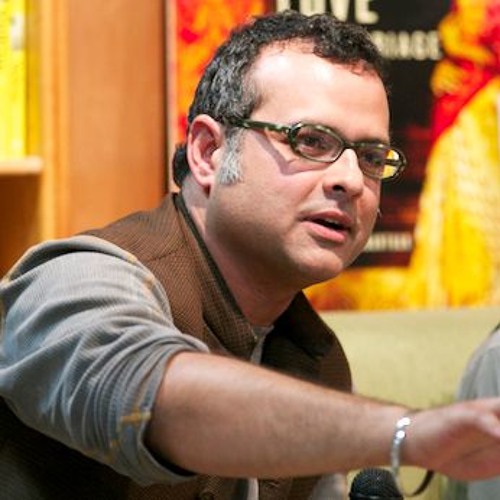
Vijay Prashad is an Indian historian, editor, and journalist. He is a writing fellow and chief correspondent at Globetrotter. He is an editor of LeftWord Books and the director of Tricontinental: Institute for Social Research. He is a senior non-resident fellow at Chongyang Institute for Financial Studies, Renmin University of China. He has written more than 20 books, including The Darker Nations and The Poorer Nations. His latest books are Struggle Makes Us Human: Learning from Movements for Socialism and (with Noam Chomsky) The Withdrawal: Iraq, Libya, Afghanistan, and the Fragility of U.S. Power. Tings Chak is the art director and a researcher at Tricontinental: Institute for Social Research and lead author of the study “Serve the People: The Eradication of Extreme Poverty in China.” She is also a member of Dongsheng, an international collective of researchers interested in Chinese politics and society.
ZNetwork is funded solely through the generosity of its readers.
Donate




