

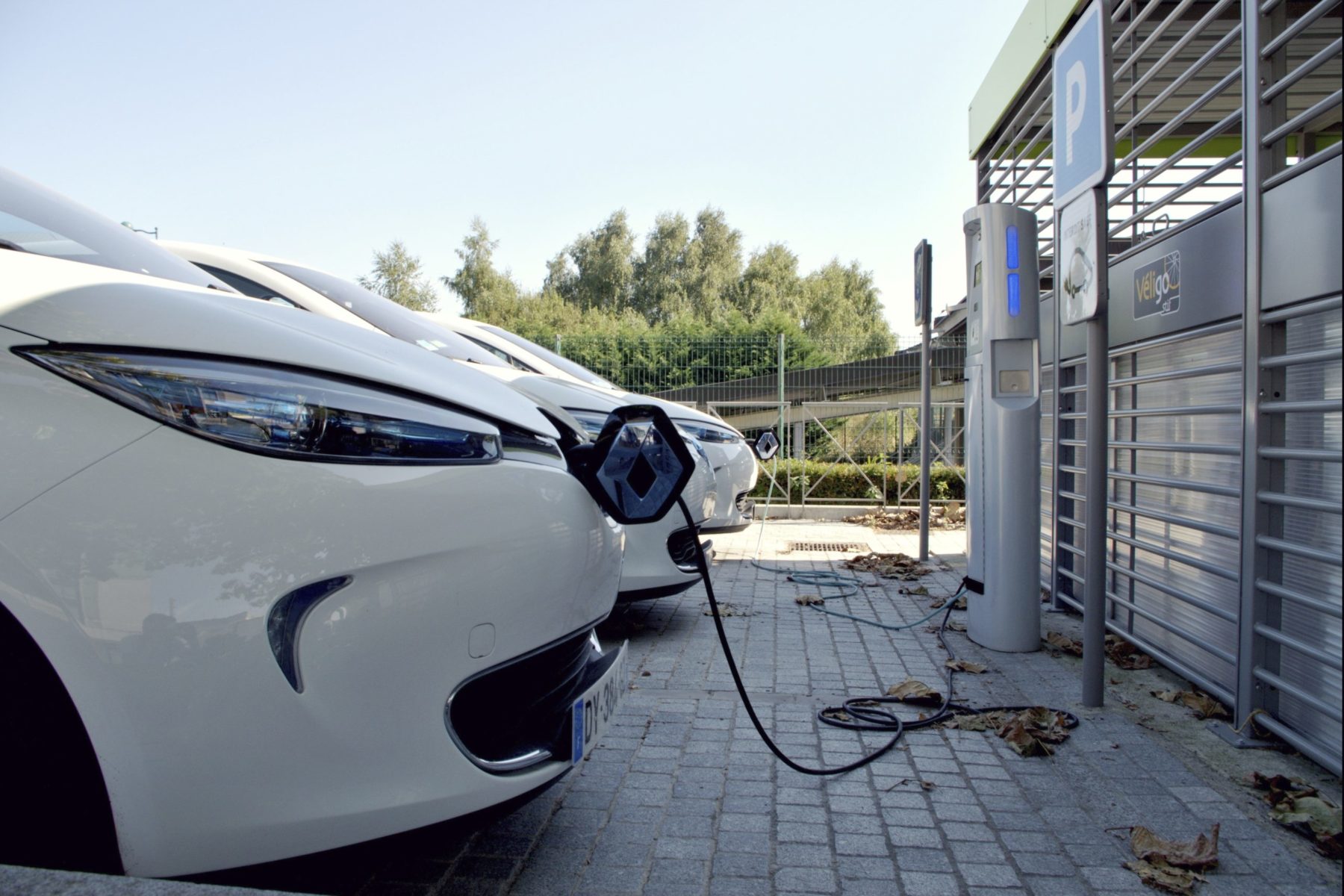
In his pathbreaking 1971 book, The Closing Circle, Barry Commoner proposed four laws of ecology: Everything is connected to everything else; Everything must go somewhere; Nature knows best; There is no such thing as a free lunch. We are inclined to forget that any technology designed to make life better comes with a cost—not just a monetary cost but also a cost in health, psychology, the environment, or social values.
Remember all the promises of nuclear energy? All benefit and no (announced) cost. So it is now with electric vehicles as an antidote to the climate crisis.
EVs require six times the mineral input of an ordinary car. Mainly because of the heavy lithium battery, EV production releases nearly 70 percent more greenhouse gases than are produced in an ordinary car’s manufacture.
Lithium and other battery mineral components require extensive mining. The expanding international competition over access to these minerals is not yielding riches for mine workers and landowners, only devastation of local environments, health and safety concerns for miners, and exceptional profits for global corporations and the governments that preside over the mines.
Besides lithium, cobalt, bauxite, and nickel are also crucial for batteries; they are mined in various parts of Africa and Latin America. Hence the international scramble, a familiar story that has played out with fossil fuels extracted from the Middle East, Africa, and Central Asia, to the overwhelming benefit of the oil companies and the repressive governments that invited them in.
Three Cases
Guinea in east Africa, mineral-rich but dirt-poor. Guinea has the world’s largest reserves of bauxite, used to manufacture the aluminum in batteries. 200,000 acres of farmland and 1.1 million acres of natural habitat will be destroyed by bauxite mining, with little compensation from foreign investors. Three international firms dominate mining in Guinea: US-owned Alcoa, British-owned Rio Tinto, and Russian-owned United Company RUSAL. Chinese and Norwegian firms are also involved.
Or take nickel, which is concentrated in Indonesia, where a new Chinese nickel processing technology is producing millions of tons of toxic waste that have to be disposed of on land. Coal-fired plants provide the energy for the processing, adding carbon emissions to the environmental disaster. For Indonesia’s government, however, processing raw nickel within the country is a major benefit, and China holds the advantage.
In the Democratic Republic of Congo (DRC), the international battle is over cobalt. China is leading the way in the DRC; US corporations are trying to get back in the game. As I’ve written previously, the DRC holds most of the world’s cobalt mines. That means sudden riches for the mining companies and some government officials, but it also means terrible working conditions for miners, exploitation of child labor, and destruction of the environment to make way for the mines.
China in the Lead
As a New York Times graphic shows, China dominates the supply chain in all phases of EVs—from mining and processing the key minerals to assembling the battery cells and manufacturing the autos. China has a controlling interest, about 80 percent, in the processing of lithium, manganese, cobalt, nickel, and graphite, as well as the manufacture of battery components.
How to get past China’s chokehold on minerals is the subject of ongoing international discussions that involve the US, the European Union, Japan, Canada, and Australia. In May, at the most recent G7 meetings in Hiroshima, the members agreed to take the first steps toward cooperating on reducing dependence on Chinese supplies.
Agreements will not be easy to negotiate or implement, however, for at least two reasons. Making the supply chain more secure—meaning more secure from China—would also require that corporations that normally compete would have to share supplies. Politically, a formidable obstacle is the human rights and environmental policies of the host countries. Working closely with those governments will (and should) arouse criticism, in much the same way that getting in bed with Middle East autocrats has been controversial.
Forming a “critical minerals club,” one of several proposals being considered by the US, the EU, and other countries, leaves open the question of the club’s rules when it comes to labor and environmental standards. As we have seen in various trade agreements, such as NAFTA, imposing those standards raises political problems both within and between the parties.
As for the producing countries, such as Indonesia, high international demand is an invitation to create an OPEC-style cartel so as to gain greater revenue from investing companies. Those countries have every incentive, as the OPEC countries have shown, to discount human rights. As a cartel, OPEC has the power to ensure that human rights and environmental concerns never feature in pumping and marketing agreements with the major oil companies.
If Not EVs, What?
EVs are obviously going to be around for a good while. Consumers have spoken; everywhere you turn, EVs comprise a fast-growing proportion of car sales. Governments are cranking up subsidies and tax breaks for manufacturers and buyers.
Lithium battery investment and production capacity are likewise growing exponentially. Yet all that effort will be eclipsed before very long. That’s when solid-state batteries replace lithium batteries and hydrogen becomes the fuel of choice. Meantime, gas-powered vehicles remain on the road, far more numerous than EVs and dirtying the air as before.
Perhaps the politically and environmentally correct car strategy is to keep the vehicle you have for as long as you can. If it’s of fairly recent vintage, it should last for decades with proper care. That way, you lower the costs, hidden and well-known, of new car production and old car disposal.
Or you move in an entirely different direction: two- and three-wheel electric vehicles. “Globally,” writes David Wallace-Wells in the New York Times, “there are 10 times as many electric scooters, mopeds and motorcycles on the road as true electric cars, accounting already for almost half of all sales of those vehicles and responsible already for eliminating more carbon emissions than all the world’s four-wheel EVs.”
ZNetwork is funded solely through the generosity of its readers.
Donate





1 Comment
We avoid the real issue and need of good public transport, redesigned cities, communities, and walking, biking, etc. So far, what really matters is profit and the domination of some by the ambition and power of others.