


Colombia’s decision to recognize Israeli sovereignty over the occupied Syrian Golan Heights marks a dangerous turning point.
By becoming only the second country in the world – after the United States – to endorse Israel’s illegal annexation of Syrian territory, Bogotá has signaled a complete reversal of Gustavo Petro’s foreign policy under new far-right President Abelardo de la Espriella.
However, Colombia is not an isolated case. It reflects a broader, highly aggressive campaign by Israel to systematically dismantle and reverse hard-won pro-Palestine and pro-Arab positions worldwide. In fact, the shift in Bogotá comes alongside dramatic changes in Caracas, where Venezuela’s interim leadership has to restore consular ties with Israel after a 17-year freeze.
The same thing is happening in Europe. A prime example is Slovenia, where the newly installed government under Janez Janša removed the Palestinian flag from government buildings and announced its intention to freeze the country’s 2024 recognition of Palestinian statehood and move its embassy to Jerusalem.
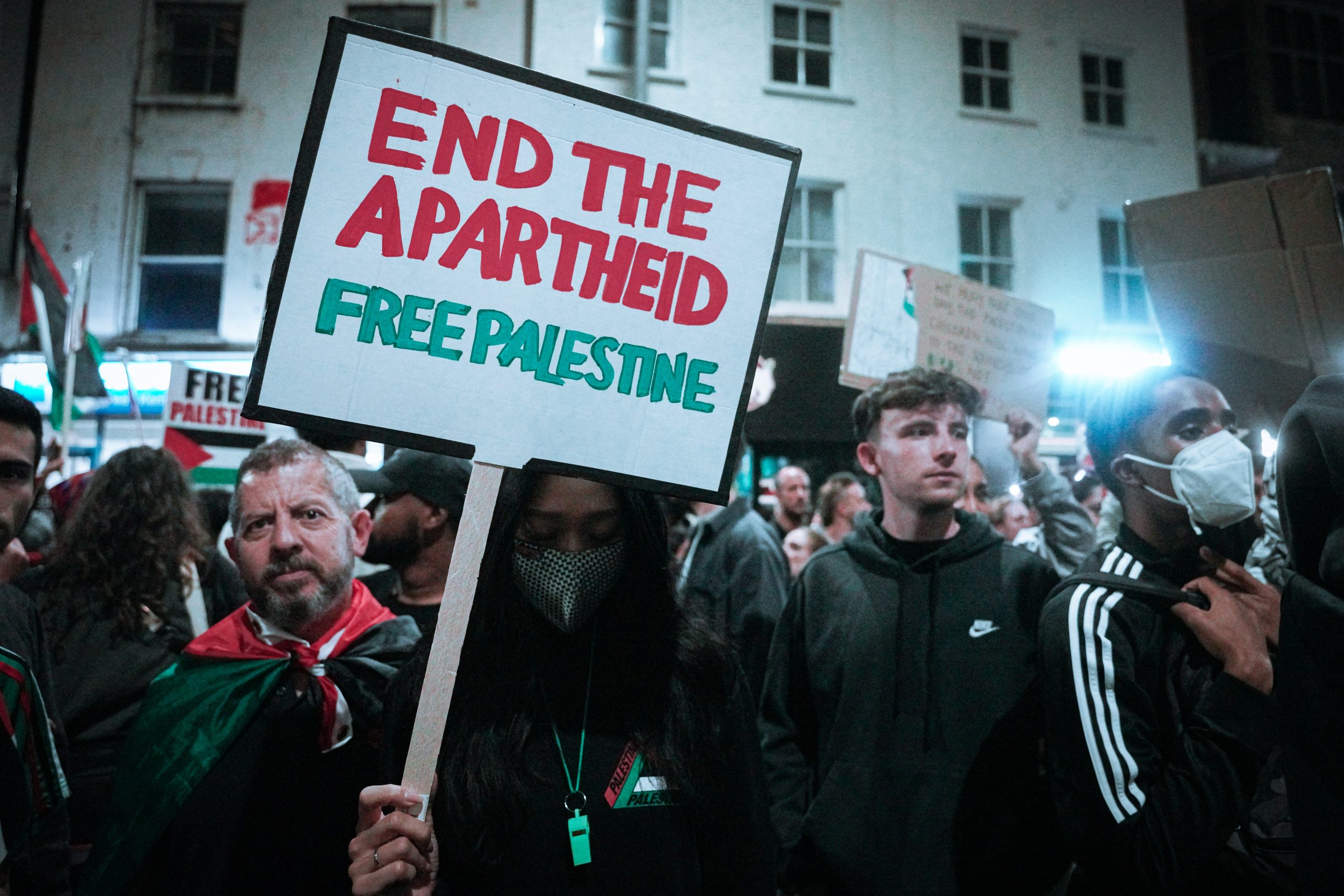
Israel knows that its so-called ‘PR problem’ is no longer that of a merely tainted image resulting from occasional negative news coverage. The genocide in Gaza, coupled with genocidal discourse and wars of aggression across the Middle East, means that Israel, this time around, will not easily recover from the damage it has inflicted on its global reputation.
Though some circles, including those purportedly critical of Israel, insist that the problem is Israeli Prime Minister Benjamin Netanyahu and his government of extremists, the truth is far more unpleasant for Israel. Indeed, Israel as a country, as a colonial project and as an ideology is increasingly being questioned.
Even some within Israel’s own mainstream media have begun acknowledging the depth of the crisis. “Maybe it’s time to understand that this isn’t just a PR failure, but a moral failure,” prominent Israeli television anchor Yonit Levi said last year. The Washington Post, meanwhile, described Israel as “turning into a global pariah.”
But Israeli leaders, though refusing to acknowledge the potentially irreversible changes in the global mood toward their country and Zionism as a whole, are comforted by two factors: one, continued US – and, by extension, Western – support; and two, directly related to the first, their ability to shift governments’ positions toward Israel through political, diplomatic and other means.
For Israel, the people never mattered; only governments do.
Colombia illustrates precisely why. Israel did not need to reverse Colombian public opinion or undo years of solidarity with Palestine. It only needed a change of government. The election of the unabashedly pro-Israel De la Espriella provided exactly that.
The political consequences were almost immediate. De la Espriella moved to restore full relations with Israel, withdraw Colombia’s support for South Africa’s genocide case at the International Court of Justice, resume coal exports and, most consequentially, recognize Israeli sovereignty over the occupied Golan.
This rapid reversal also gives greater significance to former President Petro’s repeated statements of US and Israeli interference in the election that defeated left-wing candidate Iván Cepeda. Though these accusations remain contested, the outcome itself is unmistakable: a change of government was enough to begin dismantling years of Colombian policy on Palestine and Israel.
The same applies to Venezuela. Many initially viewed the US of pro-Palestine President Nicolás Maduro as merely another episode in Washington’s long history of intervention in Latin America. But the speed of Venezuela’s subsequent realignment suggests a broader transformation.
The clearest indication is Caracas’ growing closeness to Tel Aviv. Venezuela severed diplomatic relations with Israel under Hugo Chávez in 2009 over the war on Gaza. Seventeen years later, the two governments have agreed to restore consular services – a significant step toward normalization and a powerful symbol of Venezuela’s changing geopolitical orientation.
Israel’s relationship with much of the Global South has historically been fraught, shaped by its colonial character, military aggression and close alignment with Western power.
Under Netanyahu, however, Israel worked systematically to break that isolation, expanding its influence across Africa, Asia and Latin America as the US-dominated global order began to weaken.
Gaza dramatically reversed those gains, not only in the Global South but worldwide. The challenge now is to make that reversal lasting – and Israel’s recent gains in Colombia, Venezuela, Slovenia and elsewhere temporary.
But Arab countries can – and must – do more. Their swift condemnation of Colombia’s Golan decision under UN Security Council Resolution 497 is necessary, but statements alone cannot counter Israel’s active diplomatic offensive.
Principled positions on Palestine and occupied Arab territories must be reinforced through economic, diplomatic and strategic partnerships. Otherwise, hard-won political gains will remain fragile, easily reversed whenever governments change.
We are at the cusp of a historic moment, a reality increasingly acknowledged by Israeli politicians, historians and media themselves. To squander this opportunity to expose Israel and hold it accountable for its crimes in Palestine and throughout the Middle East would be unforgivable.
The fight for justice in Palestine has already gone global, and those among us who deeply care about Gaza must understand the significance of this transformation. Israel is fighting to reverse its growing isolation and should not be expected to give up anytime soon.
Therefore, we must accelerate our efforts, using every available means consistent with international law and the aspirations of the Palestinian people, to ensure that the historic transformation brought about by Gaza cannot simply be reversed.
Israel must understand that there can be no return to business as usual, no escaping accountability, and no coming back from genocide.


Ramzy Baroud is a US-Palestinian journalist, media consultant, an author, internationally-syndicated columnist, Editor of Palestine Chronicle (1999-present), former Managing Editor of London-based Middle East Eye, former Editor-in-Chief of The Brunei Times and former Deputy Managing Editor of Al Jazeera online. Baroud’s work has been published in hundreds of newspapers and journals worldwide, and is the author of six books and a contributor to many others. Baroud is also a regular guest on many television and radio programs including RT, Al Jazeera, CNN International, BBC, ABC Australia, National Public Radio, Press TV, TRT, and many other stations. Baroud was inducted as an Honorary Member into the Pi Sigma Alpha National Political Science Honor Society, NU OMEGA Chapter of Oakland University, Feb 18, 2020.
ZNetwork is funded solely through the generosity of its readers.
Donate




