


Juliet Schor is professor of sociology at Boston College and co-founder of the Center for a New American Dream. Her most recent book is ‘Plenitude: the new economics of true wealth’. She is one of the keynote speakers at the ISEE conference and expands on her speech in this blog post.
In my address to the International Society for Ecological Economics I argued that to reduce ecological footprint and solve the unemployment crisis, hours of work should be reduced. This shares the available work and reduces pressure on eco-systems. The additional time off work available to households can then be deployed to what visionary philosopher Frithjof Bergmann has called high-tech self-providing. That is, people make and do for themselves in areas such as food, shelter, energy, clothing and small manufactures. The high tech dimension is that the methods of production used require sophisticated knowledges and skills and in many cases, computers and other high-technology machinery. With HTSP, small scale production is high productivity and therefore sensible to undertake in an advanced modern economy.
The high tech self-providing economy is one that has a great deal of initial appeal, but also raises many questions. Is it really possible that people could go back to doing so much for themselves? Is it a viable option for the unemployed? What can be done to promote such a model?
The answer to these questions is yes, this is a viable model. Once households and individuals have time available to engage in it, the way to accelerate its adoption most quickly is to organize it at a community level. Bergmann has been active in Germany for many years, encouraging what he has termed New Work Centers. These community gathering places were initially aimed at the unemployed, who were time rich and cash poor. The centers purchase the machinery needed for some of the HTSP activities, such as the small-scale manufacturing technologies. (One version of these is the “fabrication laboratory,” pioneered at MIT in the US, which is a complementary set of small-scale machines that can be programmed and used to make small numbers of almost any kind of simple manufactured item.) Centers can also be used to house lowertech tools for woodworking, sewing, etc. and they are also centers for skill development. Workshops, classes, talks and informal skill development activities take place at centers. They serve as nodes of networks of people who are practicing self-providing (of the high and low tech variety). By bringing people together who are involved in these activities, centers lead to faster adoption of this way of life, both because it becomes socially normative and because of the practical advantages of learning that are possible in a communal setting. Such centers also build social capital, and with it the potential to be organized for political change.
In coming years, the economics of HTSP are likely to improve, for two reasons. First, fabrication technology and practice and other high-knowledge ways of production such as permaculture are being refined and improved on a continual basis. The extra work required by early adopters will be lessened over time. The transmission of knowledge and machinery will become more routinized and easier. These ways of producing things will become more feasible for those who are technologically less adept. Second, with economic stagnation and high unemployment likely to continue, and income growth predicted to be low, the financial benefits to individuals will increase. When households have surplus time and are short on cash, self-providing becomes a more intelligent way to meet needs than in eras of plentiful market work and easy money.
Finally, HTSP is also a high satisfaction way to spend time. In contrast to more passive or spectatorial methods of entertaining oneself, self-providing activates our creative impulses. That in turn creates deep satisfaction and happiness. In the end, the joys of making and doing may turn out to be the most important factor promoting a return to this way of life.

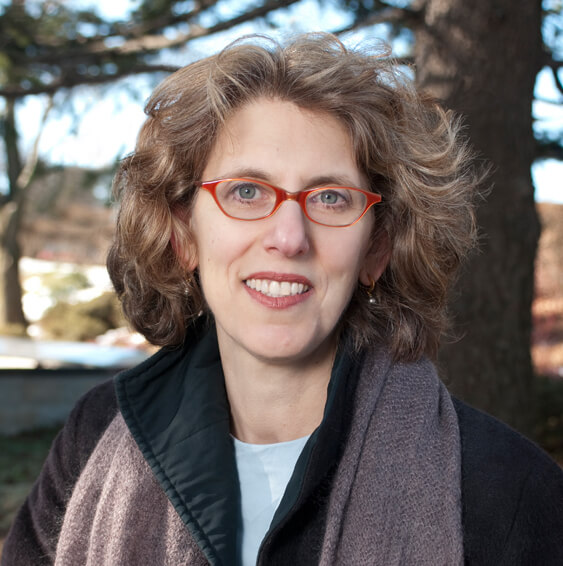
Juliet Schor is Professor of Sociology at Boston College. Before joining Boston College, she taught at Harvard University for 17 years, in the Department of Economics and the Committee on Degrees in Women's Studies. A graduate of Wesleyan University, Schor received her Ph.D. at the University of Massachusetts. She is a co-founder of the South End Press and the Center for Popular Economics. She is a founding Board Member of the Center for a New American Dream, where she currently serves as the Co-Chair of the Board of Directors. Schor is also, an occasional faculty member at Schumacher College, a former columnist for Z Magazine, a former Trustee of Wesleyan University and a former fellow of the Brookings Institution. Schor is currently writing Plenitude: Economics for an Age of Ecological Decline, which will be published in 2010 by The Penguin Press. She is also author of the national best-seller, The Overworked American: The Unexpected Decline of Leisure (Basic Books, 1992) and The Overspent American: Why We Want What We Don’t Need among other works. She has served as a consultant to the United Nations, at the World Institute for Development Economics Research, and to the United Nations Development Program. She was a fellow at the John Simon Guggenheim Memorial Foundation in 1995-1996. In 1998 Schor received the George Orwell Award for Distinguished Contributions to Honesty and Clarity in Public Language from the National Council of Teachers of English and in 2006 she received the Leontief Prize from the Global Development and Economics Institute at Tufts University for expanding the frontiers of economic thought. Schor has lectured widely throughout the United States, Europe and Japan to a variety of civic, business, labor and academic groups. She appears frequently on national and international media.
ZNetwork is funded solely through the generosity of its readers.
Donate




