


Thomas Friedman has achieved another media triumph with the debut of “Tom’s Journal” on the “NewsHour with Jim Lehrer.” The feature will be a “one-on-one debriefing of Friedman by Lehrer or one of the program’s senior correspondents,” says a news release from the influential PBS program. Friedman will appear perhaps a dozen times per year — whenever he comes back from a major trip abroad.
Specializing in foreign affairs, Friedman reaches millions of readers with his syndicated New York Times column. And he’s often on television — especially these days. “In the post-9/11 environment, the talk shows can’t get enough of Friedman,” a Washington Post profile noted. He appears as a guest on “Meet the Press,” “Face the Nation,” “Washington Week in Review” and plenty of other TV venues. He even went over big on David Letterman’s show.
A passage from Friedman’s 1999 book “The Lexus and the Olive Tree” sums up his overarching global perspective: “The hidden hand of the market will never work without a hidden fist. McDonald’s cannot flourish without McDonnell Douglas, the designer of the U.S. Air Force F-15. And the hidden fist that keeps the world safe for Silicon Valley’s technologies to flourish is called the U.S. Army, Air Force, Navy and Marine Corps.”
If he were as passionate about challenging global corporatization as promoting it — or as fervent about stopping wars as starting them — it’s hard to imagine that a regular feature like “Tom’s Journal” would be airing on the “NewsHour.”
Friedman has been a zealous advocate of “bombing Iraq, over and over and over again” (in the words of a January 1998 column). Three years ago, when he offered a pithy list of prescriptions for Washington’s policymakers, it included: “Blow up a different power station in Iraq every week, so no one knows when the lights will go off or who’s in charge.”
In an introduction to the book “Iraq Under Siege,” editor Anthony Arnove points out: “Every power station that is targeted means more food and medicine that will not be refrigerated, hospitals that will lack electricity, water that will be contaminated, and people who will die.”
But Friedman-style bravado goes over big with editors and network producers who share his disinterest in counting the human costs. Many journalists seem eager to fawn over their stratospheric colleague. “Nobody understands the world the way he does,” NBC’s Tim Russert claims.
Sometimes, Friedman fixates on four words in particular. “My motto is very simple: Give war a chance,” he told Diane Sawyer four months ago on “Good Morning America.” It was the same motto that he’d used two and a half years earlier in a Fox News interview. Different war; different enemy; different network; same solution.
In the spring of 1999, as bombardment of Yugoslavia went on, Friedman recycled “Give war a chance” from one column to another. “Twelve days of surgical bombing was never going to turn Serbia around,” he wrote in early April. “Let’s see what 12 weeks of less than surgical bombing does. Give war a chance.”
Another column included this gleeful approach for threatening civilians in Yugoslavia with protracted terror: “Every week you ravage Kosovo is another decade we will set your country back by pulverizing you. You want 1950? We can do 1950. You want 1389? We can do 1389 too.”
Last November, his column was in a similar groove. “Let’s all take a deep breath and repeat after me: Give war a chance. This is Afghanistan we’re talking about. Check the map. It’s far away.”
Friedman seems to be crazy about wisps of craziness in high Washington places. He has a penchant for touting insanity as a helpful ingredient of U.S. foreign policy; some kind of passion for indications of derangement among those who call the military shots.
During an Oct. 13 appearance on CNBC, he said: “I was a critic of (Defense Secretary Donald) Rumsfeld before, but there’s one thing … that I do like about Rumsfeld. He’s just a little bit crazy, OK? He’s just a little bit crazy, and in this kind of war, they always count on being able to out-crazy us, and I’m glad we got some guy on our bench that our quarterback — who’s just a little bit crazy, not totally, but you never know what that guy’s going to do, and I say that’s my guy.”
And Friedman doesn’t just talk that way. He also writes that way. “There is a lot about the Bush team’s foreign policy I don’t like,” a Friedman column declared in mid-February, “but their willingness to restore our deterrence, and to be as crazy as some of our enemies, is one thing they have right.”
Is Thomas Friedman clever? Perhaps. But not nearly as profound as a few words from W.H. Auden: “Those to whom evil is done / Do evil in return.”
_______________________________________________
Norman Solomon’s latest book is “The Habits of Highly Deceptive Media.” His syndicated column focuses on media and politics.

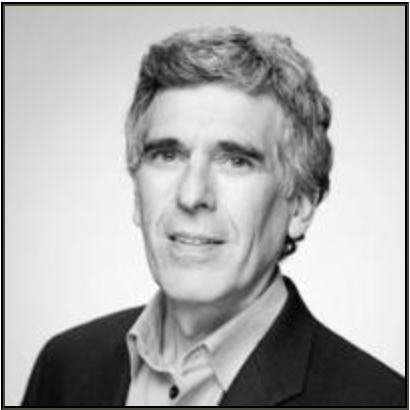
Norman Solomon is the national director of RootsAction.org and executive director of the Institute for Public Accuracy. The paperback edition of his latest book, War Made Invisible: How America Hides the Human Toll of Its Military Machine, includes an afterword about the Gaza war.
ZNetwork is funded solely through the generosity of its readers.
Donate




