


But this is not about arms deals or rapprochement with the US. It is far cruder. The BJP has driven an agenda against Muslims. In 2000, Modi’s senior leader, LK Advani travelled to Israel, where he pointedly said to his hosts: “We share with Israel a common perception of terrorism as menace, even more so when coupled with religious fundamentalism.”
It is the last part of his comment that bears notice – “coupled with religious fundamentalism”. It is typically a synonym for “Islamic militancy” or more plainly, “Islamic fundamentalism”.
When the BJP’s Jaswant Singh visited Israel as the defence minister in July 2000, he complained that the relationship between the two countries had been hampered “due to domestic policies because of a Muslim vote bank”.
In other words, Singh believed that a “Muslim lobby” in India had constrained the ability of the Indian government to link up with its natural partner – Israel. In 1982, when the Israeli consul in Bombay, Yossef Hassin, wrote an article blaming the “Muslim Lobby” for India’s inability to link with Israel, he was expelled from the country. A great deal divided 1982 from 2000.
In 1982, India remained committed to the decolonisation precepts. It is why India – as a leader in the Non-Aligned Movement – supported the Palestinian cause. By the 1990s, the movement had been weakened, even more so by the demise of the Soviet Union.
As a consequence the policy of decolonisation no longer held sway. States in the movement fought to be part of the “globalised world” rather than build dignified national economies. Globalisation had no room for an anti-colony policy against Israel. South Africa’s apartheid regime ended in 1994.
The Palestine Liberation Organisation signed up to the Oslo peace agreement that same year. It was as if decolonisation was no longer on the agenda. Normal relations with Israel, as consequence, became available. This was nothing to do with a “Muslim lobby”. That language is merely Islamaphobic.
What links the BJP to Israel – particularly its hard right – is the anti-Islamic tenor of both political formations. It is why the BJP has eagerly sought to have a close tie with Israel, and why the BJP-led government did not vote in the UN Human Rights Council to send the Davis Report on Israel’s last war on Gaza to the International Criminal Court.
The road to Washington
But the BJP is not alone in its desire for normal relations with Israel. The Congress Party understood in the early 1990s that the pathway to a rapprochement with Washington could most easily come through Tel Aviv.
Recognition of Israel was the price that the Congress Party was willing to pay in order to show Washington that it was serious about a new relationship with the West. That is the main reason why India opened diplomatic ties with Israel in 1992. It paved the way to Washington.
In 1998, under the BJP, India tested nuclear weapons for the second time (the first was in 1974). Due to strict anti-nuclear proliferation paradigm of US law, US weapons makers had to suspend sales to India.
The Russian arms industry – which had supplied India with weapons until the late 1980s – had not yet come out of the disarray of the post-Soviet years. India had begun to buy western armaments in the breach. But after 1998, these were no longer so easily available.
Israel, which has a joint arrangement with western arms firms, was able to supply India with its needs. Neither Israel nor India is a signatory of the Non-Proliferation Treaty, and Israel could not be bothered with the moral hypocrisies of the US in terms of nuclear proliferation.
Arms sales from Israel to India increased at an astronomic rate. India is now Israel’s main arms buyer. It is this reliance upon Israeli arms that links India to Israel. Russians arms are back in the market, so that this reliance is not entirely necessary. It could end tomorrow.
India’s many commitments
The BJP’s tilt to Israel confounds its own many entanglements in the region. The Gulf Arab states are essential for two reasons – energy resources and jobs for Indian workers that bring India much needed remittance payments.
It is not easy for India to snub its nose at the Gulf Arab states. The UN’s acceptance of the Iran nuclear deal brings Iran’s economy back in play. India has long relied upon Iranian oil and the export of Indian goods to the voracious Iranian economy.
Relations between Gulf Arab states and Iran mean that India cannot be tone-deaf to their concerns. On Israel, despite differences between the Gulf Arabs and Iran, there is a consensus that the Palestinian cause must be front and centre. Commitments to Iran and the Gulf Arabs – particularly Saudi Arabia – mean that India cannot be cavalier about its shift in policy towards the Palestinians.
India has also sought to leverage its position in the Brics (Brazil, Russia, India, China and South Africa) bloc to gain more power on the world stage. Despite the Indian ruling class’ desire for a close link with the West, it is the Brics bloc that has allowed India far more of an entrance into international institutions.
The West has, on the other hand, not been as generous – for instance in terms of India’s entry onto the UN Security Council as a permanent member and for greater power to India in the IMF. The Brics remain consistent in their support for Palestinian rights and for the decolonisation of Israel.
China, despite not being a member of the International Criminal Court, voted for the Davis Report in the UN Human Rights Council. It is this Brics position that makes India’s shift to Israel less easy. It is why the Indian external affairs minister had to say that there is no change of Indian policy regarding the Palestinians.
Pressure from the Gulf Arab states and Iran as well as the Brics bloc is long overdue. That they would allow India – with all its prestige in the Global South – to join the US and a handful of countries in the pro-Israel ledger is astounding.
Modi’s visit to Israel provides a good opportunity for these states to draw a red line for the BJP government. It cannot have it both ways. India cannot be allowed to speak with the Brics-Gulf Arabs-Iran and walk with Israel-US.

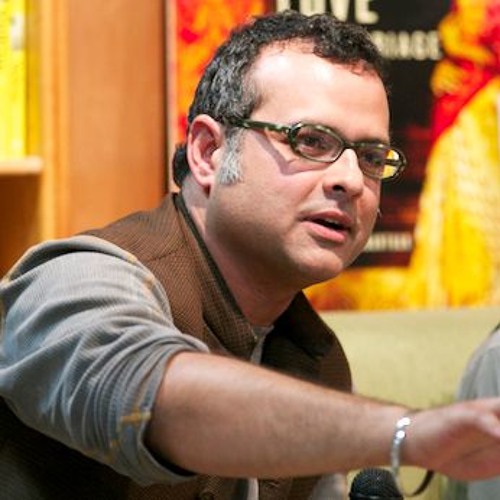
Vijay Prashad is an Indian historian, editor, and journalist. He is a writing fellow and chief correspondent at Globetrotter. He is an editor of LeftWord Books and the director of Tricontinental: Institute for Social Research. He is a senior non-resident fellow at Chongyang Institute for Financial Studies, Renmin University of China. He has written more than 20 books, including The Darker Nations and The Poorer Nations. His latest books are Struggle Makes Us Human: Learning from Movements for Socialism and (with Noam Chomsky) The Withdrawal: Iraq, Libya, Afghanistan, and the Fragility of U.S. Power. Tings Chak is the art director and a researcher at Tricontinental: Institute for Social Research and lead author of the study “Serve the People: The Eradication of Extreme Poverty in China.” She is also a member of Dongsheng, an international collective of researchers interested in Chinese politics and society.
ZNetwork is funded solely through the generosity of its readers.
Donate




