


“A 4-year-old girl passed out in 100-degree heat after she was pushed back toward Mexico by Texas National Guard personnel. A pregnant woman became trapped in razor wire and had a miscarriage. A state trooper said he was under orders not to give migrants any water.”
Yes, these are scenes from something called “Operation Lone Star,” but the director isn’t John Ford; it’s Texas Gov. Greg Abbott — and this is real life, as reported by USA Today.
And in real life, at least 853 migrants died trying to cross the U.S.-Mexico border in the past 12 months. And God knows how many merely endured — and continue to endure — various forms of hell.
Something there is that doesn’t love a wall . . .
The wall Robert Frost wrote about in his classic poem “Mending Wall,” published in 1914, was a hand-built stone wall separating an apple orchard from a pine forest. The narrator of the poem expressed ambivalence about walls in general — what’s their point? — and smirked when his neighbor said: “Good fences make good neighbors.” But here he was, working with his neighbor to repair it. This was an annual ritual; hunters were always knocking part of the wall down, and the winter weather — the frost — also inflicted regular damage. The wall was simply part of their lives, so every spring they put it back together.
Interestingly, the poem started claiming a spot in the national political consciousness in the early ’60s, after the Soviets constructed a wall dividing East and West Berlin. Yeah, something there is that doesn’t love a wall. The line had Cold War resonance, at least when it was directed at the communists, who were arrogantly creating a barrier that must not be crossed.
Quite obviously, this was not a wall constructed by equals. It was a one-sided declaration to an enemy: Stay out. America, the good guys, told the Soviets with moral certainty: Tear down that wall. This puts the present moment, and the obsession of certain powerful Americans with “border security” (and, for God’s sake, razor wire), in an interesting context.
Consider these words of Martin Luther King, when he visited Berlin in 1964:
“It is indeed an honor to be in this city, which stands as a symbol of the divisions of men on the face of the earth. For here on either side of the wall are God’s children and no manmade barrier can obliterate that fact. Whether it be East or West, men and women search for meaning, hope for fulfillment, yearn for faith in something beyond themselves, and cry desperately for love and community to support them in this pilgrim journey.”
I guess those are easy words to embrace when they’re directed at a declared enemy. But King’s context was a little larger than that. He told his audience of Berliners that, while he was hardly an expert in German politics, he knew about walls. I think he could very well have said the same words in El Paso or Laredo or Eagle Pass — any Texas border city.
“For here on either side of the wall are God’s children and no manmade barrier can obliterate that fact.”
Are you aware of that, Gov. Abbott?
Simple-minded and cruel governmental policies — policies wrapped in razor wire — keep no one safe.
So am I saying that border protection is one hundred percent wrong and our borders should be wide open? In my heart, yes, but I’m also aware that the matter is way more complicated than that, and the flow of refugees into a country can create complex difficulties for the current social structure, financial and otherwise. What I am saying is that the flow of refugees is a global matter — kind of on the order of climate change, not to mention war — and we . . . all of us . . . have to devote far more energy and awareness to addressing it than we have so far. Dehumanizing the refugees, then simply focusing on keeping them out, as though they were vermin, betrays an excruciating lack of moral intelligence.
And the damage is widespread, cultural and environmental. As the Center for Biological Diversity points out:
“Border walls built over the past several decades along the U.S.-Mexico border are a dark stain on American history. Hundreds of miles of wall have been built through protected public lands, communities and sovereign tribal nations. These barriers cut through sensitive ecosystems, disrupt animal migration patterns, cause catastrophic flooding and separate families.”
And a diverse array of endangered and rare species is threatened by our militarized protection of an imaginary line, including, as the center notes: “Sonoran pronghorns, lesser long-nosed bats, Quino checkerspot butterflies, cactus ferruginous pygmy owls, and larger predators like jaguars, Mexican gray wolves and ocelots . . .”
The “border problem” cannot be resolved by minimizing our connection to all of humanity and all of the natural world. What we call government is our collective identity. It’s more than just bureaucracy. It’s more than just rules and guns and razor wire. And now is the time for it to wake up, but this will only happen if we demand that it expand its awareness . . . expand its sense of empathy. This is the only way it can “protect” us from our self-created problems.
Robert Koehler, syndicated by PeaceVoice, is a Chicago award-winning journalist and editor. He is the author of Courage Grows Strong at the Wound.

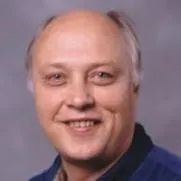
Robert Koehler is an award-winning, Chicago-based journalist and nationally syndicated writer. Koehler has been the recipient of multiple awards for writing and journalism from organizations including the National Newspaper Association, Suburban Newspapers of America, and the Chicago Headline Club.
ZNetwork is funded solely through the generosity of its readers.
Donate




