


I have always had a poor opinion of academics who flaunt their scholastic attainments at the first opportunity they get.
Thankfully, not having any attainments, I have been saved the gauche temptation.
But this is one reason why I rate Shri Narendra Modi’s record of learning so high; no matter how challenged, he has never yielded to the weakness to put out his certificates for upstart accusers to survey.
His take on Dimagi Naxals, however gives us a glimpse of what his doctoral work in (Entire) Philosophy may have comprised.
One of the teasing conundrums in philosophical speculations has been the problem of individual existence.
Having recognised that our animal self is never in doubt (we eat, we defecate, we copulate), the question has tended to remain as to how the discrete uniqueness of individual selfhood may be established beyond the physical parameters of bodily features.
Among various speculations on the problematic, one of the most influential ones was that of the French philosopher, Rene Descartes.
In his Discussions on the Method of 1637 and in Principles of Philosophy of 1644, Descartes concluded cogito ergo sum, translating to ‘I think, therefore I am.’
The telling formulation was rooted in the truth that before there is any specific thought or idea there must be a self that formulates the same, and the diversity of thoughts clearly point to separate self hoods.
In other words, before there is a thought, there must be a thinker.
No wonder that his breakthrough came to be a propellant for much personal, social, economic advancement in the Western world, among them the notion of individual rights and democracy.
And little wonder that this philosophical intervention challenged archives of received wisdoms in a way and at a scale not seen before – as individuals began to see their prowess as generators of new ideas that were not subservient to forms of unquestionable, antecedent authority.
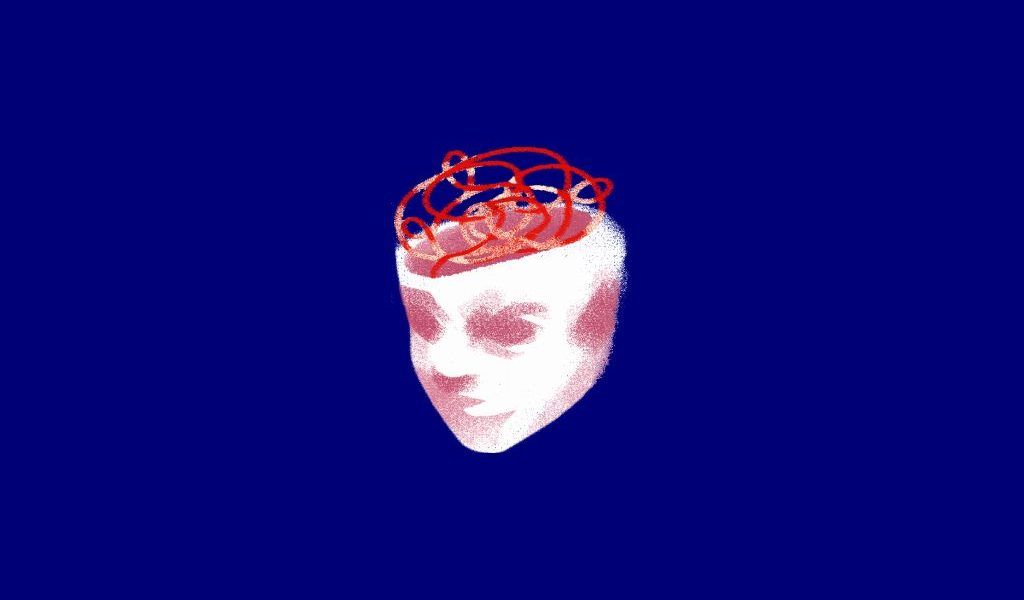
Thus, in the reversions of social thought in our time to old world sanctities – deference to scriptures, to self-appointed knowledge gurus, to parental fiats, to other forms of hierarchy in community and official life, it is little wonder that Cogito Ergo Sum – I think, therefore I am – should come to be extended to the postulation “I think, therefore I am – a Naxal”.
Thus, any act of thinking that dares to be in contravention of any oracular given, any “authorised” item of articulation on the tablet of commandments, has once again come to be viewed as transgressive, subversive, dangerous to the order as established by the chosen ones who alone are given the right to interpret and establish ideas which must be deemed kosher by every “loyal” citizen.
Among current day world leaders who have mightily contributed to reversing the mischievous charge of Descartes’ formulation, Modi must be credited with a more than substantial share.
If “terrorist” was the obvious first desirable appellation to contrast with certified loyal citizen, in switching to Naxal as the new antagonist, Modi has brilliantly underscored the heinous nature of those far more highly endowed and educated than mere terrorists, and therefore far more damaging to the oracular order of things.
The less well-fed Dimagi Naxals tend to be, the keener their minds and looks in canny opposition to the pulpit.
Modi as we know also been an avid student of Shakespeare, and cannot but have drawn inspiration form that vignette in Julius Caesar wherein Caesar says to his friend Mark Antony, “beware the lean and hungry Cassiius/ he thinks too much/ such men are dangerous.”
To conclude, the Cartesian thesis that every self exists because it thinks may well be existentially true, but for that reason is hardly politically desirable.
When human subjects are left to their own cognitive devices, the consequences for a no-nonsense state cannot but be harmful.
In a world that requires militarist certainties – if ever certainties they are – the call on the constructive and cooperative citizen committed to the goal of building an empire is clear: “there’s is not to reason why/ there’s is not to make reply/ there’s is but to do and die”.
It is a matter of great anxiety that a new generation of young Indians seem to think – yes, think – that the purpose of an educational system should not be to mass produce loyal citizens but such as can, in the course of their growth, generate ever new propositions, rejecting given ones.
No wonder that the call to disable Dimagi Naxals it is an urgent one.
Between the thinker and the thought thus must fall a shadow that ensures obliterating the consequence of thought-production.


Badri Raina is a well-known commentator on politics, culture and society. His columns on the Znet have a global following. Raina taught English literature at the University of Delhi for over four decades and is the author of the much acclaimed Dickens and the Dialectic of Growth. He has several collections of poems and translations. His writings have appeared in nearly all major English dailies and journals in India.
ZNetwork is funded solely through the generosity of its readers.
Donate




