


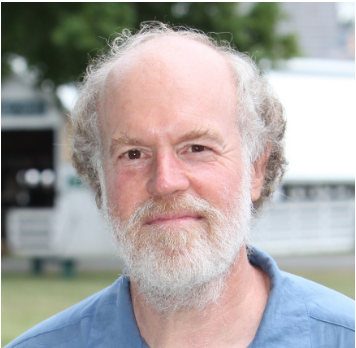
Murray Bookchin, the visionary social theorist and activist, died during the early morning of Sunday, July 30th in his home in Burlington, Vermont. During a prolific career of writing, teaching and political activism that spanned half a century, Bookchin forged a new anti-authoritarian outlook rooted in ecology, dialectical philosophy and left libertarianism.
During the 1950s and ’60s, Bookchin built upon the legacies of utopian social philosophy and critical theory, challenging the primacy of Marxism on the left and linking contemporary ecological and urban crises to problems of capital and social hierarchy in general. Beginning in the mid-sixties, he pioneered a new political and philosophical synthesis-termed social ecology-that sought to reclaim local political power, by means of direct popular democracy, against the consolidation and increasing centralization of the nation state.
From the 1960s to the present, the utopian dimension of Bookchin’s social ecology inspired several generations of social and ecological activists, from the pioneering urban ecology movements of the sixties, to the 1970s’ back-to-the-land, antinuclear, and sustainable technology movements, the beginnings of Green politics and organic agriculture in the early 1980s, and the anti-authoritarian global justice movement that came of age in 1999 in the streets of Seattle. His influence was often cited by prominent political and social activists throughout the US, Europe, South America, Turkey, Japan, and beyond.
Even as numerous social movements drew on his ideas, however, Bookchin remained a relentless critic of the currents in those movements that he found deeply disturbing, including the New Left’s drift toward Marxism-Leninism in the late 1960s, tendencies toward mysticism and misanthropy in the radical environmental movement, and the growing focus on individualism and personal lifestyles among 1990s anarchists. In the late 1990s, Bookchin broke with anarchism, the political tradition he had been most identified with for over 30 years and articulated a new political vision that he called communalism.
Bookchin was raised in a leftist family in the Bronx during the 1920s and ’30s. He enjoyed retelling the story of his expulsion from the Young Communist League at age 18 for openly criticizing Stalin, his brief flirtation with Trotskyism as a labor organizer in the foundries of New Jersey, and his introduction to anarchism by veterans of the immigrant labor movement during the 1950s. In 1974, he co-founded the Institute for Social Ecology, along with Dan Chodorkoff, then a graduate student at Vermont’s Goddard College. For 30 years, the Institute for Social Ecology has brought thousands of students to Vermont for intensive educational programs focusing on the theory and praxis of social ecology. A self-educated scholar and public intellectual, Bookchin served as a full professor at Ramapo College of New Jersey despite his own lack of conventional academic credentials.He published more than 20 books and many hundreds of articles during his lifetime, many of which were translated into Italian, German, Spanish, Japanese, Turkish and other languages.
During the 1960s – ’80s, Bookchin emphasized his fundamental theoretical break with Marxism, arguing that Marx’s central focus on economics and class obscured the more profound role of social hierarchy in the shaping of human history. His anthropological studies affirmed the role of domination by age, gender and other manifestations of social power as the antecedents of modern-day economic exploitation. In The Ecology of Freedom(1982), he examined the parallel legacies of domination and freedom in human societies, from prehistoric times to the present, and he later published a four-volume work,The Third Revolution, exploring anti-authoritarian currents throughout the Western revolutionary tradition.
At the same time, he criticized the lack of philosophical rigor that has often plagued the anarchist tradition, and drew theoretical sustenance from dialectical philosophy-particularly the works of Aristotle and Hegel; the Frankfurt School-of which he became increasingly critical in later years-and even the works of Marx and Lenin. During the past year, even while terminally ill in Burlington, Bookchin was working toward a re-evaluation of what he perceived as the historic failure of the 20th century left. He argued that Marxist crisis theory failed to recognize the inherent flexibility and malleability of capitalism, and that Marx never saw capitalism in its true contemporary sense. Until his death, Bookchin asserted that only the ecological problems created by modern capitalism were of sufficient magnitude to portend the system’s demise.
Murray Bookchin was diagnosed several months ago with a fatal heart condition. He will be remembered by his devoted family members-including his long-time companion Janet Biehl, his former wife Bea Bookchin, his son, daughter, son-in-law, and granddaughter-as well as his friends, colleagues and frequent correspondents throughout the world. There will be a public memorial service in Burlington, Vermont on Sunday, August 13th. For more information, contact info(at)social-ecology.org.
ZNetwork is funded solely through the generosity of its readers.
Donate

