


In mid-October, my email in-box began to receive forwards from Michael Bednar, a graduate student in the department of history at the University of Texas, Austin. The subject line suggested that it was an email joke: “Congress moves to regulate postcolonial studies.”
Thanks to the vigilance of Michael Bednar many of us now know that the US Congress is poised to transform the relationship between university and college level international or area studies and the US government. The study of the world has been cultivated by federal funds via Title VI legislation, but the government has, by and large, not been involved in the career choices of those who take the money, study and then go forward into their lives. The government, when the President signs HR 3077 into law, will be now create an International Education Advisory Board made up of members of the Department of Defense, the National Security Agency and Homeland Security “to increase accountability by providing advice, counsel, and recommendations to Congress on international education issues for higher education.” In other words, the government wants our students to enter a War Corps, to provide the translators, the intelligence analysts and others who will do the bidding of this era’s Evangelical Imperialism.
I had barely begun to get over the death of Edward Said, whom the Israeli scholar Ilan Pappe rightly called the “lighthouse that navigates us.” The assault on Area Studies it turns out is part of an assault on the legacy of those such as Edward Said, a long-time obsession of Martin Kramer’s Middle East Forum (and Daniel Pipe’s year old Campus Watch website). On 19 June 2003, when the Iraq war had already turned into this disastrous occupation, the US House of Representative’s Subcommittee on Select Education held a hearing on “International Programs in Higher Education and Questions About Bias.” The lead plaintiff at the hearing was Stanley Kurtz, a rather well known partisan from the Hoover Institute and National Review, who makes Bernard Lewis seem a liberal. Kurtz testimony invoked Said in his claim that most area studies centers are currently teaching anti-Americanism. “Said equated professors who support American foreign policy with the 19th century European intellectuals who propped up racist colonial empires. The core premise of post-colonial theory is that it is immoral for a scholar to put his knowledge of foreign languages and culture at the service of American power.” Actually this is not a bad summary of Said’s argument on culture and imperialism.
Kurtz recommends a reversal of the Said claim. Indeed he wants the government to oversee the Title VI funds given over to universities for the study of the rest of the world. The House accepted the critique and the recommendations. They have now written H. R. 3077 that adopts all this language, they passed it and have sent it along to the Senate (who is expected to start deliberations on it come the new year).
H. R. 3077 is not a break from US government policy. It is a reaction to the break made by many scholars within Area Studies from the goals of US imperialism. The establishment wants to take back Area Studies programs to the goal of their origination. Area Studies emerges in the early part of this century mostly as part of US evangelism: K. S. Latourette at Yale helped kick-start East Asian studies (his 1929 book is History of the Christian Missions in China); H. E. Bolton at Berkeley pioneered Latin American Studies (his 1936 book is The Rim of Christendom: A biography of Eusebio Francisco Kino, Pacific Coast Pioneer); A. C. Coolidge at Harvard worked out the contours of Slavic Studies (his big book of 1908 is entitled The United States as a World Power). In its infancy, the Church and Washington held sway over Area Studies. Our evangelical imperials of today want to return to this period.
Toward the end of Orientalism, Said noted that the US academy had taken over the Orientalist mantle from the Europeans after World War II and the “area specialist,” he noted, “lays claims to regional expertise, which is put at the service of government or business or both.” Area Studies, or the study of the world within the US academy, indeed has a complex history, much of it mired in an eagerness to please the powers. University of Chicago’s sociologist Edward Shils said of his secondment to the War Department in the 1940s, that he was “glad of the vacation from teaching [and] enjoyed the excitement of proximity to great events and to great authority as well as to the occasional exercise of power on [our] own.” Such is perhaps a good summary of the intentions of those academics who want to will themselves to power–venality mixed with a dose of the luxury afforded to the venal.
In 1951, a Social Science Research Council report regretted the “woeful lack of area experts, however defined” and it argued that the best thing for US domination of the world was “the launching of scores of area programs.” In a moment of candor, the report authored by University of Michigan East Asia scholar Robert Hall, noted, “We must know if we are to survive.” Much of what Said detested in Area Studies (particularly the study of the Arabic speaking peoples) is a result of the policies put in place in the wake of the SSRC report.
The campus struggles during the Vietnam War and the uprisings of students of color (the Third World Strike) pushed the academy to rethink Area Studies. As Said notes in Orientalism, “The Committee of Concerned Asia Scholars (who are primarily American) led a revolution during the 1960s in the ranks of East Asia specialists; the African studies specialists were similarly challenged by revisionists; so too were other Third World area specialists.” (He regrets that such a change did not come for Arabists and Islamologists–although after his book such change has been afoot to such a degree that it has provoked an immense backlash from people like Daniel Pipes, Bernard Lewis, Martin Kramer and Stanley Kurtz).
With the demise of the Soviet Union, the assault on Area Studies started afresh. We were told that all campuses must “internationalize,” an idea that is on the surface very appealing and it drew support from many Area Studies people (in the mid-1990s the Ford Foundation held a competition for funds to rethink Area Studies, a competition that drew most major universities and colleges). All talk of “internationalization” does not have humanitarian or liberal instincts, since the recent initiatives are driven principally by the military and by business.
Stanley Kurtz has used 9/11 and the recent wars as an excuse to recycle a bill that made its first appearance in 1992 thanks to Representative David Boren. In the National Security Education Act of 1992 Congress wished to “produce an increased pool of applicants for work in the departments and agencies of the US government with national security responsibilities” (article 3). The bill would have become law a decade ago had Newt Gingrich not taken control of Washington and nixed it in his bid to defund education in general. He probably didn’t read the fine print.
The business implications of internationalization came to the fore in 1990, when the National Governors Association bemoaned the lack of international education for college graduates in a globalized world. “The best jobs, the largest markets and the greatest profits will flow to the workers and firms that understand the world around them,” said the governors. Their analysis of recent history led to the assessment that “a lack of understanding and inability to communicate contributed to such events as the war in Vietnam, the hostage crisis in Iran, the OPEC oil crisis and the political consequences of the Bhopal industrial disaster.” The motives of power and profit are freed of any responsibility for this litany of ills–we are left with E. M. Forster’s dictum, “Only Connect.”
Title VI is not a one-dimensional weapon of imperial domination: it has allowed for the creation of vast amounts of knowledge mobilized by progressives to help us to understand the dilemma of our world. Yale historian David Montgomery writes that we need to review the Cold War experience of Area Studies and the academy “not only to teach us how the human imagination has been contained, but also how it has broken through the veils of secrecy and deception.” Area Studies has enabled us to better understand the creativity of popular social and left movements, and it has shown us how the theory of the GDP stifles the liberty of people around the globe. For us to continue our struggle to breathe life into Area Studies, to make it a real partisan of radical thought against the dreary deserts of pragmatism and of domination, we have to resist the new bill as it wends through Congress.
Michael Bednar asks us to write to our local representatives. That is always a good idea. Here’s another one. If you are on a college campus, start a student-faculty-staff group in defense of Postcolonial/Area Studies–and push the administration to take a position on the issue along the lines of freedom of speech. If you are not on a college campus, then express your outrage in the local paper about the government’s infringement on the liberty of intellectual thought. All political groups should take this seriously: it is not just about the academy, but also about the attempt by the state to make the academy into the emissary of Empire.
If you are interested in a campaign against this Kurtzian offensive, send me an email.
Vijay Prashad is an Associate Professor and Director of the International Studies at Trinity College, Hartford, CT. He can be reached at Vijay.Prashad@trincoll.edu

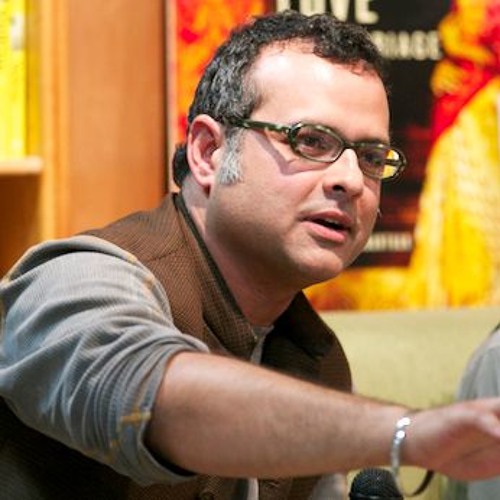
Vijay Prashad is an Indian historian, editor, and journalist. He is a writing fellow and chief correspondent at Globetrotter. He is an editor of LeftWord Books and the director of Tricontinental: Institute for Social Research. He is a senior non-resident fellow at Chongyang Institute for Financial Studies, Renmin University of China. He has written more than 20 books, including The Darker Nations and The Poorer Nations. His latest books are Struggle Makes Us Human: Learning from Movements for Socialism and (with Noam Chomsky) The Withdrawal: Iraq, Libya, Afghanistan, and the Fragility of U.S. Power. Tings Chak is the art director and a researcher at Tricontinental: Institute for Social Research and lead author of the study “Serve the People: The Eradication of Extreme Poverty in China.” She is also a member of Dongsheng, an international collective of researchers interested in Chinese politics and society.
ZNetwork is funded solely through the generosity of its readers.
Donate




