

IN 2000, Ammu Joseph, a journalist based in Bengaluru, wrote in her landmark book Making News: Women in Journalism: “Sexual harassment is a sensitive topic which many women are either embarrassed to talk about or prefer to dismiss as a relatively minor irritant that they can handle.” She catalogued story after story told by women about the atrocious behaviour of many of their male colleagues in newsrooms across the country. Ammu Joseph, along with Laxmi Murthy and others, helped found the Network of Women in Media, India (NWMI), in 2002. The book captures the atmosphere for women inside the news business. But, as Ammu Joseph says, any profession could have provided her with the same kind of material.
Anyone who has worked anywhere knows the validity of the assertion that workplace sexual harassment is not only pervasive but, until now, had been little talked about. There had been the occasional public story linked to a powerful man—be it Tarun Tejpal or R.K. Pachauri—but there was not the necessary outburst that came in the period after the gang rape in Delhi in 2012 (the “Nirbhaya” case) and in Haryana in 2013.
The All India Democratic Women’s Association (AIDWA) and other such organisations consistently beat the drum to raise awareness, but they were not taken seriously.
The election of Donald Trump to the United States presidency angered many women in that country. The Women’s March, which came alongside Trump’s inauguration, put the question of sexual harassment and violence against women on the table. Trump’s disregard for women’s concerns raised the level of consciousness among women across the U.S. It was in this atmosphere that accusations of sexual assault were made against the Hollywood producer Harvey Weinstein. Those who spoke out against Weinstein emboldened others to speak about other powerful men.
In 2006, Tarana Burke, a community organiser, used the phrase “Me Too” to start a conversation on MySpace about sexual violence against women of colour. She said that she once encountered a 13-year-old girl who told her that she had been sexually assaulted. Later, Tarana Burke wished she had said to the girl, “Me too”, as a way of offering her empathy and solidarity. Then, she did not. Now, she did. The term did the rounds and then seemed to die off. In October 2017, in the midst of the Weinstein furore, the actor Alyssa Milano took to Twitter and encouraged people to use the hashtag #MeToo. It took off.
#MeToo came to India through a list of South Asian academics who had been charged with sexual harassment and rape by young women. This list was curated by Raya Sarkar, a law student at the University of California (Davis), and others around her. It was made initially to simply collect the stories that had been sent to Raya Sarkar, who emerged on social media as a touchstone for many of the conversations around violence against female students by their teachers.
Raya Sarkar spoke to Frontline on her list, the ascension of Judge Brett Kavanaugh to the U.S. Supreme Court and accusations about the Indian newsroom. Excerpts:
Last year, after the MeToo campaign started in Hollywood, you began to produce a list of South Asian academics alleged to be sexual predators and rapists. Could you tell us a little of the origin of that list?
I created the list after Christine Fair’s Huffington Post article, where she accused the Indian historian Dipesh Chakrabarty of sexual harassment, was abruptly taken down, despite passing their vetting process. I was enraged that the article was taken down because students deserve to know if the person who sexually harassed them may have also harassed someone else.
I made the list also to warn students about allegations against professors in power who have allegedly exploited students who have worked and studied in very precarious labour conditions under them. Precarious because most graduate work is paid with a measly stipend, the college-to-job pipeline is dependent on letters of recommendation from professors, and many universities do not have functional complaints committees.
The “naming and shaming” bit was an unintended consequence.
What was your reaction to the debate that broke out following the appearance of the list?
I understand the list was not perfect. It was a crude form of dissent. At my end, I vetted everyone’s testimonies and evidence as best I could so we would not lose a libel or defamation case if there were one against me because I do not have the money to pay damages and neither did most of the accusers. We took the risk anyway because we were desperate for a #MeToo style closure but without the complainants having to end their careers.I appreciate the criticisms of the list, as people have pointed out that rape and sexual harassment are not the same and it would be unfair to clump rapists with sexual harassers. Keeping this in mind, I only included names on the basis of sexual harassment accusations and not of rape. It is possible that a person who has sexually harassed someone may have also raped another person. Grading sexual violence is the criminal court’s job, not mine. If they are later also accused of rape I think that is on them and not on me.
Arguing the semantics of the list does not distract one away from the fact that these men have all been accused of violating a vulnerable person’s sense of trust and safety, and I think it must not be normalised in schools and colleges but called out, investigated and prevented. Enabling such behaviour and writing character statements in support of powerful folks does a great job [of] discouraging victims from reporting misconduct.
The retributive nature of kinship and friendship networks of the powerful are very harmful to victims. It further alienates them from accessing due process. If I were to cite cases across the country where survivors went to court but received neither material nor restorative justice, it would take up a whole book.
What is your assessment of the discussion around Brett Kavanaugh and his accession to the U.S. Supreme Court?
Due process was manipulated in favour of Kavanaugh not only during the congressional hearing but throughout the investigation. The investigation by the FBI [Federal Bureau of Investigation] was suppressed by the Republican Party in every way possible.
First, they tried to limit the scope of witnesses they could question. Then Senator Flake arbitrarily arrived at a deadline for the investigation. Only one copy of the final report was shared by all members of the Senate. These were deliberate tactics to rush due process and suppress facts.
I am hoping for a Democratic Senate majority soon, so at least we can impeach Kavanaugh for lying under oath about what the words in his yearbook meant. The American Bar Association has announced that it will re-evaluate Kavanaugh’s rating, which will help impeachment proceedings in the future.
On the Indian side, the most powerful stories have come from women in journalism, from people such as Ghazala Wahab. You have been drawn into this story again, as it appears that there is a list of men in journalism who have been predators and rapists. What has been your reaction to the revelations?
I am very glad journalists like Ghazala Wahab and Anoo Bhuyan have publicly shared their testimonies. Whistle-blowers take great risks and their allegations should be viewed in the context of the risks they have taken in a deeply misogynist and casteist society. I believe that at the core of any liberation movement should be the most vulnerable, in this case women working in the informal sector in India who do not have any labour protections and who often belong to marginalised communities. The movement is missing the voices of more Dalit and Adivasi women and I hope we can change that.

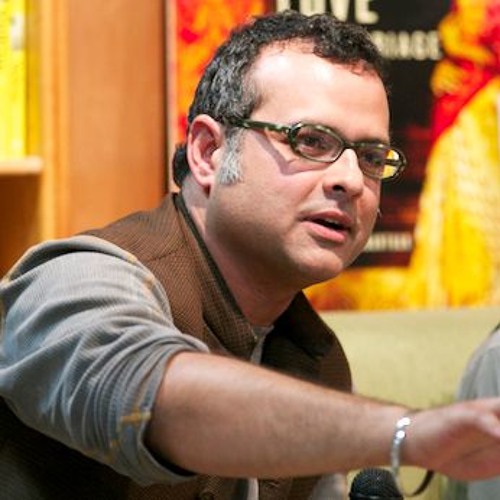
Vijay Prashad is an Indian historian, editor, and journalist. He is a writing fellow and chief correspondent at Globetrotter. He is an editor of LeftWord Books and the director of Tricontinental: Institute for Social Research. He is a senior non-resident fellow at Chongyang Institute for Financial Studies, Renmin University of China. He has written more than 20 books, including The Darker Nations and The Poorer Nations. His latest books are Struggle Makes Us Human: Learning from Movements for Socialism and (with Noam Chomsky) The Withdrawal: Iraq, Libya, Afghanistan, and the Fragility of U.S. Power. Tings Chak is the art director and a researcher at Tricontinental: Institute for Social Research and lead author of the study “Serve the People: The Eradication of Extreme Poverty in China.” She is also a member of Dongsheng, an international collective of researchers interested in Chinese politics and society.
ZNetwork is funded solely through the generosity of its readers.
Donate




