

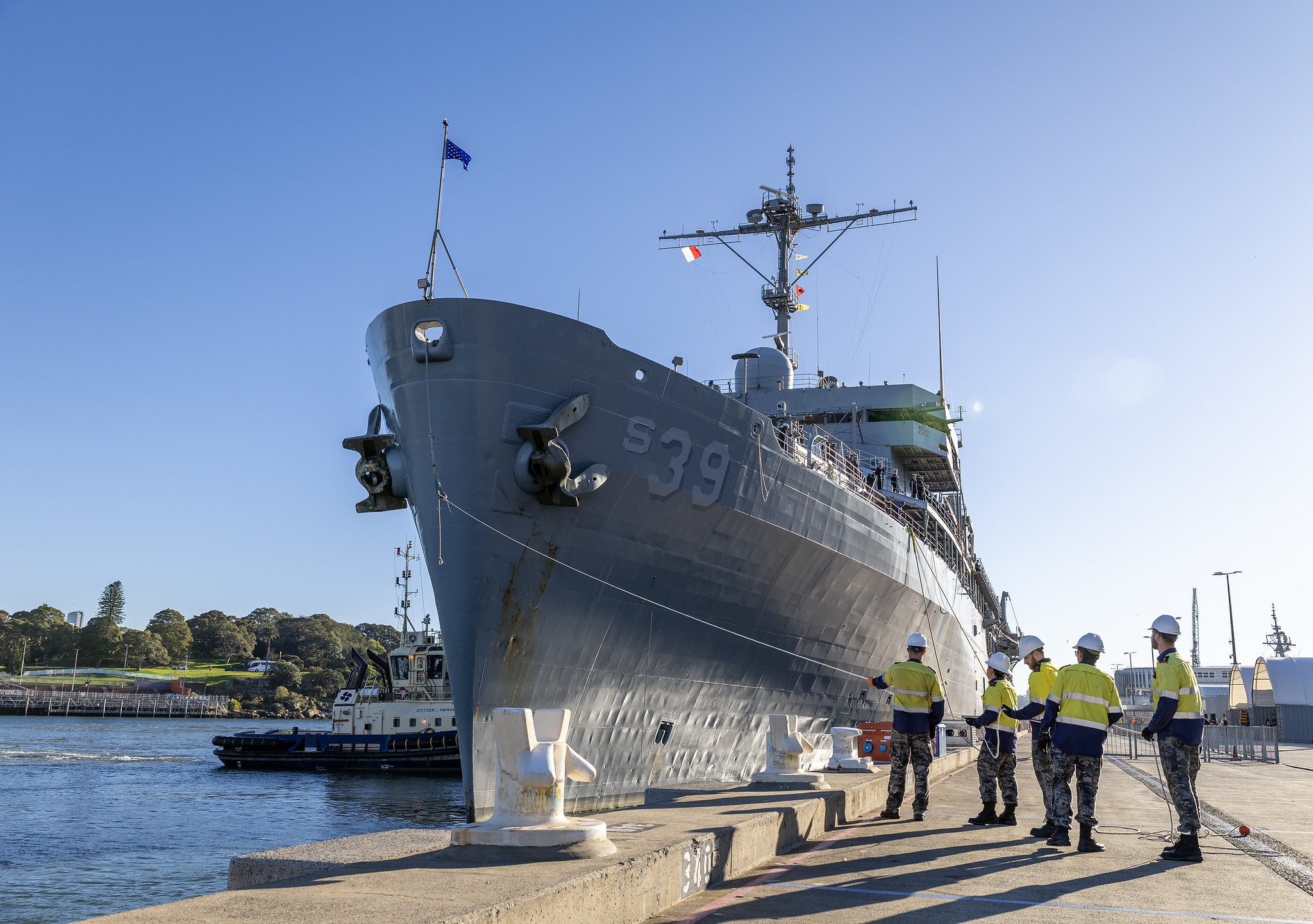
It was a blast to a past wiped out by amnesia, social media and mental decrepitude. Andrew Hastie, Australia’s opposition minister for home affairs, had been moved by an idea: greater transparency was needed regarding the US military buildup in Australia. It was an inspiration overdue by some decades, but it was worthwhile in its unaccustomed sensibility.
In an interview with the Insiders program on the ABC, Hastie proved startling in proposing that Australia needed “to have a much more mature discussion about our relationship with the United States. I think we need greater transparency.” He proceeded to recall the frankness of US Secretary of Defense Peter Hegseth’s testimony before the US Senate Armed Services Committee, which saw China named “as the pacing threat” in the Indo Pacific. Australia, Japan and the Philippines were mentioned as part of “the integrated deterrence that the US is building in the region.”
This saddled the Albanese government with significant obligations to the Australian people. Be clear, suggests Hastie. Be transparent. “I think we need to talk about operationalising the alliance, building guard rails for combat operations, and of course defining our sovereignty. And this will make things clearer for us so that we can better preserve our national interest.” With admirable clarity, Hastie places the Australian security establishment in the dock for interrogation. “We’re not just a vassal stage, we’re an ally and a partner and I think it’s time that we had a good discussion about what that looks like.”
Given that Australia already hosts a rotational US Marine force in Darwin from April to November, the Pine Gap signal intelligence facility in Alice Springs, and, in due course, the Submarine Rotational Force out of Perth from 2027 (“effectively a US submarine base”), it was time to consider what would happen if, say, a war were to be waged in the Indo Pacific. It was “about time we started to mature the [relationship] model and we’re open to the Australian people what it means for us”.
These views are not those of a closet pacifist wishing away the tangles of the US imperium. Having spent his pre-political life in the Australian Defence Forces as a member of the special services, he knows what it’s like playing valet in the battlefield to Washington’s imperial mandarins. Not that he rejects that role. Fear of abandonment and Freudian neuroses tend to pattern the Australian outlook on defence and national security. Yet there was something comforting in his awareness that the American garrisoning of its ally for future geopolitical brawling needed explanation and elucidation.
The response from Australia’s Defence Minister Richard Marles was typical. Spot the backbone of such a figure and find it wanting. US intentions and operations in Australia, he insisted, were adequately clear. Australians need not be troubled. There was, he told reporters during a visit to London to meet his UK counterpart John Healey “actually a high degree of transparency in relation to the United States presence in Australia.” The Australian government had “long and full knowledge and concurrence arrangements in relation to America’s force posture in Australia, not just in relation to Pine Gap, but in relation to all of its force posture in Australia.” Reiterating another fable of defence orthodoxy, Marles was also convinced Australia’s sovereignty in terms of how the US conducted its operations had been spared. Given Canberra’s abject surrender to Washington’s whims and interests with the AUKUS trilateral pact, this is an unsustainable claim.
To this day, we have sufficient anecdotal evidence that Pine Gap, notionally a jointly run facility between US and Australian personnel, remains indispensable to the Pentagon, be it in navigating drones, directing bombing missions and monitoring adversaries. The Nautilus Institute, most capably through its senior research associate Richard Tanter, has noted the base’s use of geosynchronous signals intelligence (SIGINT) satellites, Space-Based Infrared Systems (SBIRS) and its acquisition in the early 2000s of a FORNSAT/COMSAT (foreign satellite/communications satellite) function.
This makes Australia complicit in campaigns the United States pursues when it chooses. Dr Margaret Beavis, Australian co-chair of the International Campaign to Abolish Nuclear Weapons (ICAN), outlined the potential consequences: “We risk accelerating nuclear proliferation, we risk Pine Gap becoming a target, Tindal airbase becoming a target.”
All efforts to raise the matter before the vassal representatives in Canberra tends to end in a terminating cul-de-sac. Regarding the latest use of US B-2 stealth bombers in targeting Iran’s three primary nuclear facilities, the Australian Prime Minister, Anthony Albanese, was curt: “We are upfront, but we don’t talk about intelligence”. The bombing had been a “unilateral action taken by the United States.” Australian candour has its limits.
There is also no clarity about what the US military places on Australian soil when it comes to nuclear weapons or any other fabulous nasties that make killing in the name of freedom’s empire so glorious and reassuring. As a signatory to the South Pacific Nuclear Free Zone Treaty (SPNFZ), Australia would be in violation of its obligations, with Article 5 obligating each party “to prevent in its territory the stationing of any nuclear explosive device.” Yet deploying B-52 bombers at the RAAF Tindal base would suggest just that, though not all such bombers are adapted to that end.
The naval gazing toadies in foreign affairs and defence have come up with a nice exit from the discussion: such weapons, if they were ever to find themselves on US weapons platforms on Australian soil, would only ever be in transit. In a Senate estimates hearing in February 2023, Defence Department secretary Greg Moriarty blithely observed that, while the stationing of nuclear weapons was prohibited by the treaty, nuclear-armed US bombers could still pay a visit. “Successive Australian governments have understood and respected the longstanding US policy of neither confirming nor denying the presence of nuclear weapons on particular platforms.” It is precisely that sort of deferential piffle we can do without.
ZNetwork is funded solely through the generosity of its readers.
Donate




