

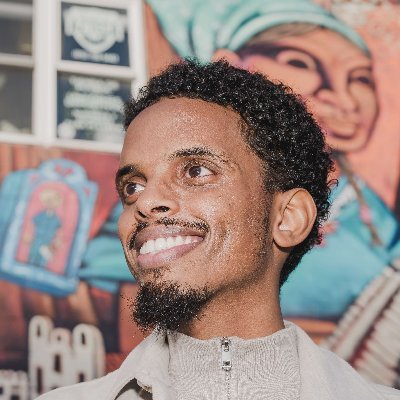
Municipal socialism is an increasingly popular idea, and not only in New York City, where Zohran Mamdani is favored to become mayor in November. New polling in the Minneapolis race for mayor shows democratic socialist challenger Omar Fateh gaining on the incumbent, Jacob Frey, a centrist Democrat. A new poll shows Fateh only five points behind Frey, up from thirteen points behind two weeks ago. Interviewing Fateh late last week, it was easy to understand why the thirty-five-year-old state senator is breaking through. He may not win, but in a bleak, unstable time, his vision of socialism is hopeful and grounded.
Asked what democratic socialism means to him, Fateh, whose first child was born last month, had a straightforward answer. “It’s pretty clear-cut,” he said. “You want to take care of everyone.”
He sees democratic socialism as a needed corrective to our political system, which tends to be rigged for the elites. “Within the Democratic Party,” he explained, “there are not enough voices for working people.”
The Minnesota Democratic–Farmer–Labor Party proved Fateh’s point this summer. After Fateh won the party’s endorsement through its usual process — which is not a primary, but rather a caucus and convention, in which delegates vote on the nominees — the state party withdrew their endorsement of him on a technicality, challenging the legitimacy of the process under what many supporters of Fateh’s campaign say was pressure from the incumbent mayor Jacob Frey’s supporters and party donors. Representative Ilhan Omar and sixteen other Minneapolis Farmer–Labor Democrats condemned the state party’s move as “inexcusable” and said that it reflected “blatant corruption” and the “influence of big money in our politics.” Frey still has the support of establishment Democrats like Governor Tim Walz and Senator Amy Klobuchar.
The son of Somali immigrants, Fateh says he grew up hearing his father talk about the US Civil Rights Movement. But like many of his generation, Fateh wasn’t engaged in politics until he was inspired by Bernie Sanders’s 2016 bid for the presidency. He remembers hearing the socialist senator and former mayor of Burlington, Vermont, speak for the first time, and “not knowing what democratic socialism was, but saying, hey, I identify with everything that he’s talking about.”Like many of his generation, Fateh wasn’t engaged in politics until he was inspired by Bernie Sanders’s 2016 bid for the presidency.
Encouraged by a friend to attend a Democratic Socialists of America meeting, he went. At the meeting, he recalls, there were some disagreements among the members who favored getting involved in electoral politics and those who did not, a debate that he notes is still ongoing. But Fateh felt, then as now, that more unites than divides socialists. “We debate the process” of how to build a better world, he says, “but the vision is still the same.”
In 2020, the same year that Zohran Mamdani won his state assembly seat, Fateh ran for state senate as a socialist and won. There, Fateh has been a leader in the statewide push to democratize higher education, winning tuition-free college for all students with household incomes under $80,000. Because tuition is not the only economic barrier for working class people pursuing higher education, Fateh also pushed for and won stipends for childcare, transportation, housing, and food, as well as grants for colleges to establish food pantries for students as well as mental health support. For the first time in over a decade, in a time of declining college attendance nationwide, Minnesota has seen an increase in enrollment across all its public institutions.
“We weren’t able to get everything we wanted,” Fateh says, acknowledging that he had originally been fighting for universal free tuition and that these gains are a compromise. “But we took a damn good first step that we can build upon.”
In the city in which George Floyd was murdered by police in May 2020, Fateh says there have been “no real meaningful changes, and there is no plan for any meaningful, transformational public safety reform. Our message has been very clear: We can have a public safety system that works for everyone.”
Fateh is running not on police abolition, but on reforms similar to those of Zohran Mamdani. Both mayoral candidates argue that many of the 911 calls – Fateh says nearly half in Minneapolis, citing a study by the city itself — currently handled by police could be better and more humanely handled by mental health responders. This way, he says, the police “can focus on violent crime, and only violent crime, and that, as a result, can make our city safer.” He also favors what he calls a “holistic approach” to safety, which includes a stronger social safety net, good jobs with good wages, affordable rent, and plenty of activities for young people.
While most socialist campaigning occurs on the terrain of the Democratic primary, part of the appeal of a general election is bringing redistributive politics to the people who aren’t part of the primary process: those who don’t vote often, aren’t registered with a party or even voters who may have cast their ballot for Trump last time.
“Last year, Trump won on a populist message,” Fateh observes. “He ran on affordability, on people’s pockets hurting.” Like Mamdani, who began his mayoral campaign talking with working-class Trump voters, Fateh argues that socialism can woo some workers away from the Right. Minneapolis is a blue city, but Fateh recalls chatting with some Trump supporters at a coffee shop early on in his campaign, one of them wearing a red MAGA hat, and finding that many of their concerns were just like those of other working people: corporate accountability, affordability, and the challenges faced by small businesses. Fateh has been talking about a commercial vacancy tax and other ways to ease those challenges, wisely seeing that such moves can help erode the MAGA base and improve the lives of people who depend on small-business income.
As New York governor Kathy Hochul surprisingly acknowledged in her recent endorsement of Mamdani, with Trump in office, cities urgently need true fighters. Here again, socialists may be better able to deliver.
“The Trump administration is going to make you choose between upholding your values or losing funding,” Fateh acknowledges. The moment will take special unity, he says, among “our partners, with the county, and state, to make sure that the funding is there to meet [the city’s] basic needs and services.” It will be especially important, given Trump’s constant threats to defund cities, he says, to make the rich pay their fair share.
Asked what he hopes to have accomplished by the time he leaves office as mayor, Fateh doesn’t hesitate. He aspires to make Minneapolis “a true union city” with “labor standards that meet the moment,” a city in which the unhoused are housed, and getting the services they need, including mental health care and addiction treatment, a city in which young people have after-school activities, summer jobs and schools in which they can thrive; an end to the pollution and consequently high rates of asthma afflicting working-class and poor communities; and a safer city, one in which when a person calls 911 they get the response they need, and in time.
“All of that is possible,” says Fateh with a smile.
ZNetwork is funded solely through the generosity of its readers.
Donate




