

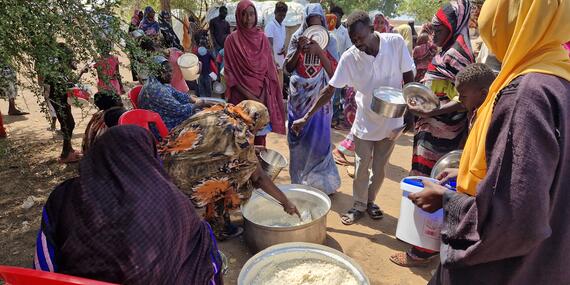
The Jeddah mediation, initiated last year with the hope of resolving the ongoing conflict in Sudan, has instead significantly deepened the country’s divisions and inadvertently prolonged the conflict. Launched in May 2023 amid escalating tensions between the Sudanese Armed Forces (SAF) and the Rapid Support Forces (RSF), the mediation sought to protect civilians and ensure humanitarian access. Despite numerous negotiation rounds, the talks were frequently suspended due to persistent violations and disagreements over terms, ultimately failing to secure a lasting ceasefire or facilitate safe humanitarian aid corridors. Over a year later, the persistent violence has transformed urban areas into war zones, resulting in massive loss of lives and unprecedented levels of displacement. With thousands of civilians killed, many more injured, and millions driven from their homes, Sudan faces ‘one of the worst humanitarian disasters in recent memory’, with no foreseeable resolution to the conflict.
As the U.S. Special Envoy to Sudan has announced plans to resume the Jeddah Mediation, it becomes critical to unpack the shortcomings of the previous rounds of these talks. The design and structure of the Jeddah mediation has contributed to prolonging the conflict in three significant ways.
First, the Jeddah mediators’ strategy focused on achieving a ceasefire and coordinating humanitarian efforts. They specifically invited the SAF and RSF leadership to send negotiation teams to Jeddah. The mediators stated that Jeddah would not host political discussions, planning to engage civilians only after a ceasefire was established. Despite this intention, the strategy unexpectedly affected the neutrality of armed groups in Darfur. After maintaining neutrality for six months, leaders from three significant factions – Minni Minawi, Gibril Ibrahim, and Mustafa Tambour, among others – publicly abandoned their neutral positions.
The political landscape in Darfur remains predominantly controlled by armed groups, despite numerous peace agreements over the past two decades. This dominance is a testament to the complex interplay of military and political forces within the region, which the Jeddah framework has yet to effectively address. The absence of a civilian political sphere in Darfur, along with the Jeddah framework’s focus on the SAF and RSF, without directly engaging local armed groups, incentivized many of these armed groups to abandon neutrality and side with either the SAF or RSF. This realignment was primarily driven by their desire to secure a stake in any future political agreement in Sudan, presenting it as the only feasible option given the framework’s limits. The formation of these alliances could have differed had the mediators effectively developed or communicated clear strategies for engaging Darfur’s armed factions.
Secondly, a significant flaw in Jeddah’s mediation structure is the disconnection between ceasefire and political negotiations, lacking a mechanism to bridge these elements. Established hastily three weeks after the conflict began, the initial rapid setup was understandable. However, continued reliance on this format without progress on a political sequencing plan has marginalised civilian actors and inadvertently legitimised the SAF and RSF leadership. This has led to the militarisation of civilian discourse, with military entities increasingly shaping civilian agendas. Consequently, most new political alliances reflect this militarised voice, reinforcing militarised authority and legitimacy.
Lastly, a critical outcome of the Jeddah mediation strategy is the politicisation of aid to gain de facto legitimacy. The mediators introduced trust-building measures that included a UN-led humanitarian forum, which the SAF and RSF joined with other international organisations to improve aid delivery. Yet, despite its announcement in November 2023, this forum has not convened its first meeting. Nevertheless, the forum’s mere setup, which lacked monitoring and accountability measures, incentivised the warring parties to intensify their efforts to gain more territorial control while engaging in a blame game. As a result, the conflicting parties are not only obstructing aid access but are also exploiting it to enhance their international legitimacy.
Initially, battles between the SAF and RSF centred on military bases, supply lines, and symbolic locations such as TV and radio stations. However, the RSF has since redirected its strategy towards targeting aid distribution routes, specifically attacking the newly established UN-designated route from Port Sudan to El Fashir via Atbara and Malit. This shift reflects the RSF’s intent to assert itself as a de facto authority by controlling aid flows to nearly one million internally displaced persons in North Darfur, diverging from its previous strategy of avoiding large-scale clashes with Darfur’s armed groups. It is noteworthy that throughout the year-long conflict, the RSF, which had previously refrained from setting up governance structures in areas under its control, established its own relief and humanitarian agency.
The Jeddah peace talks encapsulate the inherent challenges of mediating deep-seated conflicts where multiple actors, including civilians, vie for recognition and influence. However, the current mediation strategy appears out of step with the nuanced dynamics on the ground. In Sudan, achieving peace is fraught with challenges, necessitating a reevaluation of strategies to ensure they truly meet the needs of all Sudanese, essential for lasting stability.
ZNetwork is funded solely through the generosity of its readers.
Donate




