


“On April 4, 1967, exactly a year before he was killed, Dr. King named ‘materialism’ as one of the deadly triplets afflicting America: ‘When machines and computers, profit motives and property rights are considered more important than people, the giant triplets of racism, materialism, and militarism are incapable of being conquered.’
“At that point, he did not yet know how deadly to all of Earth materialist greed would become—the materialist greed of giant corporations selling fossil fuels the way a cabal of drug lords would sell their deadly drugs. And, like other drug lords, using their wealth and power to try to prevent the urgently-needed shift to wind, solar, and truly clean sources of energy.
“Half a century ago, it was the murder of civil rights workers, deaths in Vietnam, the suffering of garbage workers in Memphis — as well as the Dream of racial justice — that called Dr. King into action. Today it is the climate crisis that has come upon us, — bringing famines, floods, fires, asthma, and devastations on whole nations — and the Dream of a shared and sustainable abundance that must call us into action, walking the path he walked.”
-from “Earth and Climate Speak: The Fierce Urgency of Now,”
by Reverend Oscar Tillman and Rabbi Arthur Waskow
The evening before the historic 50th anniversary commemorative March on Washington I took the DC Metro train to the Lincoln Memorial to take part in a peace vigil organized by United for Peace and Justice. While there I ran into and was interviewed by Mimi Rosenberg and Ken Nash, hosts of the radio program “Building Bridges” on WBAI in New York City. After explaining why I was there, including my intention the next day to raise up the issue of the climate crisis among the crowd, Ken asked if this issue was going to be addressed from the stage. I told him that I thought that it would be, even though it wasn’t included as an issue in the material I had seen publicizing the rally. In all honesty, that “thought” was really more of a hope; I hardly even knew who most of the speakers were going to be.
This reality was a weakness, for sure, and not the only one. But the fact is that whenever tens of thousands of people, or more, gather together in support of progressive values and demands, it is a good thing. This is the bottom line of what the historic 50th anniversary March on Washington a couple of days ago was about.
It was particularly significant that this was a mobilization by the African American community, with support from non-black allies, and that this community came out in such large numbers. It was a sign that there is something important happening among the grassroots in response to the Trayvon Martin verdict, the Supreme Court’s roll-back-voting-rights decision, other attacks on the right to vote and continuing racial and economic injustice.
And from what I saw, it was one of the largest progressive mobilizations to DC in years, since Barack Obama became President in January, 2009. Pictures of Saturday’s rally that I saw afterwards looked very similar to the pictures I’ve seen of the one in 1963, with people massed together all the way from the Lincoln Memorial back to the Washington Monument grounds. Estimates for that one were 250,000; I’d say an accurate estimate for this one would be 200,000 or more.
I spent several hours traveling among the masses of people lining the north side of the Reflecting Pool, around the War Memorial on the east side and along the roads leading to the King Memorial on the south side. I did so with a sister climate activist from Interfaith Moral Action on Climate, each of us holding one side of a 10 foot long pole on our shoulder with two banners hanging from it, both of which addressed the issue of the climate crisis. One said, “Climate Change is a Moral Issue;” the other said, “God Calls to Us All to Heal the Earth–Stop Burning Coal, Oil and Gas.”
The response from the people who saw us was very gratifying. There wasn’t a single disparaging word or negative comment. Lots of people, probably hundreds, took a picture of our banner, and in some cases people came over to us, got behind the banner and had someone take a picture of the banner with them in it.
I’ve heard similar things since from others who also carried climate-oriented messages. One of them, a 350.org group from Loudon County, Virginia, carried a “Wake Up to Climate Change” message with a picture of the Earth with flames. Reportedly, it received “a LOT of attention.”
But it wasn’t just from among the crowd that the climate message was put forward on August 24th.
I never heard any of the speeches from the stage, as was true for what seemed like about half of the crowd based upon my travels that day. The sound system just wasn’t strong enough. That was a shame, without question, but I’ve learned since that there were at least three speakers who said something about climate: Rev. Lennox Yearwood, Corey Booker and Jeffrey Sachs. This is a very welcome development.
August 24th, for all of its weaknesses, was a sign that the dream of Martin Luther King, Jr. is alive, “the Dream of a shared and sustainable abundance that must call us into action, walking the path he walked.” Yes, we must.
Ted Glick is the National Campaign Coordinator of the Chesapeake Climate Action Network. Past writings and other information can be found at http://tedglick.com, and he can be followed on Twitter at http://twitter.com/jtglick.

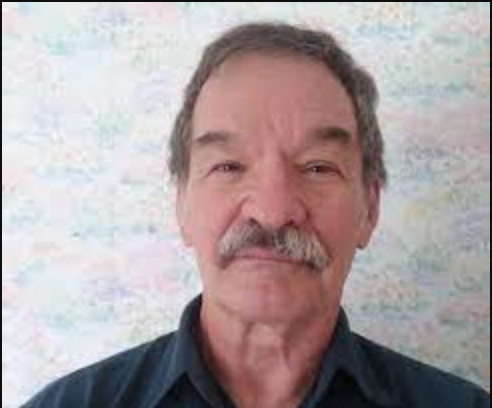
Ted Glick has devoted his life to the progressive social change movement. After a year of student activism as a sophomore at Grinnell College in Iowa, he left college in 1969 to work full time against the Vietnam War. As a Selective Service draft resister, he spent 11 months in prison. In 1973, he co-founded the National Committee to Impeach Nixon and worked as a national coordinator on grassroots street actions around the country, keeping the heat on Nixon until his August 1974 resignation. Since late 2003, Ted has played a national leadership role in the effort to stabilize our climate and for a renewable energy revolution. He was a co-founder in 2004 of the Climate Crisis Coalition and in 2005 coordinated the USA Join the World effort leading up to December actions during the United Nations Climate Change conference in Montreal. In May 2006, he began working with the Chesapeake Climate Action Network and was CCAN National Campaign Coordinator until his retirement in October 2015. He is a co-founder (2014) and one of the leaders of the group Beyond Extreme Energy. He is President of the group 350NJ/Rockland, on the steering committee of the DivestNJ Coalition and on the leadership group of the Climate Reality Check network.
ZNetwork is funded solely through the generosity of its readers.
Donate




