


The warders called us by either our surnames or our Christian names. Each, I felt, was degrading, and I thought we should insist on the honorific ‘Mister.’ I pressed for this for many years, without success. Later, it even became a source of humour as my colleagues would occasionally call me ‘Mr.’ Mandela.
—Nelson Mandela, “Long Walk to Freedom”
Nelson Mandela spent 27 years in prison, 18 of them at Robben Island – the notorious island jail that held the principle leadership of the anti-apartheid movement in South Africa. It was at that jail, with the help of his comrades, that Mandela wrote his story, “Long Walk to Freedom” (published in 1994). In this book, one gets a sense of Mandela as the deeply political figure that he was: a lawyer who fought against apartheid — a lawyer who discovered that the law was the barrier to change and so moved to politics, including terrorist operations against the intransigent apartheid state.
Mandela had a capacious political imagination: he joined the African National Congress (ANC) for its politically left-wing and socially accommodative framework. When he got to prison, most of the prisoners came from the Pan-African Congress (PAC), a black nationalist party that was, in Mandela’s words, “unashamedly anti-Communist and anti-Indian.” Not for him this kind of narrow politics. He always had a large heart and a razor-sharp vision.
Not long after his arrest in 1964, Mandela became the iconic figure of the South African struggle against apartheid – one that was not only against a ghastly political system, not only against the white ruling clique in South Africa, but also against the governments of the Western world which backed the apartheid regime virtually until the end (Mandela appeared on the U.S. terrorist lists until 2008). It was this iconic figure that the world knew from the 1960s until now. Rarely did people engage with Mandela’s ideas: rarely do we hear him quoted for his principled positions. Particularly after the struggles within South Africa weakened the regime and brought it down, it became impossible not to engage with Mandela – but it was only with Mandela as icon, as Madiba, not Mandela as the political person with deeply held views and commitments.
Everybody now is sad that Madiba is dead. Not a dry eye can be found. But many of these same people opposed freedom in South Africa to the very end. Many of these same people pilloried the struggles around the world in solidarity with Mandela’s ANC. And many of these people now ridicule the kind of views that Mandela held to the very end. When Mandela opposed the Iraq war (“All Bush wants is Iraqi oil”), the Western press lambasted him — the same press that is now aggrieved at his passage. All the obituaries detail what he did in his life, but none go into his political views.
Twenty years after freedom, South Africa remains a survivor of its past and wounded by the unsound ambitions of its current leadership. Mandela had sharp words for the neo-liberal direction in South Africa, but also for the general tenor amongst the managers of the world economy. In 2005, he went to the G8 meetings in the U.K. and made it clear that “where poverty exists, there is not true freedom. The world is hungry for action, not words. In this new century, millions of people in the world’s poorest countries—including South Africa—remain imprisoned, enslaved and in chains. They are trapped in the prison of poverty. It is time to set them free.” Where would this freedom come from – by constraining the rights of property to feed untrammeled off of social wealth? Poverty, like apartheid, is man-made, so it can be unmade by man. The rich, he said, must feed the poor.
Mandela’s legacy is not only his tremendous role in the fight against apartheid. It is also his contribution to the fight against unjust systems of power, property and propriety that shackle the world’s people from their true destiny. Goodbye Mr. Mandela, but long live his legacy.
Vijay Prashad is the Edward Said Chair at the American University of Beirut in Beirut, Lebanon.

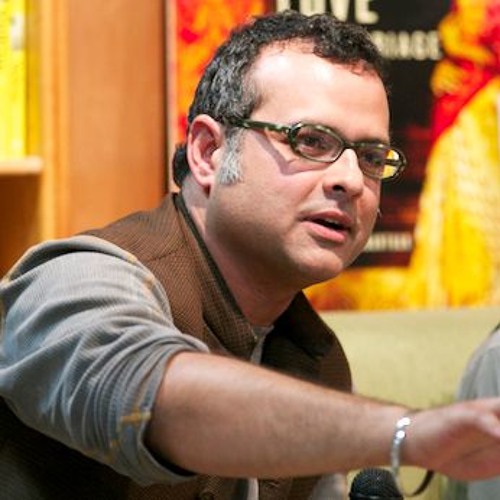
Vijay Prashad is an Indian historian, editor, and journalist. He is a writing fellow and chief correspondent at Globetrotter. He is an editor of LeftWord Books and the director of Tricontinental: Institute for Social Research. He is a senior non-resident fellow at Chongyang Institute for Financial Studies, Renmin University of China. He has written more than 20 books, including The Darker Nations and The Poorer Nations. His latest books are Struggle Makes Us Human: Learning from Movements for Socialism and (with Noam Chomsky) The Withdrawal: Iraq, Libya, Afghanistan, and the Fragility of U.S. Power. Tings Chak is the art director and a researcher at Tricontinental: Institute for Social Research and lead author of the study “Serve the People: The Eradication of Extreme Poverty in China.” She is also a member of Dongsheng, an international collective of researchers interested in Chinese politics and society.
ZNetwork is funded solely through the generosity of its readers.
Donate




