


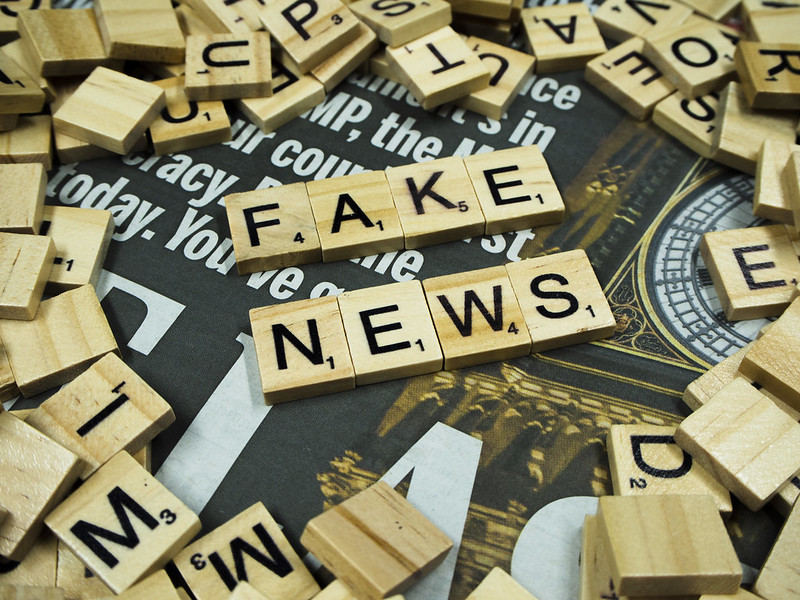
The phrase ‘fake news’ continues to be deployed routinely in US politics. In a polarized political atmosphere, both Republicans and Democrats distrust media organizations affiliated with opposing parties. This means that most of what is uttered or written by CNN is ‘fake news’ for Republicans, and much of what appears in Republicans-affiliated media is ‘fake news’ for Democrats.
The phrase is now so prevalent and has multiple meanings to the point that it is impossible to agree on a common definition. Even ‘fact checking’ organizations or news desks contribute to the troubling phenomenon of ‘fake news’ by selectively fact-checking news and information affiliated with one side of the political aisle, while ignoring the other.
Some traced the ‘fake news’ story to a small Eastern European town called Veles, in Macedonia. This particular claim is associated with Craig Silverman, a media editor at Buzzfeed. “We ended up finding a small cluster of news websites all registered in the same town,” Silverman was quoted by the BBC. The objective of these websites seemed mostly financial, ‘clickbait’ as they are called, to lure in unsuspecting users to seemingly unlikely headlines.
Later, the term became very political. It was former US President Donald Trump who publicized the term, making it the major phenomenon seen today. Mike Wendling of the BBC, however, claimed that it was Trump’s staunch rival in the 2016 US Presidential elections, Hillary Clinton, who first used the term in a speech in December of the same year.
Actually, ‘fake news’ predates both Clinton and Trump. When I first moved to the US over two decades ago, I recall my total shock at seeing the headlines of print tabloids, always positioned at the center of major US grocery stores: From unsubstantiated celebrity scandals, to ‘breaking news’ about aliens impregnating human females before returning to their home planet. Even as a newcomer to the country, it was obvious to me that such rubbish was also ‘fake news’. Sadly, these tabloids were often sold faster than legitimate newspapers, which suggests that the biggest challenge posed by ‘fake news’ is our gullibility and willingness to engage with it.
In the modern definition, ‘fake news’ has grown to also include people with opposing opinions, whether these opinions are based on facts, selective facts or utter fiction. Many of us, as journalists, are caught in this impossible labyrinth. No matter what we do to demonstrate the authenticity of our sources, we continue to be haunted by ‘fake news’ allegations.
The generational struggle for independent media organizations and journalists has been the constant push to create as much space as possible between them and the whims of politics and politicians. Recently, however, such a distance has shrunk significantly to the point that once-respected news organizations in the US have turned into the equivalent of political party pamphlets of old.
In 2018, Trump announced his “Fake News Awards”, to be ‘granted’ to journalists in liberal media organizations that opposed him. Fact-checkers of these organizations have dogged him, ever since. His ‘information’ and often exaggerated statements made him the perfect target. Joe Biden is hardly held to the same standards, not only for allegedly making false statements but, sometimes, for what appears to be more gibberish than proper English. Though Biden’s funny memes, based on declarations made in various public appearances, are stable on social media, they are rarely examined by respected news outlets.
But can we trust mainstream media in their application of the phrase ‘fake news’?
Noam Chomsky, one of the most articulate critics of mainstream US media and the author of ‘Manufacturing Consent,’ defined mainstream media as “corporations (which) are basically tyrannies, hierarchic, controlled from above. If you don’t like what they are doing you get out. The major media are just part of that system.”
Chomsky’s analysis suggests that those who make accusations of ‘fake news’ can themselves be the purveyors of ‘fake news’, if such information conveniently serves those who control these organizations “from above”, especially as “most of them are either linked to, or outright owned by, much bigger corporations”.
For us in the Global South, falsified information did not originate from the small town of Veles in Macedonia, or with Clinton’s speech or Trump’s ‘awards.’ ‘Fake news’ has been part and parcel of western colonialism, from its onset centuries ago, to neocolonialism of recent times.
Back then, the lies that often led to wars, invasions and military occupations were not called ‘fake news’ but ‘false flag’ operations. Many historians now understand that the casus belli behind the Spanish-American war in 1898 – the explosion of the US battleship, USS Maine – was based on a lie, or ‘fake news’. Iraq’s non-existent so-called weapons of mass destruction, which led to the invasion of the once-powerful Arab country in 2003 was also fake news, involving made-up stories of uranium yellowcake from Niger and the dodgy ‘secret British dossier’, and other fibs.
Palestine was invaded by Zionists based entirely on ‘fake news’, claiming that the land – historic Palestine – had no inhabitants – “Land without a people ..”. The Palestine-linked ‘fake news’ is arguably the most powerful of any colonial lie. CNN fact-checkers hardly bother to prove that God did not ‘promise’ Palestine to the Zionists and that Palestinians are not the aggressors, but the victims of Zionist-western settler-colonialism.
It behooves us all to expand the definition of ‘fake news’ beyond the US-western-centric purely political definitions waged by Republicans against Democrats and vice-versa. Lies, deceit, half-truths, misinformation and outright ‘fake news’ have been the driving force behind corporate media reporting for many years. It is now becoming more obvious simply because those manipulating the media discourse “from above” are losing control over their own narratives.
ZNetwork is funded solely through the generosity of its readers.
Donate

