

Source: Independent Media Institute
Just before 5 p.m. on Friday the 8th of November, Brazil’s former president Luiz Inácio Lula da Silva walked out of his prison in Curitiba, Brazil. Lula went to prison in April last year on a 12-year sentence. Five-hundred and eighty days of prison are now over, as the Federal Supreme Court ruled that inmates who have not yet exhausted their appeals should not be held in prison.
In addition to Lula, about 5,000 Brazilians—mostly poor and black—can be released based on the Supreme Court’s decision. Many of them have not been previously afforded the presumption of innocence, and large numbers of them have been in prison without proper legal defense.
In addition to Lula, about 5,000 Brazilians—mostly poor and black—can be released based on the Supreme Court’s decision. Many of them have not been previously afforded the presumption of innocence, and large numbers of them have been in prison without proper legal defense.
The Supreme Court verdict was not directed at Lula, but at the undemocratic nature of the judicial system that had held people in prison before they had exhausted their appeals. Lula’s situation mirrored that of these thousands of other prisoners. It was as part of a judicial criticism of the unjust system that Lula was able to be free.
But as Lula walked out of his cell and into the Free Lula encampment across the road from the prison, he signaled the importance of the Free Lula (Lula Livre) campaign of international solidarity that went from Curitiba across Latin America, and indeed across the world. From the Free Lula encampment across from his prison, comrades would hold vigils and wish him thrice a day greetings of “good morning,” “good afternoon,” and “good evening.” On November 8, Lula was able to be greeted not by shouts of solidarity, but in person.
The solidarity campaign drew in jurists and intellectuals, politicians and celebrities, a range of people who felt that the imprisonment of Lula was unjust. What had become very clear was that the legal mechanisms had become a political instrument of the elite to attack the left politicians and left movements. The collaboration between the government prosecutor and Judge Sérgio Moro indicates that there was a weaponization of the law—what is known as lawfare—to prevent the Workers’ Party from winning elections, and to make sure that the Brazilian elites hold power. What “Free Lula” meant was not only the freedom of Lula, but also an end to lawfare as an instrument against the people.
Lula walked out of his cell, but the case against him—a case with little evidence—remains. Popular pressure will continue to completely annul this persecution of Lula. There is little doubt the Free Lula campaign will continue to mobilize support so that the courts declare that Lula is innocent and allow him his full political rights. The Operation Lava Jato (Operation Car Wash) was not just used to put Lula in prison, but to make sure that he—who is supremely popular in Brazil—cannot run for office again.
Lula’s popularity comes both from the positive aspects of his presidency (when his government abolished poverty and expanded educational opportunities) and from his leadership against the neoliberal and neofascist governments of Michel Temer and Jair Bolsonaro. Out of prison, Lula’s voice will once more sharply turn on the hideous politics of Bolsonaro.
Lula is expected to make a statement to the nation from the office of a trade union in São Paulo. This is where he belongs, inside a workers’ office, among the people. Lula emerged as a central figure of the Brazilian people during the historic strikes of 1978 and 1979, which played a key role in ending the military dictatorship in Brazil. It is from the workers’ land that he will make his stand. Over the course of the Free Lula struggle, it became clear that Lula was bigger than his political party—the Workers’ Party (PT)—and even bigger than Brazil’s left. He represents the Brazilian people—the people who are now struggling to maintain their homes in the favelas and in the encampments and in the settlements, struggling to hold onto the Amazon, struggling to study and heal, eat, and smile.
It must be chilling for Bolsonaro to watch the television and see Lula walk confidently out of his prison and into the political domain
It must be chilling for Bolsonaro to watch the television and see Lula walk confidently out of his prison and into the political domain. Elections have brought the left back to power in Argentina, with the left retaining power in Bolivia. Even in Colombia, the left has made significant gains. Mass protests in Chile and Ecuador suggest the tide has turned in those two countries. Bolsonaro must know that the turn to the left in Brazil is imminent. The left now has its champion out on the streets.
This article was produced by Globetrotter, a project of the Independent Media Institute.
Ana Paula Vargas works at the Tricontinental: Institute for Social Research.
Vijay Prashad is an Indian historian, editor and journalist. He is a writing fellow and chief correspondent at Globetrotter, a project of the Independent Media Institute. He is the chief editor of LeftWord Books and the director of Tricontinental: Institute for Social Research. He has written more than twenty books, including The Darker Nations: A People’s History of the Third World (The New Press, 2007), The Poorer Nations: A Possible History of the Global South (Verso, 2013), The Death of the Nation and the Future of the Arab Revolution (University of California Press, 2016) and Red Star Over the Third World (LeftWord, 2017). He writes regularly for Frontline, the Hindu, Newsclick, AlterNet and BirGün.

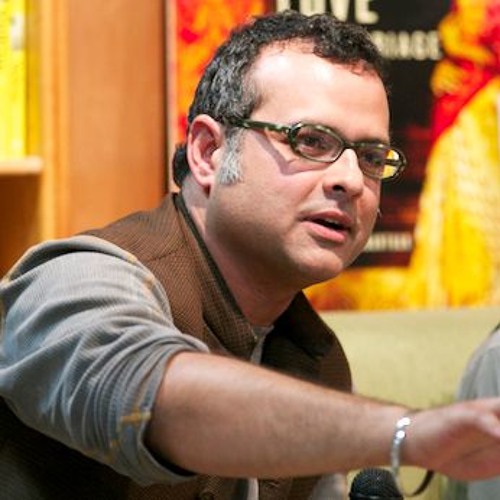
Vijay Prashad is an Indian historian, editor, and journalist. He is a writing fellow and chief correspondent at Globetrotter. He is an editor of LeftWord Books and the director of Tricontinental: Institute for Social Research. He is a senior non-resident fellow at Chongyang Institute for Financial Studies, Renmin University of China. He has written more than 20 books, including The Darker Nations and The Poorer Nations. His latest books are Struggle Makes Us Human: Learning from Movements for Socialism and (with Noam Chomsky) The Withdrawal: Iraq, Libya, Afghanistan, and the Fragility of U.S. Power. Tings Chak is the art director and a researcher at Tricontinental: Institute for Social Research and lead author of the study “Serve the People: The Eradication of Extreme Poverty in China.” She is also a member of Dongsheng, an international collective of researchers interested in Chinese politics and society.
ZNetwork is funded solely through the generosity of its readers.
Donate




