


In January 2026, the Israeli human rights organization B’Tselem published a grim update to its earlier work, titled Living Hell: The Israeli Prison System as a Network of Torture Camps. This report documents the horrific conditions faced by Palestinian prisoners in Israeli jails and detention facilities, revealing structural brutality that must be understood not as isolated injustice but as part of a broader system of violence and exclusion directed against the Palestinian people.
The Living Hell report builds on B’Tselem’s previous 2024 publication, Welcome to Hell, by incorporating updated figures and testimonies from 21 Palestinians released under ceasefire agreements or in the preceding months. These firsthand accounts, collected in the shadow of threats of re-arrest and intimidation, underline that the treatment of Palestinian detainees is neither random nor incidental, but part of a dehumanizing policy that strips prisoners of dignity, health, and, too often, their lives.
At the heart of the report is a devastating charge: Israeli prisons and detention centers have been systematically transformed into a network of torture camps. According to B’Tselem, these spaces are characterized by sustained physical and psychological abuse, extreme overcrowding, deliberate starvation, denial of medical care, and humiliation of inmates. Within this system, incarcerated men, women, and children experience violence that crosses the boundary into torture as defined by international law.
The evidence is harrowing. Between October 2023 and January 2026, B’Tselem identified 84 Palestinian prisoners and detainees who died in custody—including one minor—amid conditions of chronic neglect and abuse. Israeli authorities have released only four of these bodies to families, retaining the remainder, an act that compounds the suffering of those already bereaved.
The abuses documented are multiple and systematic: prisoners describe prolonged beatings, psychological torment, sexual violence, denial of basic hygiene and food, and a refusal to provide adequate medical treatment. In some cases, allegations include sexual assault with objects and electric shocks, alongside beatings that cause lasting injury. These accounts are corroborated by multiple former detainees and aligned with testimony gathered by international organizations, suggesting patterns that extend far beyond anecdote.
Far from being incidental acts of violence by rogue guards, the report indicates that this treatment is embedded within institutional practices and sanctioned—implicitly or explicitly—by Israel’s political leadership. The far-right Israeli National Security Minister, Itamar Ben-Gvir, who oversees the prison system, has at times publicly boasted of harsher treatment of Palestinian prisoners, even as the Israeli Prison Service denies systemic abuse.
This systemic pattern must be understood in the broader political context of Israel’s coordinated assault on Palestinian life since October 7, 2023. The transformation of prisons into instruments of suffering parallels policies of mass detention, demolition of Palestinian homes, and the ongoing genocide in Gaza. Palestinians are apprehended en masse from homes, refugee camps, and cities across the occupied West Bank and Gaza Strip; tens of thousands have been detained under military orders with little oversight, due process, or transparency.
This violence did not begin in October 2023; it has occurred both before and after that date. Palestinian human rights organizations have documented cases of torture, rape, and abuse that Palestinian prisoners have undergone for many decades. For example, the report by Addameer titled I’ve been there. A study of torture and inhumane treatment at Al-Moscobiyeh interrogation center has mortifying descriptions and testimonies of systematic use of torture. Most telling in that report is how the Israeli judicial system has given a shield to the perpetrators of these horrors.
What B’Tselem documented in its 2026 report was the increase in the frequency of the abuse. But what B’Tselem left out was that torture and rape have always been a part of the Israeli carceral prison system. Between June 1967 and the beginning of October 2023, 237 Palestinians were killed in Israeli prisons—an average of four prisoners per year. This figure does not include the thousands of Palestinians that were detained, tortured and some killed between 1948 and 1967, of which little record exists.
The Palestinian relationship with prisons is as old as the British Mandate in Palestine. Songs were sung of Palestinian prisoners who resisted the British Mandate and the ethnic cleansing of Palestine, such as the 1930 song “From Acre Prison.” The scale of abuse faced by the Palestinian detainees is illustrated by the story recounted by Sheikh Hassan al-Labadi. Sheikh Hassan was a renowned religious scholar in Mandate Palestine, arrested in 1939 by the British authorities, imprisoned in the infamous Acre prison, and found by members of his family in an Israeli mental institution in 1982. Sheikh Hassan lost all memory due to the extreme conditions that he witnessed, and he died shortly after his release to his family. The stories of Palestinians enduring years of confinement, torture and abuse are far too common in the Israeli prison context. According to estimates cited by the Red Cross, since 1967 there have been over 1.2 million cases of arrests of Palestinians by Israeli authorities, which constitutes about 20 percent of the Palestinian population in the West Bank and Gaza Strip.
Integral to understanding the violence of this system is its use of administrative detention—a practice under which individuals are held indefinitely without charge or trial. According to B’Tselem’s data, thousands of Palestinians—including many held without formal charges—remain incarcerated under this regime. Such detention violates fundamental norms of justice and due process, leaving detainees in limbo, without legal recourse or clarity about the charges against them.
Politicide
But to grasp the full scope of Israeli punitive policies, we must look beyond aggregated statistics to individuals whose detention has become emblematic of the struggle for Palestinian rights. Marwan Barghouti is one such figure, but there are many others.
Barghouti, a veteran Palestinian leader and key figure in Fatah’s political landscape, has been imprisoned in Israeli jails since 2002. Convicted by an Israeli court on multiple counts related to violence during the Second Intifada—with evidence that is contested and fabricated—he is widely known both inside Palestine and internationally as a political prisoner.
Over the decades, Barghouti’s incarceration has been a symbol of resistance and Palestinian political aspiration, including unity across factions. Many see him as a potential unifying leader for the Palestinian national movement. His absence from a major prisoner release agreement—negotiated during ceasefire talks in 2025 involving nearly 2,000 Palestinian prisoners—was a stark reminder of his political weight and Israel’s refusal to free him.
More troubling than his continued detention are the documented conditions he has endured while inside. Multiple credible sources report that Barghouti has been held in prolonged solitary confinement since the outbreak of the Gaza genocide, subject to beatings, forced humiliation, and other forms of mistreatment by prison officials. These allegations include being forced to the ground and having his shoulder dislocated, being beaten during transfers, and enduring harsh conditions with limited medical care. Human rights advocates in Israel and beyond have argued that these conditions amount to torture and psychological coercion.
Incarceration and assassination function as parallel instruments within the same political strategy: when imprisonment succeeds in neutralizing leadership, it silences resistance slowly; when it fails, targeted killing removes those figures permanently from the political landscape.
Israel systematically arrests and kills political leaders, community leaders, doctors, engineers, physicists (the case of Imad Barghouthi is one example) down to student activists as part of its campaign of politicide, or the deliberate destruction of a people’s political existence. The assassination and arrest of leaders of Palestinian groups that are outside the Palestinian Authority has become routine and has weakened Palestinian political processes. Prison is a key site of punishment for Palestinian political life—it has become a means to control society by the removal of key figures, the instillation of fear, and the fragmentation of communities. In this way, the prison system operates as a part of a broader strategy to undermine Palestinian self-determination and restrict the ability of the Palestinian people to sustain political organization and national continuity.
But this systematic dehumanization has not stopped Palestinians from resisting this system. Palestinian academics and political leaders imprisoned were able to resist by focusing on education and scholarly work. From the late 1960s, when Palestinians used to write political lectures using chicken bones, ash, and small pieces of paper found in cigarette packs, to going on hunger strikes demanding access to paper, pens, books, and education—the Palestinian experience is truly unique, as they have literally turned prisons into schools and universities. Al Quds University ran a program from 2005 offering Palestinian prisoners bachelor’s and master’s degrees through a system of education and testing designed to ensure academic excellence; up to 2023, 800 Palestinian prisoners were able to graduate from the program.
The suffering of Palestinian prisoners must not be viewed in isolation. Imprisonment serves Israel’s broader political objectives: to suppress Palestinian political leadership, to break the spirit of resistance, and to normalize a regime of control that extends from prison cells to communities across the occupied territories. The transformation of Israeli detention facilities into what B’Tselem rightly calls torture camps is a stark symbol of how the machinery of the state can be deployed to dehumanize an entire population.
As we reflect on the Living Hell report, we must insist that international institutions, governments, and human rights mechanisms hold accountable those responsible for systemic abuse. Palestinian prisoners—whether high-profile figures like Barghouti or ordinary civilians swept up in waves of detention—deserve humane treatment, transparency, and legal protections. Ending these practices is not only a matter of legal obligation; it is a moral imperative.
Living Hell compels us to confront the reality of Israeli prisons not as isolated sites of criminal justice, but as key nodes in a broader system of oppression. To ignore this brutality is to accept the normalization of torture and cruel treatment in the modern world. It is time for the global community to act—firmly, unequivocally, and in solidarity with the Palestinians whose lives are being shaped inside and beyond prison walls.
This article was produced by Globetrotter.

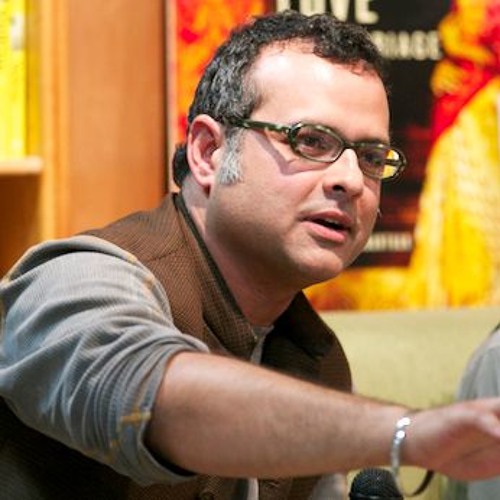
Vijay Prashad is an Indian historian, editor, and journalist. He is a writing fellow and chief correspondent at Globetrotter. He is an editor of LeftWord Books and the director of Tricontinental: Institute for Social Research. He is a senior non-resident fellow at Chongyang Institute for Financial Studies, Renmin University of China. He has written more than 20 books, including The Darker Nations and The Poorer Nations. His latest books are Struggle Makes Us Human: Learning from Movements for Socialism and (with Noam Chomsky) The Withdrawal: Iraq, Libya, Afghanistan, and the Fragility of U.S. Power. Tings Chak is the art director and a researcher at Tricontinental: Institute for Social Research and lead author of the study “Serve the People: The Eradication of Extreme Poverty in China.” She is also a member of Dongsheng, an international collective of researchers interested in Chinese politics and society.
ZNetwork is funded solely through the generosity of its readers.
Donate





2 Comments
This piece of shit said he is disgusted by Prof. Chomsky. No self-reflection, no deeper examination. Immediate condemnation of the best amongst us. What an opportunistic asshole.
Vijay is a Stalinist who denies that Uyghurs are being mistreated in China. What a piece of shit