


In less than two years the troops of MINUSTAH (Mission of the Nations United for the Stabilization of Haiti) perpetrated three massacres in Cite Soleil, an outlying slum of Port au Prince. According to numerous testimonies, barely mentioned by the corporate media, the occupation forces entered the poorest district of the impoverished island with armoured vehicles backed by artillery wielding helicopters. On at least two occasions – July 6, 2005 and December 22, 2006 – MINUSTAH fired on unarmed residents causing scores of deaths. Many died in their flimsy houses, where they had taken refuge from the ‘blue helmets’. According to the Nobel Laureate, Adolph Perez Esquivel, during the first year of MINUSTAH’s mission alone (which was authorized June of 2004) 1200 people died in acts of violence.
It is striking that the Latin American Left – which has justly denounced imperialist wars in Iraq and Afghanistan – is not doing the same with the genocide that is taking place in Haiti. Considering that MINUSTAH’s troops are contributed largely by countries that boast left leaning governments (more than 40 percent of the 7 thousand soldiers and officials, and commanded by Lula’s Brazil) there should be ample solidarity with the Haitian people. The reasons that are adduced to send troops to the island do not stand up. The main argument is that the troops contribute to security which is required to stabilize Haitian democracy – that the troops are needed to disarm and disband ‘bandits’ and drug traffickers – as if those were problems that have military solutions. Two and a half years after MINUSTAH was formed it has neither improved security nor stabilized democracy. On February 7 more than 100 000 protesters demanded that MINUSTAH leave and that their legitimate President, Jean Bertrand Aristide, return. In spite of the protests, the UN decided to extend MINUSTAH’s mission.
For Brazil – the Latin American country most eager to have its troops in Haiti – the incentive is acquiring a permanent seat on the UN Security Council. Some analysts maintain that MINUSTAH could prove the feasibility of a ‘Latin American NATO’ that several governments of the region promote (La Jornada, 2/12/06). Some justify MINUSTAH from an anti-imperial point of view by arguing that the participation of the Armed Forces of Argentina, Brazil, Chile, Bolivia and Uruguay places limits on Yankee expansionism in the region.
In any case, left leaning governments have embraced a radical policy shift without debate as if it were a prerogative of being in power. This is what happened in Uruguay, a country that contributes 750 soldiers making it the largest contributor relative to population. In July, 2004 the Uruguayan Left denounced MINUSTAH as an imperial force. A year later they were in power and claimed MINUSTAH contributed to the democratization of Haiti. The Uruguayan parliament voted an important increase to its military contingent that the right wing government had decided to send the previous year. Lamentably,only one out of every 50 deputies dared to raise their voice against a policy that contradicted the principles of Frente Amplio and which was implemented without even token consultation with its popular base. Debate in Brazil, Argentina and Chile was even more scarce. In Bolivia, Evo Morales blocked any attempt to debate the subject according to ex- minister Andrés Soliz Rada.
Nevertheless, what is in play is much more that a question of principles. It is obvious that left governments should not commit troops for the flagrant violation of human rights that in Haiti resembles genocide against the poor. It is in the poorest districts of the urban periphery of Port Prince, those sites that Mike Davis argues are ‘the new decisive geopolitical stage’, where the blue helmets act most aggressively. Brian Concannon, director of the Institute for the Justice and Democracy in Haiti, maintains that ‘it is difficult not to notice a relation between the huge protests in Cite Soleil and the districts that the UN selected to conduct extensive combat operations’.
This is a war against the poor led by governments that are supposedly most sympathetic to the poor. There is a clear parallel between the activities of our soldiers in the poor districts of Haiti and the militarization of favelas and the poor districts of the great South American cities. The Brazilian deputy Marcelo Freixo maintains that ‘favelas are a public space occupied by a public enemy – a space in which disorder, and insecurity, has become the total absence of rights, a huge military tank aimed at the community’. Brazil’s security policy is one that abolishes the rights of the poor who live in favelas. In that sense, MINUSTAH acts just like the Brazilian army in favelas: criminalizing the poor.
A century ago, German Social Democracy crossed the Rubicón by supporting the colonization of the Third World and the imperialistic war of 1914. The corollary of that foreign policy was implemented domestically in the repression of the labor movement and, most notoriously, in the murders of Rosa Luxemburg and Karl Liebknecht. A Left stained with blood of the poor stops being left. Solidarity with the oppressed of Cite Soleil is urgent, and the best way to counter the ignominious wars against the poor that are waged even by left and progressive governments.
*Translated by Joe Emersberger

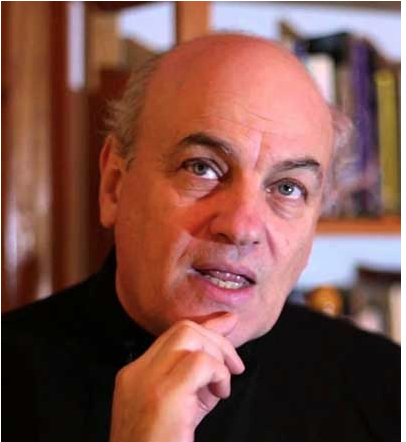
Raúl Zibechi (born January 25, 1952, in Montevideo, Uruguay) is a radio and print journalist, writer, researcher, militant, and political theorist. Between 1969-1973, as a student, he was a militant of the Frente Estudiantil Revolucionario (FER). In the '80s he began to publish in left newspapers and magazines. He focuses on social movements in Latin America and their relationships. As a popular educator he conducts workshops with social groups, particularly in urban peripheries and with peasants. He has published 18 books, almost all about concrete experiences of social movements. Three of his books have been translated into English: Dispersing power, Territories in resistance and The New Brazil (AK Press). He publishes regularly in La Jornada (Mexico), Gara (Spain) and other alternative media.
ZNetwork is funded solely through the generosity of its readers.
Donate




