Source: Originally published by Z. Feel free to share widely.

If you ask most people my age about Rwanda the only thing they remember is the 1994 genocide. The United Nations reports that as many as one million Tutsis were slaughtered in a one-hundred day period. I was 16 at the time and my interest and understanding of politics was limited, but it was easy to see something was very wrong.

I visited Rwanda this year, arriving just in time for the 4th of July. I’m used to the triumphant jubilee of Independence Day celebrations in the U.S. but in Rwanda the 4th represents Liberation Day—the day in 1994 when rebel troops marched into Kigali and ended the genocide. It is hard to put the stark contrast into words.

In the U.S. many people follow the colloquial wisdom: do not speak of sex, politics, or religion. The things many hold closest to the hearts and see as the greatest reflection of their values and identities can frequently become the catalysts for great division. How many Thanksgiving dinners have been ruined by arguments and bickering over politics?

In Rwanda every day I was meeting and talking with people who shared their survival stories. The horrendous experiences of cruelty were not swept under the rug or hidden—they were memorialized and actively remembered. It would be impossible to forget, even if a person tried, because even 29 years later the reminders—the scars—were everywhere.

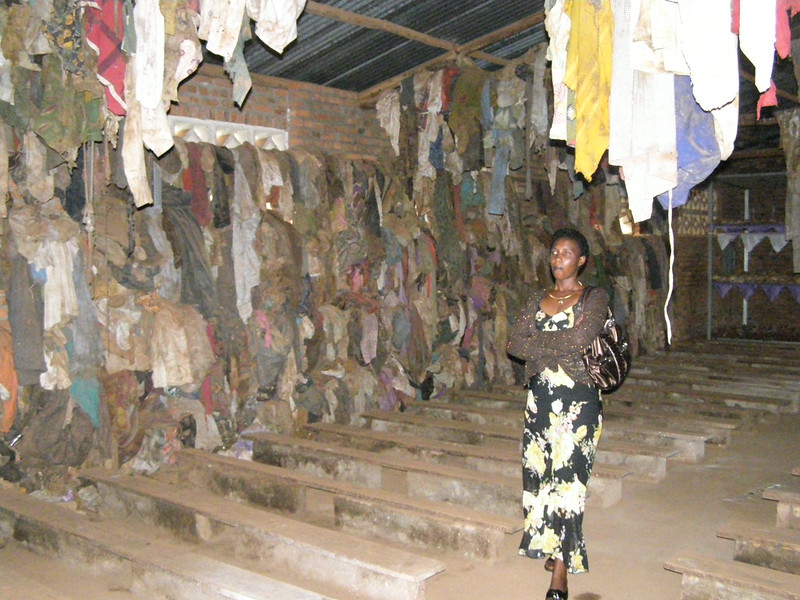
One memorial has a mass grave with the remains of more than 250,000 lives cut short. A church I visited is no longer used for worship, 45,000 bodies are interred, and the story is preserved. Churches were a common location for massacres. It seems unthinkable, it feels gratuitous to write about the violence, but I was not educated in a country with a peace curriculum.

Light pierced the church’s corrugated metal roof like stars in the night’s sky because shrapnel from grenades had made hundreds of tiny holes. Children who were lucky enough to survive learned lessons about playing dead and smearing themselves with blood to make it look believable. And it was all shared, because of a commitment to “never forget.”

Of course it is uncomfortable; if you are talking about genocide and it is comfortable, then you are either not talking about genocide or you are a sociopath.

The U.S. should learn from Rwanda. We are having political debates about Ron DeSantis’s “Slavery Was a Good Thing” Curriculum. We sugar-coat atrocities, crimes against humanity, and war for a whole range of reasons and I think it contributes to amnesia and denial.

I think we would all benefit from an honest appraisal of our painful past. Remembering our collective history—with all its blemishes and bloodstains—could be more than a wakeup call.

The whitewash is not just more dishonest political gaslighting. It provides cover for more malicious agendas, the ten stages of genocide include discrimination, dehumanization, and polarization before getting to persecution and extermination.

The contrast could not be more embarrassing. While Rwanda takes great pains to remember cruelty that pushes beyond the mind’s limits the U.S. plays mental gymnastics to find the silver lining in slavery. Can we learn a lesson in being honest about the past? Clinging to lies is not doing us any favors.


Wim Laven, Ph.D., syndicated by PeaceVoice, teaches courses in political science and conflict resolution.


Wim Laven teaches courses in political science and conflict resolution.


ZNetwork is funded solely through the generosity of its readers.

Donate
Donate
Leave A Reply

Subscribe

All the latest from Z, directly to your inbox.

Institute for Social and Cultural Communications, Inc. is a 501(c)3 non-profit.

Our EIN# is #22-2959506. Your donation is tax-deductible to the extent allowable by law.

We do not accept funding from advertising or corporate sponsors.  We rely on donors like you to do our work.

ZNetwork: Left News, Analysis, Vision & Strategy

Subscribe

All the latest from Z, directly to your inbox.

THE WIND CRIES FREEDOM

The Wind Cries Freedom, the new book from Z co-founder Michael Albert, is a sweeping oral history of a future American revolution.

Through thirty interconnected chapters, it draws out the strategies, failures, turning points, and hard-won wisdom of a movement that called itself the Revolutionary Participatory Society. These are not the polished memoirs of politicians: they are the unfiltered accounts of people who organized in neighborhoods, hospitals, universities, stadiums, courthouses, and places of worship, and kept a shared vision alive through cynicism and exhaustion.

The result is speculative political fiction that reads like history: messy, human, and quietly hopeful in the way that only real experience and long thought can produce.

Get your copy and peruse more features on the book’s website below.

“Read it, argue with it, but don’t look away. The future it recalls is one we must still fight to deserve.”

Yanis Varoufakis

“The most unusual and intriguing combination of prophecy, manifesto, and movement building manual that I have ever encountered.”

Bill Fletcher Junior

“This work fills a huge gap in our social movement literature.”

Cynthia Peters

You've just read your article on Z this month.

DOES Z'S SURVIVAL MATTER?

You keep coming back for a reason: serious political analysis, movement reporting, and debate beyond the priorities of corporate media. Today, Z is in a precarious financial position. If Z is part of how you understand the world, help keep it going. The readers who give monthly are the reason this work survives between fundraisers.

Z is in a precarious financial position. If it’s part of how you understand the world, help keep it going.

Number of donors705
Our goal1,000

Sustainers at $9/month or more receive the digital Z Magazine.

Already a sustainer? Click here and we won’t ask again. Thank you!

Your reading count is stored only in your browser and is never sent to us.

Sound is muted by default.  Tap 🔊 for the full experience

CRITICAL ACTION

Critical Action is a longtime friend of Z and a music and storytelling project grounded in liberation, solidarity, and resistance to authoritarian power. Through music, narrative, and multimedia, the project engages the same political realities and movement traditions that guide and motivate Z’s work.

If this project resonates with you, you can learn more about it and find ways to support the work using the link below.

Z is in the most precarious financial position in its history.

Z is a place to think beyond the limits of the present.

For decades, Z has brought together political analysis, movement reporting, debate, and visions of a different future from writers and activists around the world. That work is more than journalism. It is movement infrastructure: movements need places to develop ideas, test arguments, learn from experience, and imagine what comes next.

In the first two days of this fundraiser, 19 donors and 8 new monthly sustainers stepped up. Help us reach 1,000 donors who keep Z independent, for everyone.

For decades, Z has published the analysis, debate, and visions movements need, free of paywalls, ads, and billionaire owners. If that work should continue, Z needs your support now.

Number of donors705
Our goal1,000

Sustainers at $9/month or more receive the digital Z Magazine.

Subscribe

Join the Z Community – receive event invites, announcements, a Weekly Digest, and opportunities to engage.

Exit mobile version

