Source: Originally published by Z. Feel free to share widely.

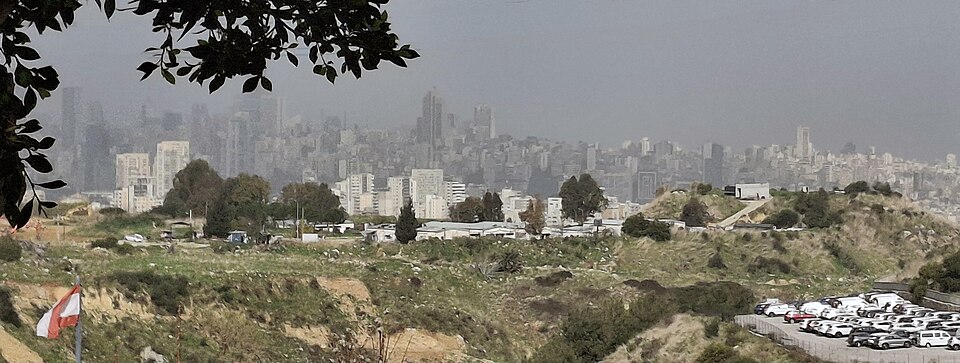
Israeli Prime Minister Benjamin Netanyahu’s chances of reelection hinge on carrying on the war Hezbollah and keeping the fires burning with Iran. At the same time, he must assuage Donald Trump, who has called Netanyahu “crazy” for undermining US-Iran peace talks by continuing military action in Lebanon and, just last week, exchanging fire with Iran. In that exchange, Iran fired missiles at Israel and Israel bombed a petrochemical plant in Iran as well as bombed Hezbollah positions near Beirut. Iran and Israel then deescalated, but not before Netanyahu, reportedly against Trump’s wishes, had retaliated against Iran.

That truce—the US-brokered cease-fire between Israel and Lebanon—is a fiction anyway. No sooner was it announced than it was violated by Israel and Hezbollah. Hezbollah, which is required to stop fighting under the agreement, explicitly rejected it, arguing that it did not take part in the latest arrangement and that Israel is not required to make any concessions. A Shiite leader close to Hamas said Hezbollah would stop fighting when Israel agreed to withdraw completely from Lebanon–which Israel is not going to do.

“To truly stop this,” Netanyahu said,” we have concluded that we need security zones” as part of a “fundamental change” following the October 7 Hamas attack. “Perhaps when Hezbollah is dismantled, we will reconsider.” Thus, Israeli air strikes continue, notwithstanding Netanyahu’s supposed acquiescence to Trump’s wishes that he order them to halt. As the New York Times puts it: “For all the diplomatic fanfare surrounding the newest cease-fire agreement in Lebanon, the reality on the ground… was grimly familiar: Israeli airstrikes, Hezbollah rockets and little sign that the war had stopped.”

Netanyahu’s situation would seem to be shaky. His determination to “dismantle” Hezbollah, like his aim to destroy Hamas, is probably unrealizable—and it risks renewed Iranian missile strikes on Israel and other Gulf states. Yet the Israeli far right cabinet and much of the public supports continuing to go after Hezbollah. And Netanyahu’s leadership thrives on warfare—incentive enough to defy Trump. At some point, defiance might also be costly, since Iran has been firm that stopping Israeli attacks on Hezbollah is one key to reaching an agreement with the US.

Trump keeps telling Netanyahu to stop fighting and keeps saying a peace agreement with Iran is just a few days away. But here’s where Netanyahu has hope for his strategy: The fighting in Lebanon is only one of several outstanding issues that are obstructing a US-Iran agreement. Another is Iran’s nuclear enrichment. And a third is Iran’s frozen assets, as reported by CNN on June 5 in an interview with a top military adviser to Supreme Leader Ayatollah Mojtaba Khamenei. The adviser said a deal with the US requires that it unfreeze $24b in Iranian assets—half once an agreement is signed, the other half later. Trump will see that demand as similar to what Obama agreed to in the 2015 nuclear deal—and he will surely reject it.

The likely future is more rounds of fighting and fewer opportunities for the US and Iran to overcome their differences. Netanyahu is banking on that.


Mel Gurtov, syndicated by PeaceVoice, is Professor Emeritus of Political Science at Portland State University.

Mel Gurtov is Professor Emeritus of Political Science at Portland State University.


ZNetwork is funded solely through the generosity of its readers.

Donate
Donate
Leave A Reply

Subscribe

All the latest from Z, directly to your inbox.

Institute for Social and Cultural Communications, Inc. is a 501(c)3 non-profit.

Our EIN# is #22-2959506. Your donation is tax-deductible to the extent allowable by law.

We do not accept funding from advertising or corporate sponsors.  We rely on donors like you to do our work.

ZNetwork: Left News, Analysis, Vision & Strategy

Subscribe

All the latest from Z, directly to your inbox.

THE WIND CRIES FREEDOM

The Wind Cries Freedom, the new book from Z co-founder Michael Albert, is a sweeping oral history of a future American revolution.

Through thirty interconnected chapters, it draws out the strategies, failures, turning points, and hard-won wisdom of a movement that called itself the Revolutionary Participatory Society. These are not the polished memoirs of politicians: they are the unfiltered accounts of people who organized in neighborhoods, hospitals, universities, stadiums, courthouses, and places of worship, and kept a shared vision alive through cynicism and exhaustion.

The result is speculative political fiction that reads like history: messy, human, and quietly hopeful in the way that only real experience and long thought can produce.

Get your copy and peruse more features on the book’s website below.

“Read it, argue with it, but don’t look away. The future it recalls is one we must still fight to deserve.”

Yanis Varoufakis

“The most unusual and intriguing combination of prophecy, manifesto, and movement building manual that I have ever encountered.”

Bill Fletcher Junior

“This work fills a huge gap in our social movement literature.”

Cynthia Peters

You've just read your article on Z this month.

DOES Z'S SURVIVAL MATTER?

You keep coming back for a reason: serious political analysis, movement reporting, and debate beyond the priorities of corporate media. Today, Z is in a precarious financial position. If Z is part of how you understand the world, help keep it going. The readers who give monthly are the reason this work survives between fundraisers.

Z is in a precarious financial position. If it’s part of how you understand the world, help keep it going.

Number of donors713
Our goal1,000

Sustainers at $9/month or more receive the digital Z Magazine.

Already a sustainer? Click here and we won’t ask again. Thank you!

Your reading count is stored only in your browser and is never sent to us.

Sound is muted by default.  Tap 🔊 for the full experience

CRITICAL ACTION

Critical Action is a longtime friend of Z and a music and storytelling project grounded in liberation, solidarity, and resistance to authoritarian power. Through music, narrative, and multimedia, the project engages the same political realities and movement traditions that guide and motivate Z’s work.

If this project resonates with you, you can learn more about it and find ways to support the work using the link below.

Z is in the most precarious financial position in its history.

Z is a place to think beyond the limits of the present.

For decades, Z has brought together political analysis, movement reporting, debate, and visions of a different future from writers and activists around the world. That work is more than journalism. It is movement infrastructure: movements need places to develop ideas, test arguments, learn from experience, and imagine what comes next.

In the first two days of this fundraiser, 19 donors and 8 new monthly sustainers stepped up. Help us reach 1,000 donors who keep Z independent, for everyone.

For decades, Z has published the analysis, debate, and visions movements need, free of paywalls, ads, and billionaire owners. If that work should continue, Z needs your support now.

Number of donors713
Our goal1,000

Sustainers at $9/month or more receive the digital Z Magazine.

Subscribe

Join the Z Community – receive event invites, announcements, a Weekly Digest, and opportunities to engage.

Exit mobile version

