


Over the years that I’ve worked in the social change movement I’ve interacted with and observed a lot of progressive leaders. I’ve tried to be a good one myself. Out of those experiences I’ve come to believe a number of things about what positive leadership is and isn’t.
Good leaders are not necessarily great, articulate speakers. They may be; it is certainly a skill to be worked at and developed, but much more important are people who take seriously the words of Chinese philosopher Lao-Tse:
“A leader is best when people barely know he exists. Not so good when people obey and acclaim him, worse when they despise him. ‘Fail to honor people, they fail to honor you.’ But of a good leader, who talks little, when his work is done, his aim fulfilled, they will say, ‘we did this ourselves.’â€
Similar thoughts were expressed in the powerful movie, Zapata. One of the most moving scenes is toward the end when Marlan Brando, playing Zapata, talks with his wife Yosefa, played by Jean Peters, just before he leaves home to meet what he and Yosefa know will likely be his death:
Yosefa: I don’t speak for myself now, but if anything happens to you, what would become of these people, what would they have left?
Zapata: Themselves.
Yosefa: All the fighting and the death, what has really changed?
Zapata: They’ve changed. That’s how things really change. Slowly, through people. They don’t need me anymore.
Yosefa: They have to be led.
Zapata: Yes, but by each other. A strong man makes a weak people. Strong people don’t need a strong man.
“By each other.†A simple yet profound concept.
Where does wisdom come from? From my experience, it comes from those skilled at learning and listening. It comes from the collective, not the individual. That is why the issue of HOW we give leadership is so critical.
In this competitive, individualistic society many, though not all, institutions of higher learning teach that if you make it through graduate school, through business, law, medical or divinity school, you are a cut above the common folk, the salt of the earth. The model of leadership is elitist.
We have to be about something completely different, and many of us are all over the country. We are committed to a genuinely democratic political practice that encourages and brings forward new leadership.
This means much more than periodic elections to office. Elections are important, but in the absence of conscious efforts and mechanisms to inform those voting and encourage active participation in between elections, they are little more than a hollow shell.
Democracy means the encouragement of discussion on a broad scale about key issues, including the articulation and circulation of differing positions.
Democracy means flexible but firm time limits on people speaking in meetings to discourage the monopolization of discussion by articulate, long-winded individuals. If time is not consciously provided for all those who wish to speak and limited for those who tend to go on and on, those not used to speaking will feel intimidated and discouraged from active involvement. The use of a small group discussion format, when possible, is a concrete way to make it easier for those not used to speaking up to do so.
Whenever possible, a consensus-seeking method of discussion should be used. This discourages “show-boating†by strong individuals and encourages a more collective process of listening and healthy interaction.
Finally, collective evaluation is an essential part of a genuinely democratic process. Through it those who are making mistakes, going off-message or functioning in a problematic way can be held to account, and a process is established whereby everyone comes to understand that no one individual is above the group.
This doesn’t mean that we don’t need the women and men who can give stirring speeches that inspire and motivate. We do. But those same people need to understand that, as Italian revolutionary Antonio Gramsci said, “The mode of existence of the new (revolutionary) can no longer consist of eloquence, the external and momentary arousing of sentiments and passions, but must consist of being actively involved in practical life, as a builder, an organizer, ‘permanently persuasive’ because he is not purely an orator.â€
We must struggle for this approach to leadership, for an accountable and humble leadership, for leaders who see their prime work as the development and encouragement of others who can rise to their full potential and help us unite the many to turn this country and world around from its suicidal course.
Ted Glick tries his best to give leadership to the Climate Crisis Coalition (www.climatecrisis.us) and the Independent Progressive Politics Network (www.ippn.org), among other groups. He can be reached at indpol@igc.org or P.O. Box 1132, Bloomfield, N.J. 07003.

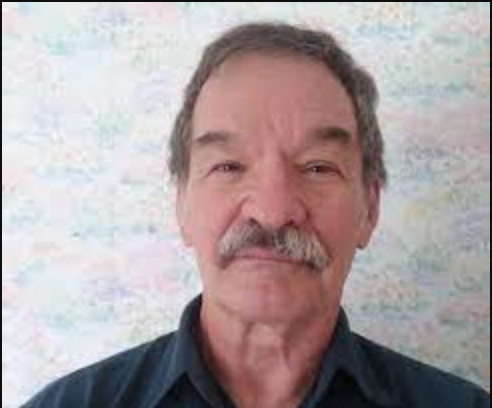
Ted Glick has devoted his life to the progressive social change movement. After a year of student activism as a sophomore at Grinnell College in Iowa, he left college in 1969 to work full time against the Vietnam War. As a Selective Service draft resister, he spent 11 months in prison. In 1973, he co-founded the National Committee to Impeach Nixon and worked as a national coordinator on grassroots street actions around the country, keeping the heat on Nixon until his August 1974 resignation. Since late 2003, Ted has played a national leadership role in the effort to stabilize our climate and for a renewable energy revolution. He was a co-founder in 2004 of the Climate Crisis Coalition and in 2005 coordinated the USA Join the World effort leading up to December actions during the United Nations Climate Change conference in Montreal. In May 2006, he began working with the Chesapeake Climate Action Network and was CCAN National Campaign Coordinator until his retirement in October 2015. He is a co-founder (2014) and one of the leaders of the group Beyond Extreme Energy. He is President of the group 350NJ/Rockland, on the steering committee of the DivestNJ Coalition and on the leadership group of the Climate Reality Check network.
ZNetwork is funded solely through the generosity of its readers.
Donate




