

When I first dreamed up this series, one intent I held was that Din and Ana’s investigations would put our two detectives in positions where they could examine all the internal organs of the Empire. How do these strange people make these biological miracles of theirs? How do they arm themselves, make their laws, treat their brains–and, perhaps, feed themselves?
How a fantasy empire feeds itself at first seemed like a rather dull subject (despite this, of course, being the dictating factor for nearly every major power throughout most of human history). But the more I turned my thoughts to how we feed ourselves in our real, present reality, the more commensal it all seemed.
We here in the West—if not in all of human society—maintain an unspoken, unshakeable belief that the farm is the natural state of man. Even though relatively few people work in agriculture now (at least compared to the past), there seems to be a free-floating awareness that our modern lives are an unnatural violation, and we should return to this primordial, traditional manner of life: the lowing of livestock, the Wellington boots, the smell of freshly tilled soil and the distant cock’s crow.
Yet agriculture, of course, is by default phenomenally unnatural. Each farm is a little bubble of unnatural reality, where crops and creatures do not succumb to the afflictions of the natural world: within these zones, they are unnaturally blessed with food and water and warmth; they are treated with medicines to render them unnaturally resistant to diseases and blights; why, even the creatures and crops themselves are deeply unnatural things. If your eye ever falls upon an illustration of the prehistoric ancestors of today’s corn or potatoes, for example, you’ll be stupefied to imagine that ancient civilizations ever thought they could breed crops from such piddly specimens.
Farms are not sites of hallowed tradition. They are, if anything, laboratories for profound biological change. We simply prefer to believe otherwise: if we paid it any attention, it could cause discomfort whenever we sit down to eat.
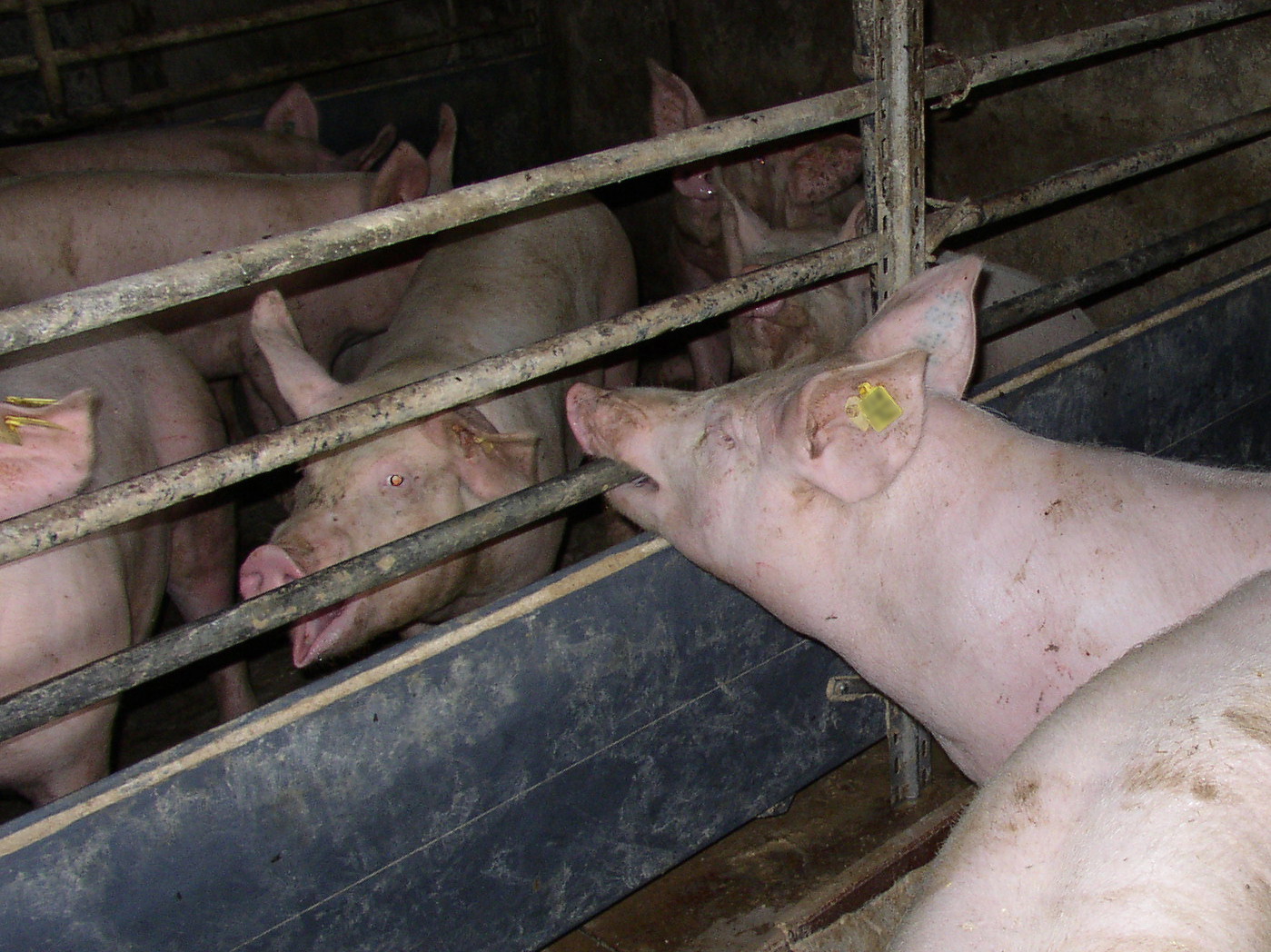
Because today, despite its veneer of rustic heritage, there are few industries more profligate and reckless than agriculture. It seems mad to devote precious water to growing alfalfa in the deserts of Arizona, all for cattle feed—and yet, we do it. It is mad to burn down the Amazon rainforest to grow soybeans for chickens and pigs—and yet, we do it. It is a foul thing to imagine piglets ground into paste to be fed to their own mothers, and yet this is fairly common practice. Just the land required to grow cattle and their feed is staggering to the point of stupidity. How many wars in human history have been fought for a fraction of this territory? The Ruhr Valley and the Aquitaine are rounding errors in comparison.
For each of these madnesses, very clever people can explain precisely why it is done this way—but, at heart, the reason is always the same: we hunger for these tastes, and demand to have those hungers sated. These practices are simply the most efficient methods of doing so.
The more I thought on it, the stranger the biologies of our world seemed. And how brilliantly we have hacked them, all the way from the stone age to this age of information. I realized that if I tried to shape the agriculture of the Empire of Khanum so it hewed close to our own methods, readers would reject it for being too foolish, too unbelievable, and too short-sighted. They’d toss the book aside and condemn it as absurd.
It is that short-sightedness that troubles me most now. I write this in early January of 2026, when many of the south and western American states have just experienced one of the most anomalous winters in living memory. Here in central Texas, it was another year when I wore shorts and short sleeves when hanging Christmas lights, and got bit to pieces by mosquitoes while doing so. We have yet to get below freezing even once, and have just tipped back over into severe drought. Many of the Rocky Mountains are totally without snow, all the way up to Wyoming. Though the upcoming summer’s heat and drought are usually assuaged by snowmelt, now the year appears quite daunting.
There is an unnerving, unspoken awareness that something, somewhere, has gone terribly awry.
We are living in an unnatural moment, and the future shall be more unnatural yet. And while it’s impossible to put it into quantifiable terms, probably about a third of that unnatural future can be attributed to agriculture: to its deforestation, to its fertilizer production, to all the incredible labor required to farm and grow flesh. Though we’ve dreamed up solutions to other causes of climate change, we have almost no answers to the problem of farming. But farming itself shall be curtailed in time, certainly: it was one thing to go a year without a freeze, but much more catastrophic, and yet now much more imaginable, would be a year without rain.
To meet this unnatural moment of our own making, we will have to imagine and fashion things far more unnatural than everything that came before, including methods of producing food. We shall have to become much more like the Empire of Khanum, I suspect, and attempt creations likely both strange and unnerving—though they shall be hardly stranger than what we’re doing now.
Whether we succeed remains to be seen. It is not a question of cunning—for I know we’re a very cunning species—but bravery, gumption and wisdom. There, I’m much less sure. Tradition is a hard thing to jettison, even when the very land refuses to foster it any longer.
But nature has rendered its verdict. The future is unnatural, whether we like it or not.

ZNetwork is funded solely through the generosity of its readers.
Donate




