


On 25 September, the people who live in Iraqi Kurdistan voted on an independence referendum. It appears that 90% of the people who voted have asked the Kurdish Regional Government (KRG) to begin negotiations with the Iraqi government for secession. This large mandate complicates matters in West Asia. Both Turkey and Iraq conducted military exercises near the borders of Iraqi Kurdistan, while both governments said they would do all they can to suffocate any such aspirations.
It is important to recognize that this vote is not a mandate from the Kurdish people for an independent country. The world’s 30 million Kurdish people are largely spread out across Turkey, Syria, Iraq and Iran. The vote did not include the Kurds who live in Turkey (the vast majority) or those who live in Iran and Syria. No doubt that there were celebrations in these countries and that Kurdish national sensibility was given a sharp boost this week. But this is not a referendum for a Kurdish national home as much as it is a call for the secession of the Iraqi Kurdish autonomous area – already largely independent since 1991.
When the US expelled Iraqi forces from Kuwait in 1991, US President George H. W. Bush called upon the Iraqi people to rise up and overthrow the rule of Saddam Hussein. In Iraq’s north the two main political parties – the Kurdish Democratic Party (KDP) and the Patriotic Union of Kurdistan (PUK) – followed this call. The Kurdish peshmerga fighters seized the oil-rich city of Kirkuk. They expected US air cover. It did not come.
But then the Iraqi army mobilized its regular and irregular units and began to pummel the Kurdish advance using helicopters. A million Kurds rushed to the Turkish border. UN Security Council Resolution 688 declared northern Iraq to be a ‘safe haven,’ which was the term that then expanded to ‘autonomous region.’ The US declared the region to be a ‘no-fly zone’ and protected it from Iraqi aircraft.
The KDP and PUK controlled this region, defended by US aircraft. Governance structures emerged, as did a national anthem and a national flag. Kurdish autonomy deepened after the fall of Saddam Hussein’s government in 2003 and during the US occupation of Iraq. American petroleum companies flooded into the enclave, as did Turkish consumer goods. The Kurdish autonomous region was sanctified by the 2005 Iraqi Constitution, which ensured that its autonomy remained. The PUK’s leader Jalal Talabani became the President of Iraq.
For all practical purposes, Iraqi Kurdistan has been an independent country since 1991.
Over the course of the past few years, the KPD’s Masoud Barzani has been President of the Kurdish Regional Government. Tensions between the KPD and the PUK continue, but these are nothing compared to the considerable tension that has existed between the Kurdish Regional Government and the Iraqi government in Baghdad. Iraq’s government has accused the Regional Government in Irbil of allowing oil to be illegally siphoned off through Turkey into international markets. Over the past decade, Iraq’s government has asked Irbil to bring the Kurdish militias (the peshmerga) under the command of the Iraqi armed forces. None of these issues have been settled.
The Kurdish peshmerga became essential to US war plans when they fought under US cover against ISIS in Mosul and elsewhere. The Kurdish parties used the opportunity to seize as much territory as possible, including – once more – the city of Kirkuk, not only oil-rich, but ethnically diverse.
As all this occurred, oil prices dropped. The Kurdish Regional Government saw its revenues fall. In these times, it is normal for accusations of corruption to emerge. Barzani, under political pressure, answered these charges with a call for an independence referendum.
In other words, this referendum, which is restricted to the Iraqi Kurdish enclave, had little bearing on events in Turkey, Syria or Iran. Barzani’s call trapped his internal opposition, who backed him and saw his popularity rise as he addressed mass rallies across the region. The sentiment of independence is an immense thing, hard to minimize. It is easy to tap into but hard to control.
Inevitably, Turkey, Iran and the government of Iraq said that they would do all they could to block the secession. Iraqi Kurdistan is a landlocked region, reliant upon these neighbors for trade. It is oil-rich, but it will need to get its oil to the market. If Turkey, Iran and Iraq embargo Iraqi Kurdistan, then it will suffer greatly. This has been the situation in South Sudan, which won its independence but remains dependent on Sudan for the movement of its oil to international markets. Barzani has not made clear the path forward for an isolated Iraqi Kurdistan.
Meanwhile, the Syrian government has affirmed the autonomy for Syrian Kurds who live largely in a northern belt along the Syria-Turkey border. Attempts by the Syrian Kurds to create Rojava (western Kurdistan) have come under pressure from the Turkish government and military, which remains poised on its border and has even entered Syria to prevent Syrian Kurdish ambitions to create an unbroken territory. There are no open calls for Kurdish independence in Syria. The parties there have developed their strength under the rubric of a federal Syria, with autonomy for each of the minority groups.
In Turkey, the various parties – including the PKK guerrilla group – have moved away from the call for an independent Kurdistan. Harsh measures from the Turkish government have hurt Kurdish ambitions. But more than anything, social developments have also undermined the possibility of a Kurdistan in south-eastern Turkey. More than 60% of the Kurdish population in Turkey lives west of Ankara, with more than a million Kurds in Istanbul itself. To create a Kurdish state would require massive population transfers, something not seen as desirable even by the Kurds in Turkey. That is why the PKK’s jailed leader Abdullah Öcalan and other Kurdish politicians now call for more rights within the Turkish framework rather than outright independence.
In Iran, Kurdish aspirations have been harshly blocked by the government, through crackdowns against demonstrations and by the arrest and execution of Kurdish leaders. There is no expectation in Iran for Kurdish secession.
A glance back at the Xoybûn Committee’s demands from the 1920s and 1930s suggests that the Kurdish aspirations have moved from statehood to being allowed full rights to live as Kurds wherever they live. That Kurds are not permitted to use their language has been a long-standing grievance of the community. Equally troubling for them is the idea that they are not even regarded as a community (for a long period, the Turkish government saw them as ‘Mountain Turks’). There is no question that the Kurdish people have unfulfilled desires for their national dreams and their cultural realities. This particular referendum – important as it was for the Iraqi Kurds – will not come close to providing a solution to the problem. It has, however, provided a short-term solution to the problems of the government of Barzani.
Vijay Prashad is professor of international studies at Trinity College in Hartford, Connecticut. He is the author of 18 books, including Arab Spring, Libyan Winter (AK Press, 2012), The Poorer Nations: A Possible History of the Global South (Verso, 2013) and The Death of a Nation and the Future of the Arab Revolution (University of California Press, 2016). His columns appear at AlterNet every Wednesday.

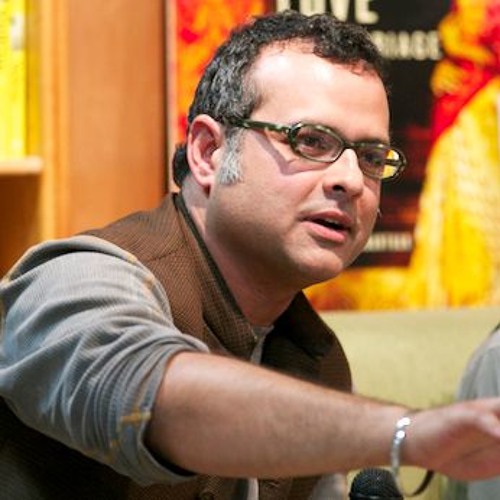
Vijay Prashad is an Indian historian, editor, and journalist. He is a writing fellow and chief correspondent at Globetrotter. He is an editor of LeftWord Books and the director of Tricontinental: Institute for Social Research. He is a senior non-resident fellow at Chongyang Institute for Financial Studies, Renmin University of China. He has written more than 20 books, including The Darker Nations and The Poorer Nations. His latest books are Struggle Makes Us Human: Learning from Movements for Socialism and (with Noam Chomsky) The Withdrawal: Iraq, Libya, Afghanistan, and the Fragility of U.S. Power. Tings Chak is the art director and a researcher at Tricontinental: Institute for Social Research and lead author of the study “Serve the People: The Eradication of Extreme Poverty in China.” She is also a member of Dongsheng, an international collective of researchers interested in Chinese politics and society.
ZNetwork is funded solely through the generosity of its readers.
Donate




