


Two extremely unexpected events occurred regarding the Korean Peninsula in the first week of March 2018. North Korea’s leader, Kim Jong-un, offered to meet with President Trump, withdrawing some previous conditions. And President Trump agreed to meet with Leader Kim, withdrawing some previous conditions.
Maybe someone somewhere predicted this would happen. But, if so, I never read it. Now that it has occurred, everyone everywhere is scrambling to interpret it and then to counsel how to react to it. The pundits and politicians are debating: (1) why the two leaders did it, (2) what are its consequences, and (3) will the meeting actually take place?
In the world outside North Korea, some say Kim retreated before Trump’s many voluble threats. A smaller number say the opposite, that Trump retreated before Kim’s many voluble threats. And quite a large number say the threats played at most a secondary role because the real reasons are different.
Some suggest that Kim felt strong enough to reduce his preconditions in order to gain the legitimation his regime has sought and that a meeting would give him. Some suggest that Trump felt strong enough to reduce his preconditions in order to gain him the worldwide recognition as a statesman and great president that he has sought and that a meeting would be likely to gain him.
Of course, some say simply that each thinks he will be able to con the other and has no intention of being serious about a deal. These are views of persons outside North Korea. We really do not know what kind of internal debate is going on in North Korea. I suspect that it is more or less the same debate.
The debate about consequences depends very much on the answers as to the motivations of Kim and Trump. Some see it as the tactical genius of Kim. For these analysts the consequences are negative for the United States because Trump would have surrendered his biggest card to play, non-recognition. Some see it as the tactical genius of Trump. For these analysts the consequences are very positive because they would reduce the opposition of other countries and movements to further punitive actions by Trump.
Finally, the debate on whether the meeting will take place at all depends on the answers given to the previous two questions. If one or the other or both are not serious, then one or the other will call off the meeting. Even if one or the other or both are serious, the meeting still might not take place, as one or the other realizes the tactical errors he has made.
Of course, even if the meeting does take place, there is no guarantee whatsoever that the two sides could reduce significantly their very wide differences such that a deal would be consummated. And even if a deal were signed formally by the two, it would remain to be seen how one would verify that the other side was living up to the terms of the deal. Many persons who have been involved in previous negotiations have pointed out how immensely difficult it is to verify compliance.
President Ronald Reagan famously said of a deal with President Mikhail Gorbachev of the Soviet Union “trust but verify.” But there is virtually zero trust between the United States and North Korea. And if on top of that one can’t verify, a so-called deal would be a fool’s paradise.
I have written this text using parallel phrases for Kim and Trump because I believe they are behaving in mirror image of each other. My own guess is that a meeting is unlikely to come to pass, and that each side will draw negative conclusions from this fact.
In that case, this process would then have made the quest for stability of the Korean peninsula more difficult, not less. In my view this would be disastrous, as it might well lead to the war most of us do truly fear.
I do not however think a nuclear war is inevitable by any means. An increased stability (a more accurate phrase than peace) of the Korean peninsula is most likely to result from pressures from below, from all the rest of us. Such pressures need desperately to be organized, which is not yet happening on a large enough scale.
There is in addition one other element that might work in the same direction – the very unpredictable personal decisions of Kim and Trump. They have surprised us this month, and frequently before this. Maybe they will surprise us again.

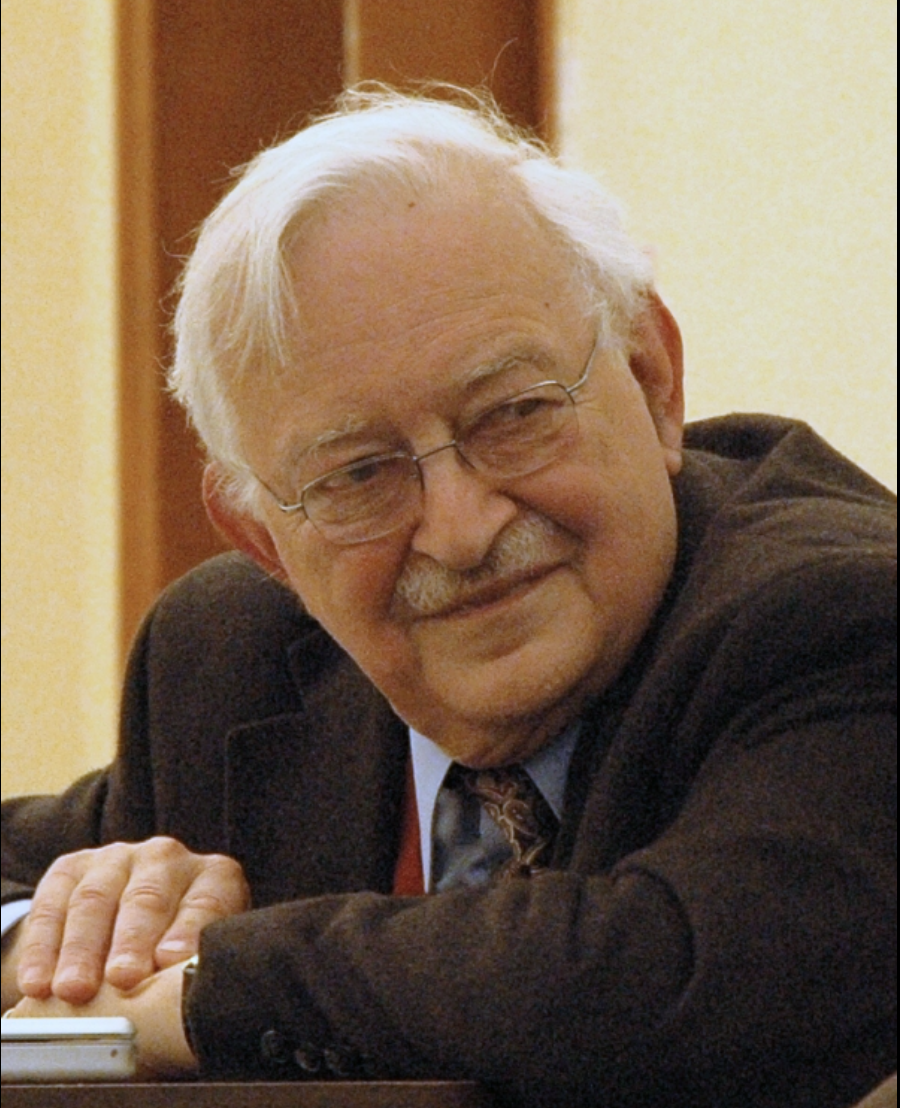
Immanuel Wallerstein (September 28, 1930 – August 31, 2019) was an American sociologist and economic historian. He is perhaps best known for his development of the general approach in sociology which led to the emergence of his world-systems approach. He was a Senior Research Scholar at Yale University from 2000 until his death in 2019, and published bimonthly syndicated commentaries through Agence Global on world affairs from October 1998 to July 2019. He was the 13th president of International Sociological Association (1994–1998). Politically, he considered himself on the "independent left" and was active in a variety of organizations. He argued that we are in the transition from our existing capitalist world-economy to some new system, and that the great political struggle of our time is about which new kind of systemic order will replace our existing one. A new systemic order could be better or worse, depending on our collective ability to push the worldwide decision in one direction or another. He believed that a crucial element in this is a vast debate about the kind of better system we wish to build, and saw the Reimagining Society Project as one of the ways to further this collective debate.
ZNetwork is funded solely through the generosity of its readers.
Donate




