

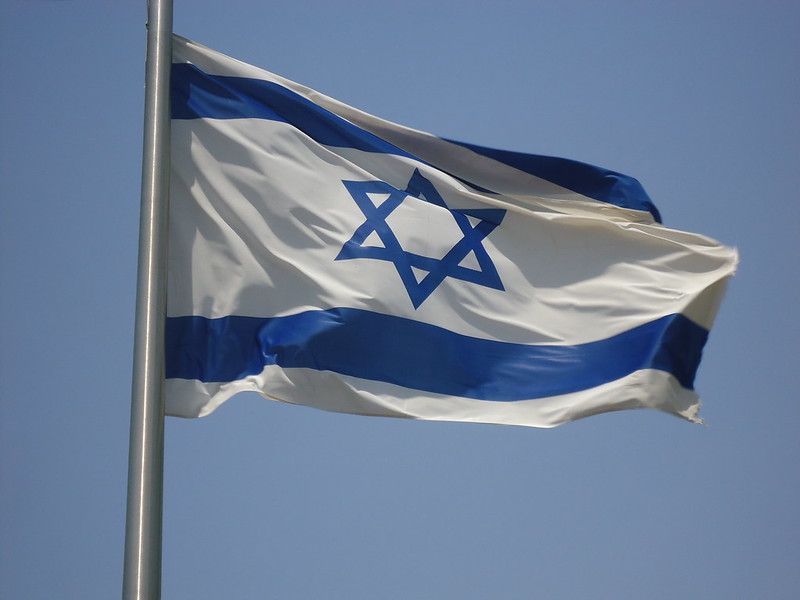
This year’s celebrations of American independence straddled Israel’s most intense airstrikes on Palestinians in nearly two decades. Amidst Fourth of July parades and picnics, Americans may have barely noticed what happened far away in a region beset by generations of violence. Assuming they noticed at all, Americans might ask three basic questions:
Who lives in Jenin’s refugee camp?
Where do they hope to move?
Why should Americans care?
About 50 miles north of Bethlehem and three miles from the Israel border, Jenin is hilly and rural. Its 40,000 residents live beside a refugee camp with another 15,000 crammed into about 100 acres. UNRWA, the United Nations Relief and Works Agency for Palestine Refugees, estimates the population density as 33,000/square kilometer. Manhattan’s is 28,000, and the Jenin camp has no tall buildings. What it does have are as many as eight family members living in a single room, poor sewage, and erratic delivery of water and electricity
Where are these refugees from? Where do they want to go to?
The camp is one of more than 50 created by the United Nations for Palestinians and their descendants who fled or were expelled from their homes in the aftermath of what Israelis call its 1948 War of Independence; Palestinians call it the Nakba, The Disaster.The UN created more camps after the 1967 War and Israel’s occupation of the West Bank, land outside the borders of its founding that the UN supported. Jenin’s “refugees” live in the land of their ancestors. They wish to remain there—but under their own control.
Terminology is fraught. Historic Palestine and Biblical Israel refer to the same place; many Christians call it The Holy Land. Warring nomenclature extends to geographic subsets: locally, people of Jenin consider themselves living in the Occupied Territories of Palestine; internationally, it is usually called the West Bank; in Israel, it is part of Greater Israel or, using Biblical names, Judea and Samaria. More than half a million Israelis now live in these territories, seized in the 1967 War, despite the international consensus that such settlements violate international law governing land seized in war. The residents call themselves settlers.
That term conjures our feisty ancestors in covered wagons “civilizing” the Wild West as they pursued America’s Manifest Destiny. That mythology masks the experience of native peoples: expulsion from homelands that had been theirs since time immemorial. Plus, such appropriation was approved by a government in which they had no voice. Expropriation without representation. Colonizing the continent is central to American history. “Ethnic cleansing” had not entered the vocabulary, but its practice had.
We, collectively, have begun to make some amends by, for example, recognizing the inhumanity of transporting native children from their families to distant schools where they could not speak their language or express their culture. In addition, some conferences and public gatherings now begin with land acknowledgments, which identify the event’s location on ancestral lands of indigenous people.
During my childhood, playing cowboys and Indians was common. It was easy to tell the good guys from the bad. Aggressors won; defenders lost. Both resorted to violence, the perpetual consequence as blood leads to blood leads to blood leads to blood. Last week, one Israeli soldier was killed and 12 Palestinians. Israel claimed to be eliminating terrorists; locals described their experience similarly, “sheer terror.”
Why should American’s care?
Beyond embracing rights for ourselves, we purport to support universal human rights. However, hard facts of American practice contradict the lofty ideals of theory regardless of which political party is in power. In 2022, President Biden pledged $312 million of humanitarian aid to the West Bank and Gaza for hospital services and to restore UNRWA’s support of refugees, which President Trump had ended three years before. Israel, a developed country that ranks 31st in the Gross Domestic Production of all nations, receives $3.8 billion—12 times that sum–in military aid alone.
Departing Jenin on a visit in 2016, my bus stopped outside town on a dusty road that passes as a highway. Two hundred goats and their herders had the right of way. I’d never glimpsed such an ancient way of life. Waiting patiently, I wondered–I still wonder—how much longer the Palestinians of Jenin, of the West Bank, of the Occupied Territories of Palestine must wait for their ancient rights: freedom, independence, and land they control.
Russell Vandenbroucke is recently retired Founding Director of the Peace, Justice & Conflict Transformation Program at University of Louisville and is syndicated by PeaceVoice.
ZNetwork is funded solely through the generosity of its readers.
Donate




